
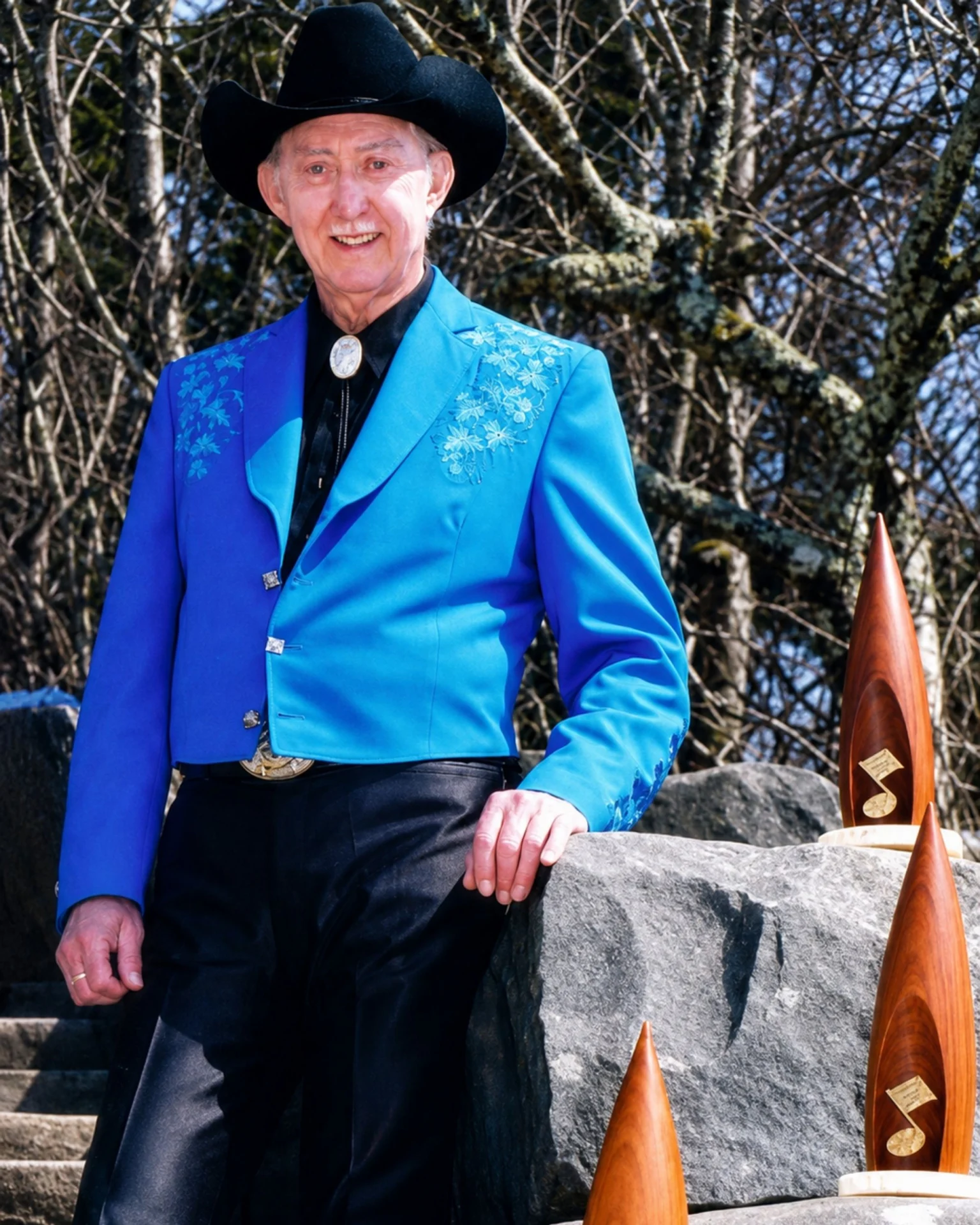
In 1962, Jack Greene joined Ernest Tubb’s Texas Troubadours as a drummer. By 1967, he stood at the center of country music’s biggest night, holding awards for Male Vocalist, Single, Album and Song of the Year. How did a sideman become a legend? It started with a baritone that refused to stay hidden.
Greene had spent years working clubs and small Southern stages before Tubb brought him into the fold. He played drums, but he could also sing and play guitar. Tubb gradually gave him more room at the microphone, first during shows and then as an opening vocalist. The Texas Troubadours were more than a backing band; they were a training ground where musicians learned hard country night after night in dance halls, theaters and radio appearances. Steel players, guitarists and singers passed through, and Tubb had little interest in keeping talented men hidden simply because they made his own show stronger.
Greene’s voice became increasingly difficult to hide. Where Tubb sang with a rough, conversational edge, Greene had a smooth baritone capable of carrying long notes without losing the weight of traditional country. Audiences began responding to him as a singer rather than merely the man behind the drums. Tubb encouraged him to try a solo career.
Greene left the band and signed with Decca, where producer Owen Bradley put that voice at the center. In 1966, he recorded Dallas Frazier’s ‘There Goes My Everything.’ The record changed everything. It spent weeks at number one and became one of the biggest country hits of the period. At the inaugural CMA Awards in 1967, Greene was named Male Vocalist of the Year. The single won Single of the Year, the album built around it won Album of the Year, and Frazier’s composition took Song of the Year.
Ernest Tubb’s greatest contribution was not a record. It was knowing when the man beside him no longer needed to stay there.
More hits followed, including ‘All the Time,’ ‘You Are My Treasure’ and ‘Statue of a Fool.’ Greene joined the Grand Ole Opry in 1967 and remained part of its family for decades. His success also revealed something important about Ernest Tubb. Many stars protected the people who made their bands work. Tubb repeatedly treated his musicians differently. If someone beside him developed enough talent to build a career of his own, Tubb often helped make the separation possible.
That culture outlived any single lineup of the Texas Troubadours. By the time Jack Greene died in 2013, the band he had once joined as a drummer had already sent generations of steel players, guitarists and singers into the wider country world. One of Ernest Tubb’s greatest contributions was not a record. It was knowing when the man beside him no longer needed to stay there.