
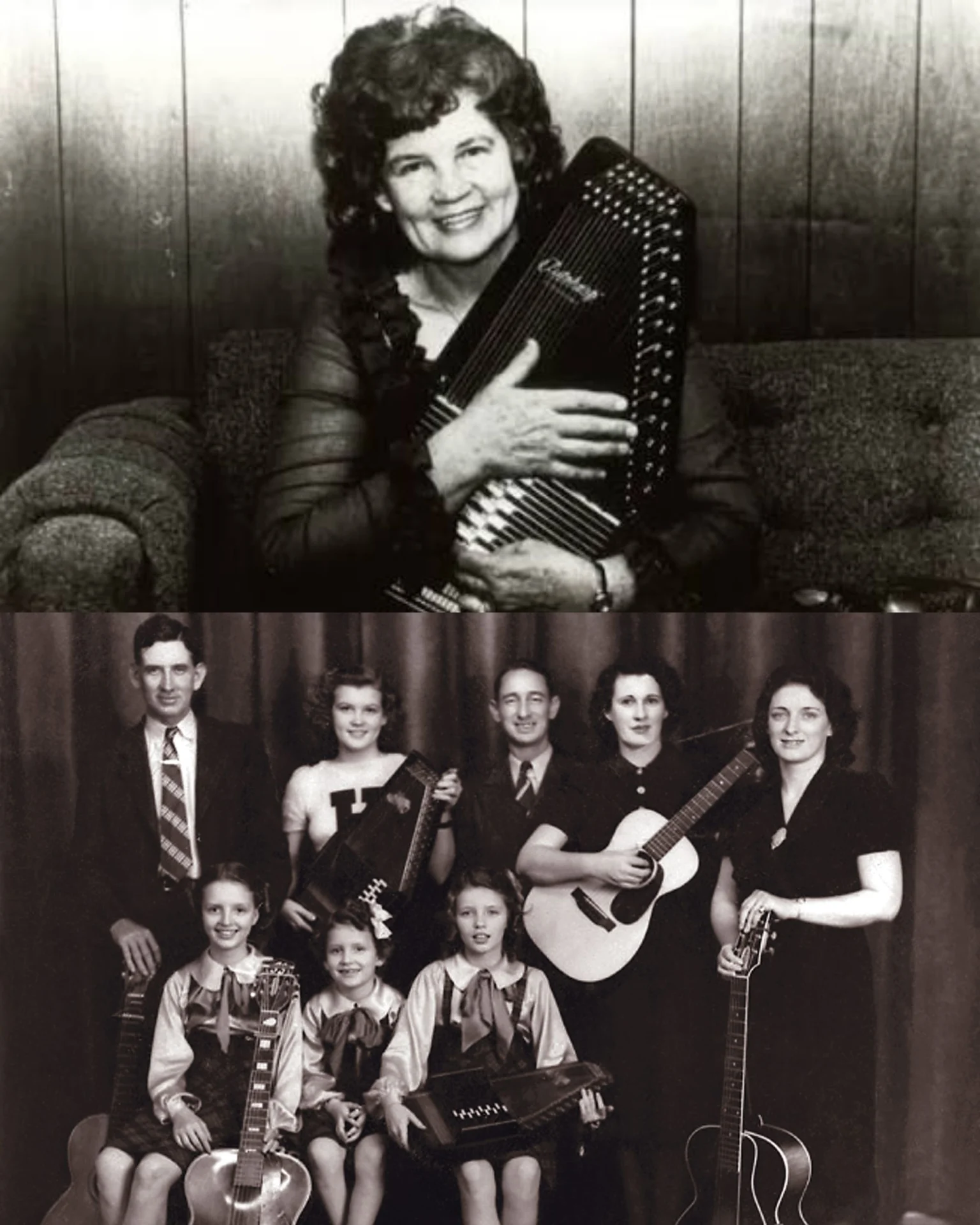
The music begins before the last plate of cornbread is handed through the concession window. In Poor Valley, Virginia, the Carter Family Fold transforms a simple Saturday night into a living archive of American country music. Families from across the region gather here not just to listen but to dance, to eat, and to feel the warmth of a community that refuses to let history fade. At the heart of this nightly miracle is a promise made by a daughter to her father more than sixty years ago.
Janette Carter was the daughter of A.P. Carter, one of the founding figures of country music. In 1927, A.P., his wife Sara, and sister-in-law Maybelle traveled to Bristol, Tennessee, where they recorded the songs that would define a genre. But fame and commercial success did not keep the family together. By the time Janette was grown, the original Carter Family had disbanded, and A.P. had returned to his rural roots, running a small store in the mountains.
When A.P. grew old, he asked Janette to keep his music alive. At the time, Janette worked as a cook at an elementary school. She accepted the challenge not with grand plans but with determination. She began hosting informal music sessions in her father’s store, inviting local musicians and neighbors to share tunes and stories.
In 1976, Janette and local residents built an 880-seat amphitheater beside the old store. They transformed retired school bus seats into comfortable chairs and railroad ties into sturdy benches. The structure was not designed to impress tourists but to function as a gathering place for people who valued the music.
Every Saturday night, Janette, her brother Joe, and her son Dale welcomed crowds. She kept admission prices low so that entire families, from grandparents to toddlers, could attend together. The stage featured mostly acoustic instruments, preserving the intimate sound of old-time music. Johnny Cash, who married Janette’s cousin June, was one of the few allowed to play electric guitar on that stage, a rare exception that highlighted the family’s connection.
The Carter Family Fold became more than a venue. It was a living room for the community, where grandmothers taught grandchildren to clog, where local musicians found a regular stage when radio had turned its back on their style, and where the spirit of the Carter Family continued to breathe.
Janette’s dedication extended to the kitchen. She prepared soup beans and cornbread, along with her famous egg salad, to feed the guests. This food was not a gimmick but a necessity, a way to make everyone feel at home. The kitchen work was as vital as the music, ensuring that the evening lasted and that strangers became friends.
Keeping the doors open was the only measure of success.
For over thirty years, Janette hosted these nights, earning barely enough to cover costs. She once said that keeping the doors open was the only measure of success. Her approach challenged the commercialism of the country music industry, proving that heritage could be preserved through hospitality rather than profit.
When Janette died in 2006, her daughter Rita Forrester took over the Fold. She continued the tradition, welcoming Saturday crowds and singing alongside the musicians. The promise had passed from one generation to the next, becoming a community’s shared responsibility.
Janette Carter left behind a legacy that cannot be measured in record sales or museum exhibits. She showed that history lives when it is practiced, when it is danced, and when it is served with a hot meal. The Carter Family Fold stands not as a monument to the past but as a doorway to a living tradition, a place where every Saturday night, the promise is renewed.