
The plane crashed near Nashville on July 31, 1964 and Mary Reeves lost the man she had loved since 1946. But she also inherited something far less personal yet enormously consequential: master tapes, unreleased performances and hundreds of recordings whose future Jim could no longer decide for himself. The first proof of what remained in those vaults arrived quickly.
Distant Drums a Cindy Walker song Reeves had recorded before his death was prepared for release with additional orchestration. It became a major posthumous hit in 1966 reaching No. 1 on the U.S. country chart and spending five weeks atop the British chart. Mary realized that Jim’s recordings did not have to become museum pieces.
Working with RCA and producers she became increasingly involved in selecting and preparing material for release drawing from a recorded catalog that reportedly contained roughly 350 songs. Older vocals could be paired with new backing tracks. Unfinished material could be shaped for contemporary listeners. Albums continued appearing long after most posthumous catalogs would have gone quiet.
She did not merely preserve the past. She kept it moving.
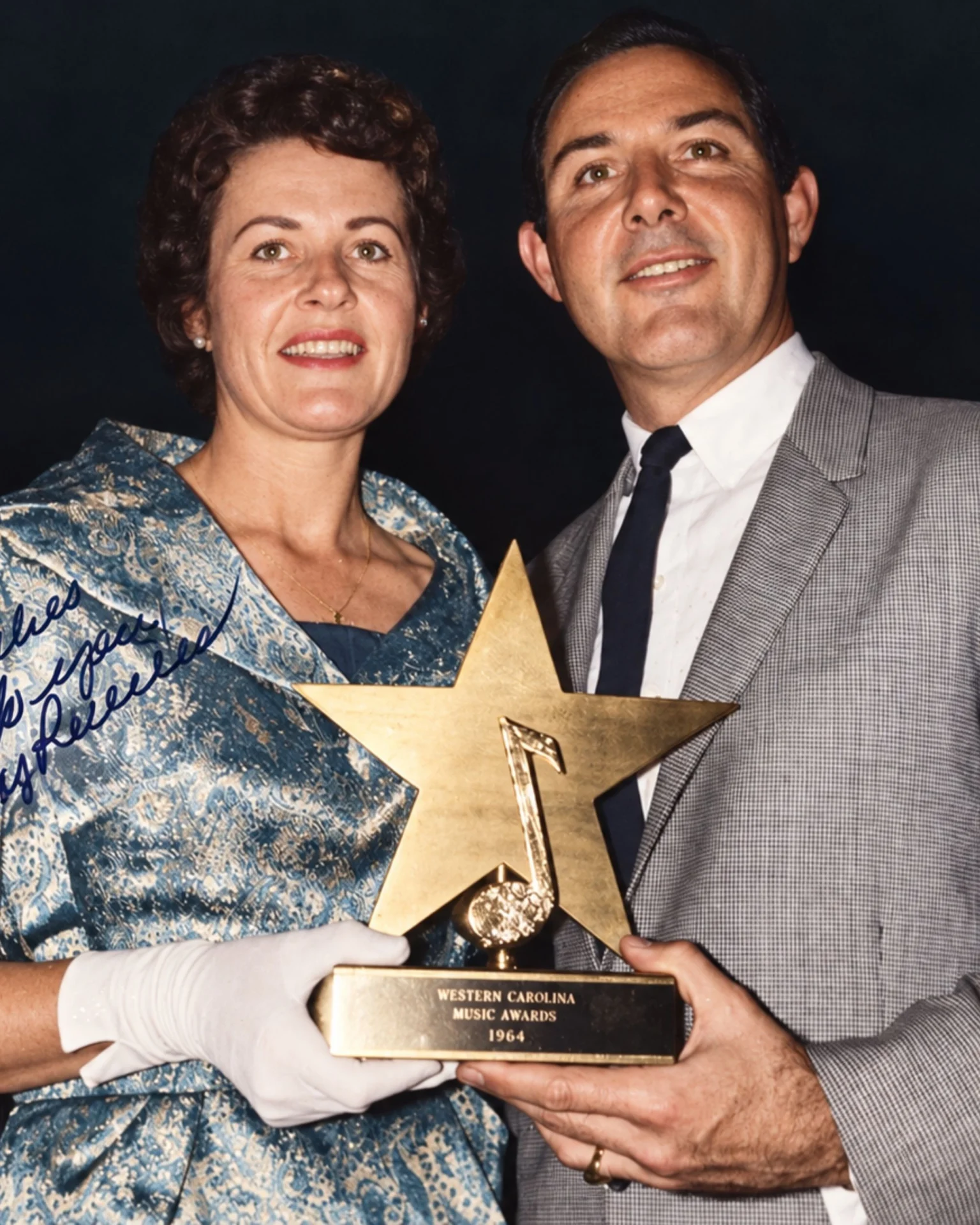
The result was almost a second career. Jim Reeves remained present on the country charts into the 1980s nearly twenty years after the crash while his smooth baritone continued finding audiences far beyond the United States. Mary guarded more than the tapes. She operated the Jim Reeves Museum in Nashville preserving his awards belongings and career history while answering the questions that naturally followed when an artist’s reputation continued growing after his death.
Technology eventually pushed that stewardship into unfamiliar territory. In 1982 separate recordings by Reeves and Patsy Cline were combined for Have You Ever Been Lonely creating a duet between two singers who had both been gone for nearly two decades. The record reached the country Top 10 placing their voices back on contemporary radio beside artists neither had lived to hear.
The husband was gone but the artist remained.
Mary once drew that simple distinction between the man she had lost and the body of work left behind. By the time she had finished tending that legacy Jim Reeves was no longer remembered only through the records released during his lifetime. An entire generation had grown up hearing songs that reached them because Mary Reeves had decided the vault was not a graveyard but an unfinished catalog.