
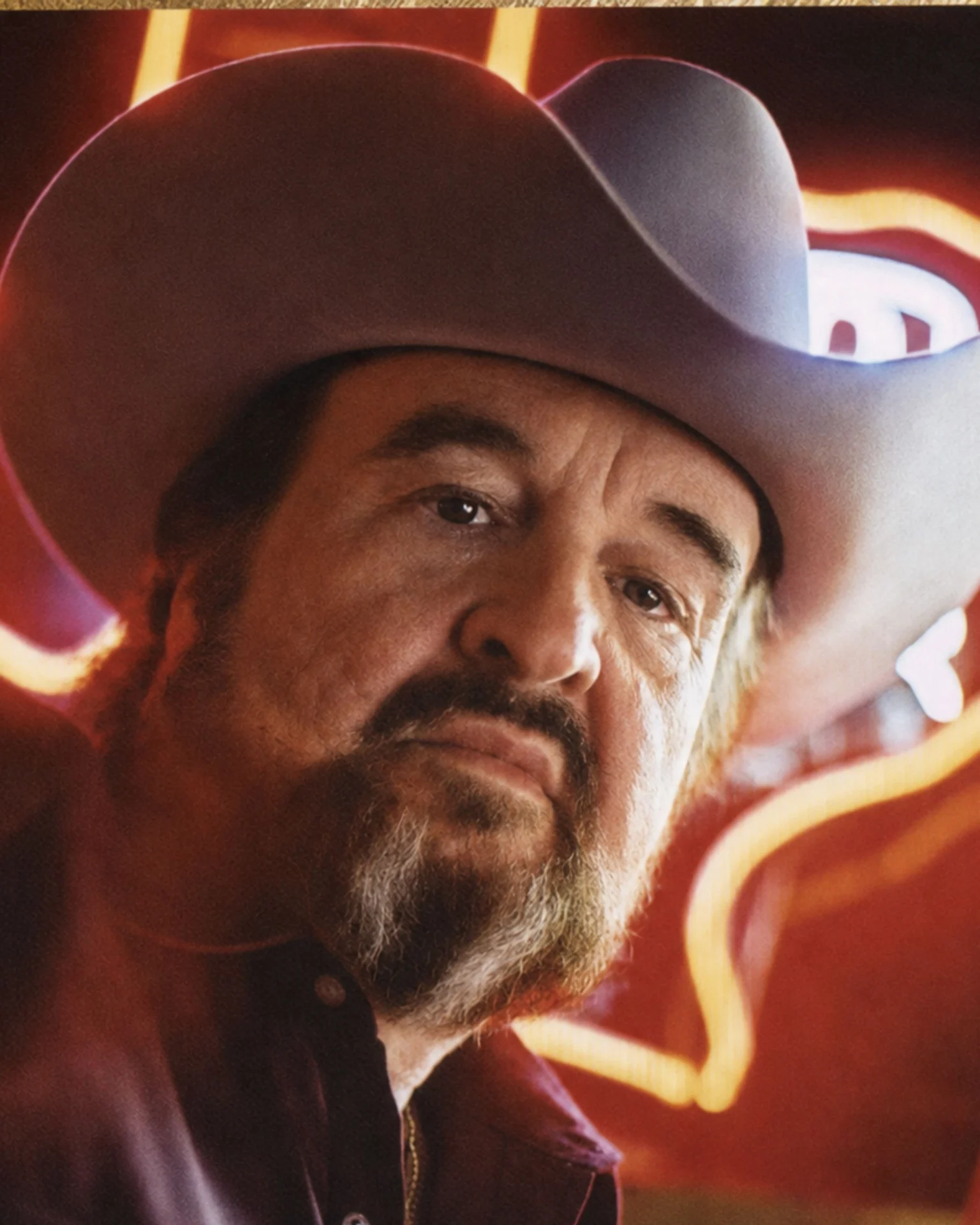
The high notes wouldn’t come out. On April 15, 1972, Johnny Bush walked onto a stage in Weslaco, Texas, as the man they called The Country Caruso. He opened his mouth to sing—and silence answered where powerful notes should have roared.
Bush had spent years building that voice. A Texas honky-tonk veteran, he had played drums alongside Willie Nelson in Ray Price’s Cherokee Cowboys before stepping out on his own. By the late 1960s, songs like Undo the Right and You Gave Me a Mountain marked him as one of the strongest voices in country music. His range earned him the nickname Country Caruso. Then RCA signed him, and the national door seemed wide open.
RCA encouraged Bush to write, a task he initially found absurd in Nashville filled with songwriters like Nelson, Harlan Howard, and Bill Anderson. But with friend Paul Stroud, he crafted Whiskey River on a paper sack during a bus ride from Nashville to Texas. Released in 1972, Bush’s version reached No. 14 on Billboard’s country chart and became a Texas anthem. Willie Nelson recorded it the next year, turning it into the signature opener for countless concerts.
Yet while Whiskey River climbed, Bush’s voice began betraying him. That night in Weslaco, he felt his throat choke off the high notes. Soon, much of his vocal range vanished, and at times he struggled even to speak.
It felt as if my throat were choking them off
Doctors found nothing wrong with his vocal cords. Bush tried medication, psychologists, chiropractors, acupuncture, and hypnosis. At one point, he was told the problem might be psychosomatic. Meanwhile, his RCA career stalled. After three albums, the major-label opportunity disappeared.
Only in 1978 did doctors identify the real cause: spasmodic dysphonia, a rare neurological disorder causing involuntary spasms in the muscles controlling the voice. The diagnosis didn’t restore lost time or RCA momentum. But it confirmed the ordeal was real.
Treatment and vocal therapy allowed Bush to regain control. By the late 1990s and 2000s, he recorded and toured again—no longer chasing national stardom, but welcomed as an elder statesman of Texas honky-tonk. His voice, permanently altered, carried a new authority earned through struggle.
The comeback didn’t erase the loss. It gave the loss a place to live. When Johnny Bush stood onstage again, the sound was rougher, harder earned, marked by the thing that nearly silenced him. But it still belonged to him—and in the end, that was its own victory.