
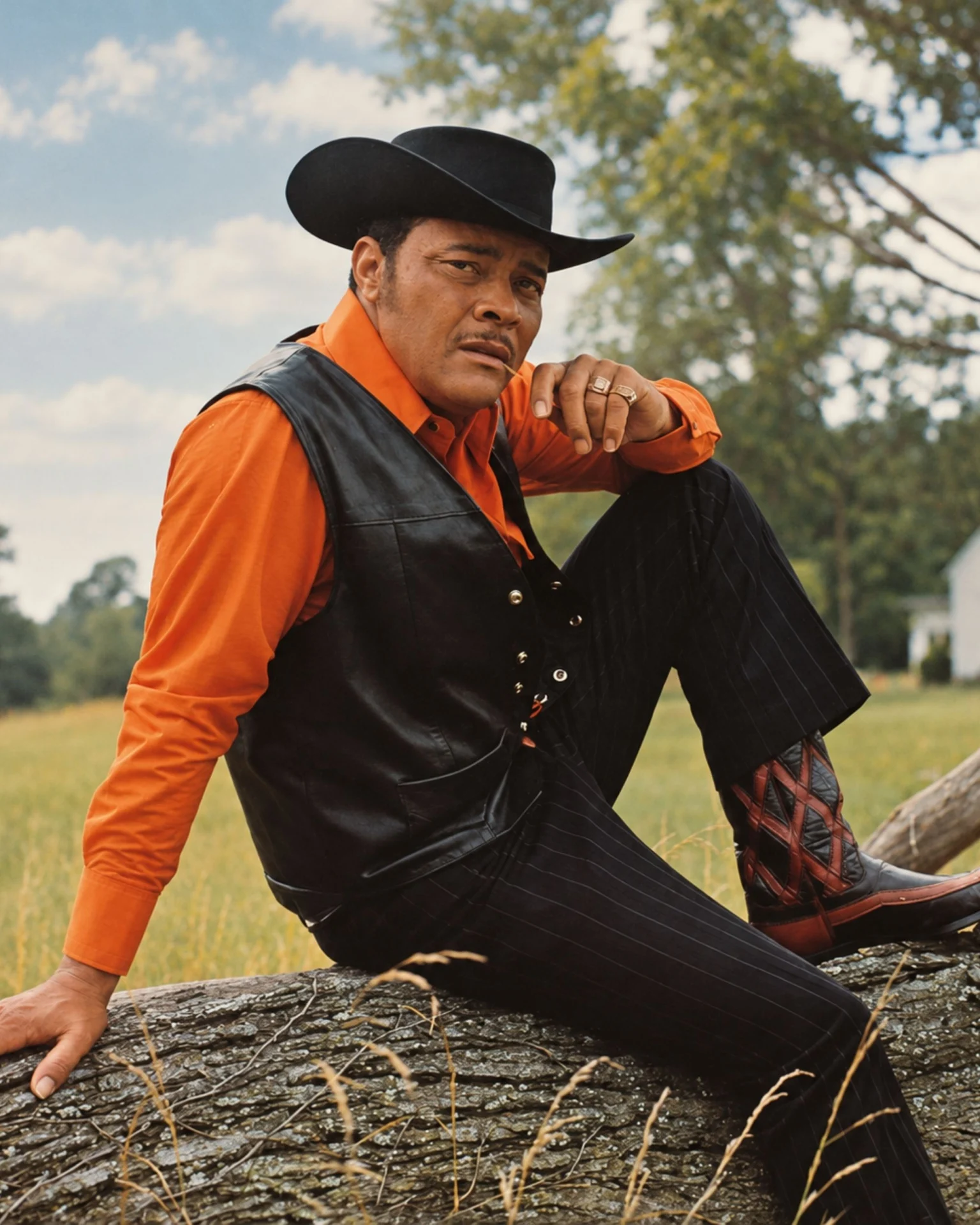
He stepped on the toy in the dark. It was only a two-dollar piece of plastic on the floor, but for a father who had already lost his lungs and his paycheck, that tiny object became the reason to stay. Stoney Edwards knew this moment from the inside before he ever put it into a song.
Born Frenchy Edwards in Seminole, Oklahoma, during the Depression, he came from a world where work came before dreams. He moved west and took the jobs that kept food on the table. Janitor. Truck driver. Cowboy. Machinist. Forklift operator. At night he carried the voices of Lefty Frizzell, Bob Wills, and Merle Haggard through Bay Area clubs, but no record label knew his name yet.
Then a steel refinery tank nearly erased everything.
In 1968 Edwards was trapped inside a sealed tank at the refinery and suffered severe carbon dioxide poisoning. He survived, but his old life did not. Heavy work was no longer possible. His wife and children still needed him to provide, and the body he had always trusted could not answer the call. The paycheck vanished. So did the belief that hard labor would always be enough.
That fear became the song.
That song was never a clever Nashville trick. It was one poor man’s crisis made small enough to fit inside a doorway.
“A Two Dollar Toy” tells the story of a father who believes his family would be better off without him. He is ashamed. He is broken. He starts to leave. Then his foot comes down on a cheap toy on the floor, and he sees what he would be walking away from. No speech. No miracle. Just a child asleep in the house and a reminder that he still belonged there.
Country music did not find Edwards until after the accident had stolen his strength. In 1970 he helped organize a benefit for the ailing Western swing legend Bob Wills. A lawyer with Capitol Records connections heard him sing at that event. Within months Edwards was recording for the label.
His first album was called A Country Singer. That plain title sounded like a declaration. His records carried a hard country sound shaped by real work and real damage. He did not sound like someone acting blue-collar for a microphone. He sounded like someone who had punched a clock until his body said no.
In the 1970s “She’s My Rock” became a Top 20 country hit and “Mississippi You’re on My Mind” followed. Edwards became one of the most visible Black country singers after Charley Pride, but his story never looked like a clean industry breakthrough.
It began in a tank. A hospital room. A house full of children. A father scared enough to think about leaving.
Those records carried that weight. Even when the songs were not autobiographical, the voice had lived through work, sickness, and money pressure. Edwards knew what it meant to lose a job and keep moving. He knew what it meant to fear failure and remain a father anyway.
Stoney Edwards never entered country music through glamour. He came through work clothes, bad lungs, and a tiny toy on the floor that reminded him what kind of man he wanted to be. The song born from that breaking proved he still had something left to give. That is the truth that still cuts deep. Country music found Stoney Edwards only after life had nearly broken him, and the song he made from that breaking became his quiet way back to himself.