
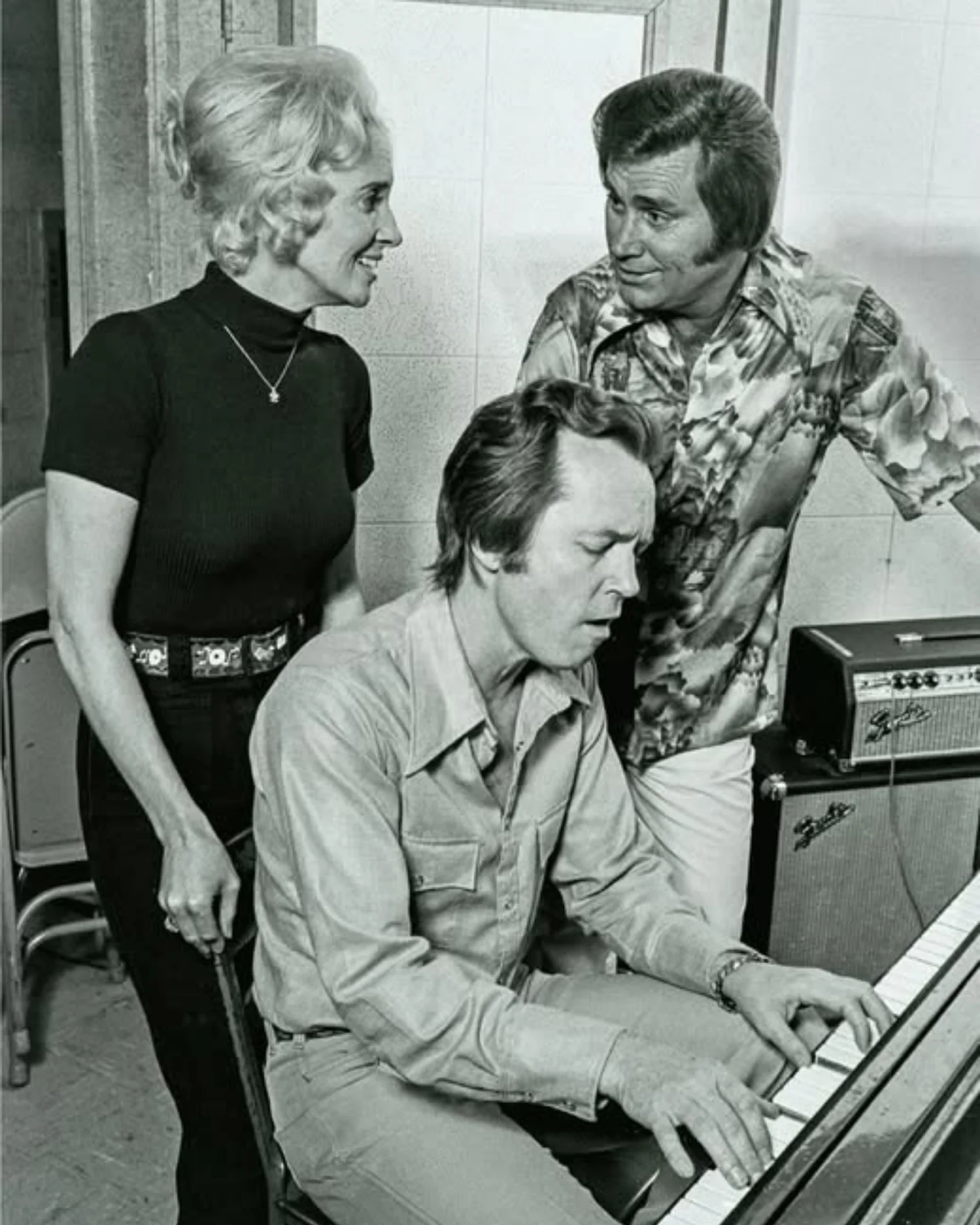
Billy Sherrill was playing piano for rock and blues bands and scraping by on about $25 a week. Then a single envelope arrived in the mail. Inside was a royalty check for $4,000 from a song he had written that ended up as a B-side. He looked at the number and felt the ground shift beneath him.
I was in the wrong end of this thing
That realization sent him packing his bags for Nashville, Tennessee. He would never earn a living onstage again. Instead he would become the architect behind some of country music’s most unforgettable records.
Raised in Phil Campbell, Alabama, Sherrill grew up playing piano at his father’s evangelist revivals and absorbing blues and country radio. He later played in rock and R&B bands. But after that $4,000 check arrived, the economics became crystal clear. Playing music for $25 a week was a poor trade compared to writing songs and producing records. He moved to Nashville and landed a job at Sam Phillips’ studio, gaining engineering experience. When Phillips closed that operation, Epic Records hired Sherrill as a staff producer in 1963.
At first, he took on acts other producers avoided. That changed when he co-wrote Almost Persuaded for David Houston. The song hit number one for nine weeks in 1967 and won Grammy awards. Suddenly Sherrill had leverage. Then Virginia Wynette Pugh walked into his office. He signed her, renamed her Tammy Wynette, and together they created twenty number one hits including I Don’t Wanna Play House and Stand By Your Man. Sherrill wrapped her voice in dramatic strings and arrangements, making her pain feel both intimate and massive.
In the early 1970s, George Jones followed Sherrill to Epic. Critics complained about Sherrill’s polished, string-laden productions on Jones’s hard country voice. But Sherrill understood drama. He produced The Grand Tour and The Door, and then the song Jones thought was too morbid to sell—He Stopped Loving Her Today. It revived Jones’s career and became a country classic.
I liked making records because I could make something that would outlive me
Sherrill later said. He worked with Charlie Rich, Johnny Paycheck, Tanya Tucker, and David Allan Coe, becoming a central figure in 1960s and 1970s Nashville production. In 2010, the Country Music Hall of Fame inducted him. The lesson from that first royalty check had become a lifelong blueprint: stay behind the glass and build records that will last.