
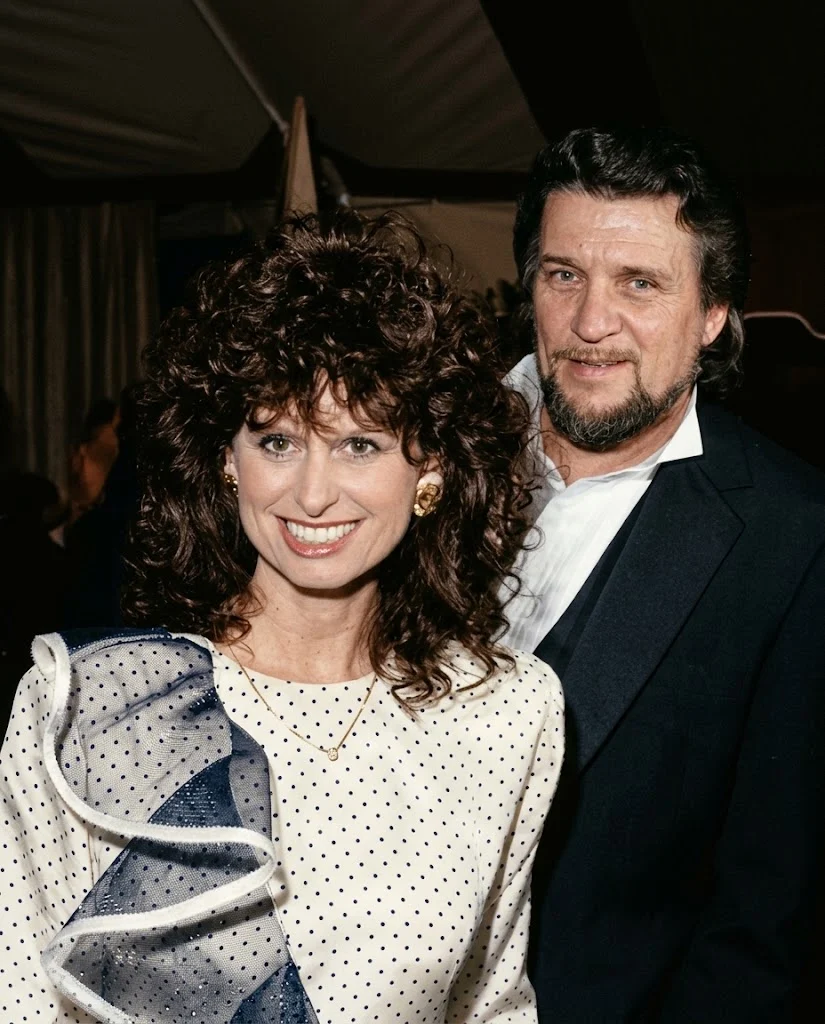
On February 13, 2002, the outlaw who had spent decades rebelling against Nashville sat safe in his home in Chandler, Arizona. Jessi Colter held his hand until the end, closing a thirty-three-year chapter of loyalty that began when his road life had already cost him three marriages.
Before that final quiet moment, the music had roared for years. Waylon Jennings built a reputation as a pioneer who refused to play by Nashville’s polished rules. The same rebellious spirit also left broken relationships behind him, and he poured that heavy reality into early records like “This Time.” That honesty helped shape the Outlaw Country movement he would later help lead.
The industry saw an untamable force, a man who seemed destined to burn out on his own terms. Then, on October 26, 1969, in a church in Phoenix, he married Jessi Colter, a talented artist who understood the demands of stage life.
Colter did not try to quiet his music, change his wardrobe, or smooth his rough edges. She offered the steady ground he had never found on tour. That partnership carried them into the studio and into history.
In 1976, Jennings, Colter, Willie Nelson, and Tompall Glaser drove Wanted! The Outlaws to become the first country album in history to reach Platinum certification. They shared stages and released duets like “Storms Never Last,” a song about weathering dark days that mirrored their own devotion.
The real test came away from the microphones. During the peak of his fame in the late 1970s and early 1980s, Jennings fell into a devastating cocaine addiction that threatened everything he had built.
It took immense, quiet endurance for Colter to pull him through those years. She watched him fight his darkest demons, endured the chaos of addiction, and stood beside him until he chose sobriety in 1984 and retreated to Arizona to break the habit for good.
The artist who spent his career fighting establishment control willingly surrendered his life to her. He openly credited Colter as the reason he survived his own massive success.
“He spent his life fighting control, then found strength in surrendering to the woman who stayed.”
When years of hard living caught up with him, their bond deepened. Jennings suffered severe complications from diabetes in his later years, ultimately losing mobility and the ability to perform. The leather-clad renegade of the 1970s became an aging man in a wheelchair, but Colter never left her post.
His outlaw image remains stamped on American music, immortalized in Platinum records, iconic television appearances, and Country Music Hall of Fame exhibits. Fans will always remember his booming baritone and the driving rhythm of a leather-bound Fender Telecaster.
Yet the quieter truth is this. The legend was made by rebellion, but the final peace was made by a woman who stayed when the music stopped.