
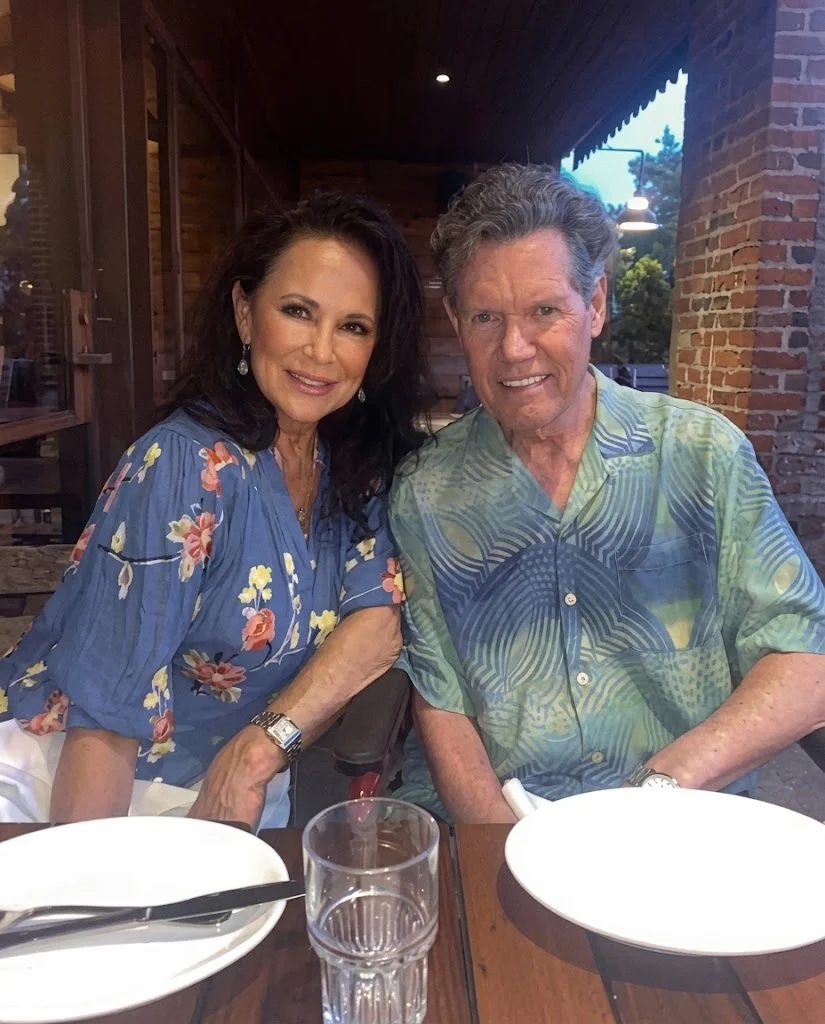
One faint squeeze of a hand changed everything.
In the summer of 2013, Randy Travis lay motionless in a Texas hospital bed after a severe viral heart infection caused a massive stroke. The country music baritone who once filled arenas was trapped in a coma. Doctors told his family that his chance of survival was only one to two percent. They also spoke about removing life support.
Mary Davis stepped close to his bedside. She asked him to show her a sign if he wanted to keep fighting. Then she felt his hand press weakly against hers. That small movement became a powerful refusal. She told the medical team no.
She felt his hand press weakly against hers, and that tiny squeeze became her answer.
The road ahead was brutal. The stroke left Travis with severe aphasia, a condition that robbed him of the ability to speak, read, and write. His right side was also paralyzed. Recovery was measured in hours of therapy, not applause. He worked to move a toe, stand under his own weight, and make even a simple vowel sound.
During that exhausting rehabilitation, Travis and Davis married in March 2015. Their vows were not only spoken in a ceremony. They were lived out in quiet rooms, therapy clinics, and long stretches of patience. The phrase sickness and health became daily work.
Davis learned to read his frustration and joy through a furrowed brow or a shift in his eyes. When the couple returned to public life, she held his hand tightly and answered questions for him. She protected his dignity while carrying the emotional weight of his recovery.
That invisible devotion reached its most public moment in the fall of 2016. Travis was inducted into the Country Music Hall of Fame during a Medallion Ceremony in Nashville. Many expected him to remain seated while Garth Brooks welcomed him and Davis spoke on his behalf.
Instead, Travis rose. Guided by Mary, he moved slowly toward the microphone. The room fell silent. Then he sang the classic hymn Amazing Grace. The melody carried through the space, showing how music can reach where damaged speech centers cannot.
Every note on that stage carried the weight of thousands of hours of therapy and a wife who refused to let the music end.
His platinum records and chart-topping songs had already secured his place in country music history. But his greatest legacy was written in the quiet hours after a coma, built on love, stubborn hope, and a hand squeeze that preserved one of the genre’s most enduring voices.