
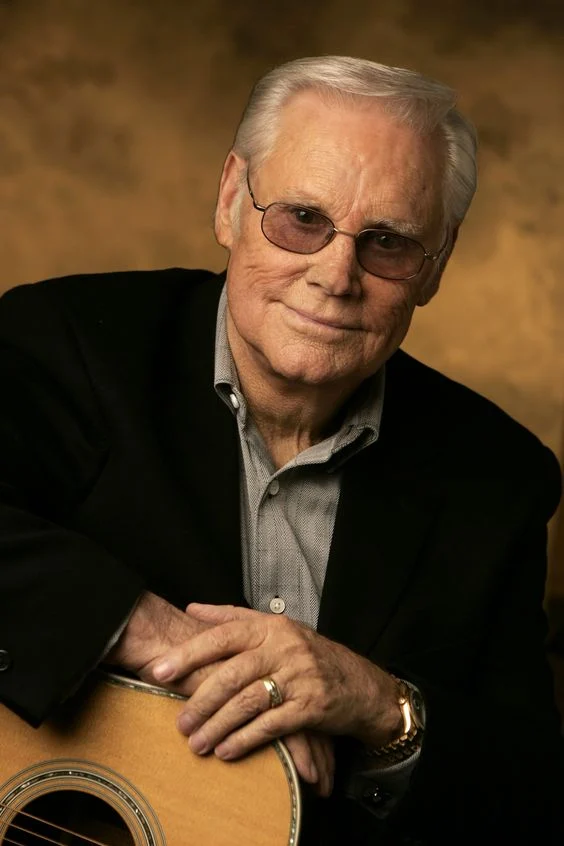
The moment the truth arrives in George Jones’ signature masterpiece, it lands like a thunderbolt in a quiet room. The man has stopped loving her because he has died. A wreath sits on his door. They will carry him away soon. That devastating revelation, delivered with the weight of a three-minute novel, has cemented “He Stopped Loving Her Today” as the most heartbreaking story in country music history.
Released in 1980 on the album I Am What I Am, this track did not simply climb the charts. It redefined what a country song could accomplish. It turned a funeral into a love story. It made listeners feel the ache of unrequited devotion across decades. And it rescued a troubled legend from the brink of obscurity, giving George Jones a second act that would forever change his legacy.
He stopped loving her today. They placed a wreath upon his door. And soon they’ll carry him away.
Jones delivered those lines with a voice that sounded like it had lived through every syllable. His baritone carried the weight of his own battles with substance abuse and heartbreak. The track became his redemption. At a time when his career was fading and his personal life was unraveling, I Am What I Am arrived as a defiant statement of survival. Producer Billy Sherrill crafted a lush soundscape that blended traditional country sorrow with orchestral grandeur. The result was a comeback that defied expectation.
What makes the recording endure lies in its restraint. The arrangement never overpowers the story. An acoustic guitar opens the song with a gentle strum, setting a somber stage. The steel guitar weeps underneath, its crying tones echoing the narrator’s grief. A piano moves through the verses with soft, introspective chords, as if the instrument itself is mourning alongside the listener. When the string section swells during the chorus, it does not shout. It elevates. The drama becomes cinematic without ever losing its human heart.
The song was written by Bobby Braddock and Curly Putman, two songwriters who understood the power of narrative economy. Every line serves a purpose. The man keeps her picture on his wall. He goes half crazy now and then. He keeps letters dated 1962 with every “I love you” underlined in red. The details accumulate like dust on a neglected photograph. When the narrator visits him and sees no tears, when he is dressed up to go away for the first time, the listener knows something has shifted. The twist arrives with devastating precision. He stopped loving her because he stopped living.
The impact of this single track cannot be overstated. It won the Country Music Association’s Song of the Year in both 1980 and 1981, a feat rarely accomplished. It earned Jones a Grammy for Best Male Country Vocal Performance. Critics began referring to it as the gold standard for storytelling in the genre. Artists who followed, from Alan Jackson to Randy Travis, have pointed to this song as a benchmark for emotional authenticity.
For listeners who find themselves moved by this level of emotional depth, the journey does not have to end here. Johnny Cash captured a similar loneliness in Sunday Morning Coming Down, a Kris Kristofferson ballad that dwells on introspection and regret. Waylon Jennings offered vulnerability with Amanda, a love song that balances tenderness with strength. Dolly Parton wrote I Will Always Love You as a heartfelt farewell long before it became a pop phenomenon. Brad Paisley and Alison Krauss created Whiskey Lullaby, a haunting duet about love and loss that echoes the same tragic resonance. And Garth Brooks delivered If Tomorrow Never Comes, a reflective meditation on the fleeting nature of life and affection.
George Jones once said that if he could sing a song the way he felt it, people would believe him. With He Stopped Loving Her Today, he did more than that. He made the world feel the weight of a love that never faded until life itself faded away. The song remains a cornerstone not just of the I Am What Am I album but of the entire country music tradition. It reminds us that the most powerful stories are often the saddest ones and that a simple melody, when matched with truth, can transcend time, genre, and generation.