
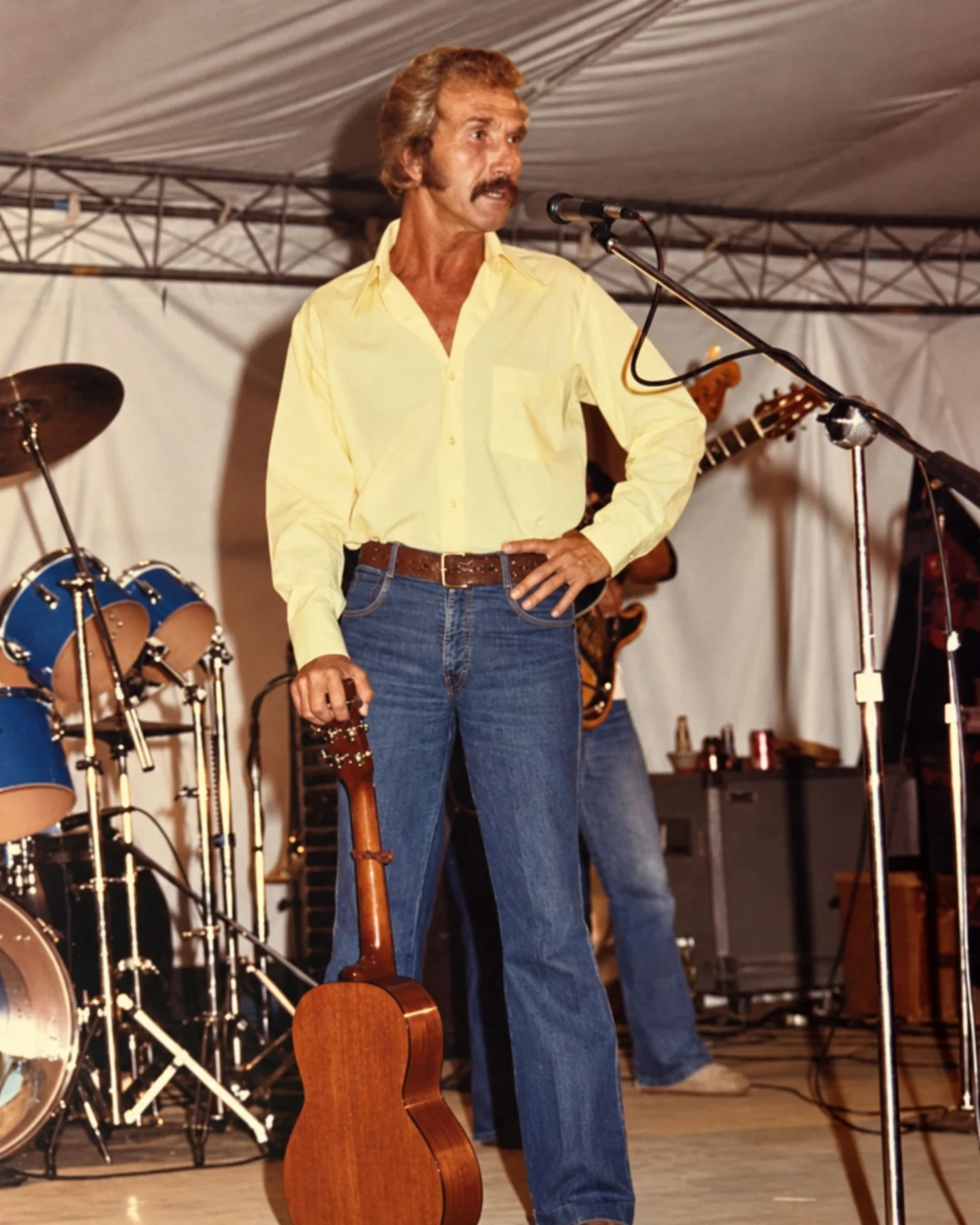
It was a sound nobody planned to make. A sound that should have been erased. But when a faulty transformer in a Nashville recording console distorted Grady Martin’s guitar tone during a Marty Robbins session, something extraordinary happened. Instead of stopping the take, Robbins and engineer Glenn Snoddy decided to keep it. That broken sound on Don’t Worry became the accidental birth of fuzz guitar.
It should have been a ruined take. Instead, they kept it.
When the single was released in 1961, listeners were captivated. They asked what instrument had produced that strange, compressed noise. Musicians across Nashville wanted the same effect for their own records. But there was a problem. The sound belonged to a damaged piece of circuitry, and when the console finally stopped producing it, Snoddy could not recreate it on demand.
That limitation sparked a revolution. Snoddy worked with Revis Hobbs to build a transistor circuit that could reproduce the distortion deliberately. Their creation was the Maestro FZ-1 Fuzz-Tone, one of the first commercially available fuzz units. It turned a studio accident into a controllable effect.
But the story did not end in Nashville. A few years later, Keith Richards used a Maestro on the Rolling Stones’ (I Can’t Get No) Satisfaction, transforming fuzz from a country session mistake into one of rock guitar’s most defining sounds. What began as a faulty transformer became the sound of youth, frustration, and electric rebellion.
Marty Robbins had set out to make another country record. What survived was not just a hit but a mistake that engineers learned to manufacture. A fault in the system gave the world a new kind of dirt. And long after that session ended, the damaged sound kept moving from country studios into rock arenas, leaving a legacy that generations of guitarists still chase.