
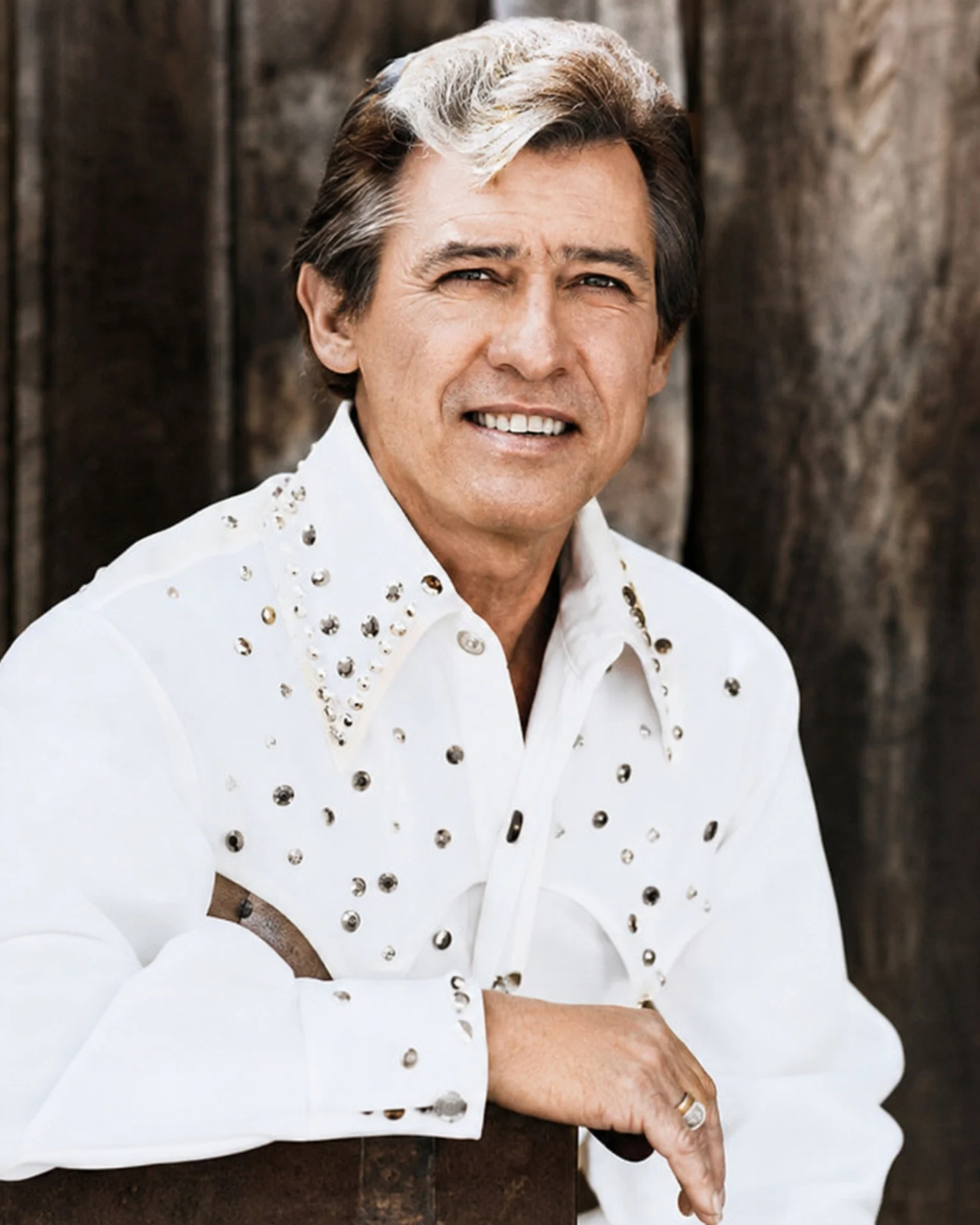
Cal Smith finally took the microphone as a lead singer. He was no longer a young man. He was in his late 30s and had already spent years playing guitar behind Ernest Tubb. But when his song “Country Bumpkin” became one of the biggest hits of 1974, it was clear that his time had come. The former sideman had earned his place in the spotlight.
Smith was born Calvin Shofner in Oklahoma and grew up in California. He worked clubs and radio before joining Ernest Tubb’s Texas Troubadours in the early 1960s. For more than a decade, he stood on stage as a guitarist while other singers took the lead. He knew the road and the bandstand, but his own recording career moved slowly.
By 1972, Smith had only modest chart success. Then Bill Anderson gave him “The Lord Knows I’m Drinking,” a song that mixed humor and judgment. It told the story of a drinking man criticized by a churchgoing woman whose own behavior was not perfect. Released late that year, it became Smith’s first No 1 hit.
The biggest moment came next. In December 1973, Smith recorded Don Wayne’s “Country Bumpkin” at Bradley’s Barn. The song followed a country boy through love, marriage, fatherhood, and loss. In just a few verses, it covered a lifetime. Smith sang it with warmth and weight, never letting it become overly sentimental. As one listener might say,
He sang it like someone telling a life story simply because it had to be told.
Released in 1974, “Country Bumpkin” soared to No 1. It also won Single Record of the Year and Song of the Year at the Academy of Country Music Awards. The Country Music Association also named it Song of the Year.
Smith proved that his breakthrough was no accident when “It’s Time to Pay the Fiddler” also reached No 1. He had become a star, but his path was different from most. He had waited and worked, and his success felt earned.
For a man who had spent years watching others from behind a guitar, the recognition was sweet. The microphone had finally moved toward him, and he was ready. Cal Smith’s story is a reminder that sometimes the best songs come from those who know the value of waiting.
The microphone had finally moved toward him.