
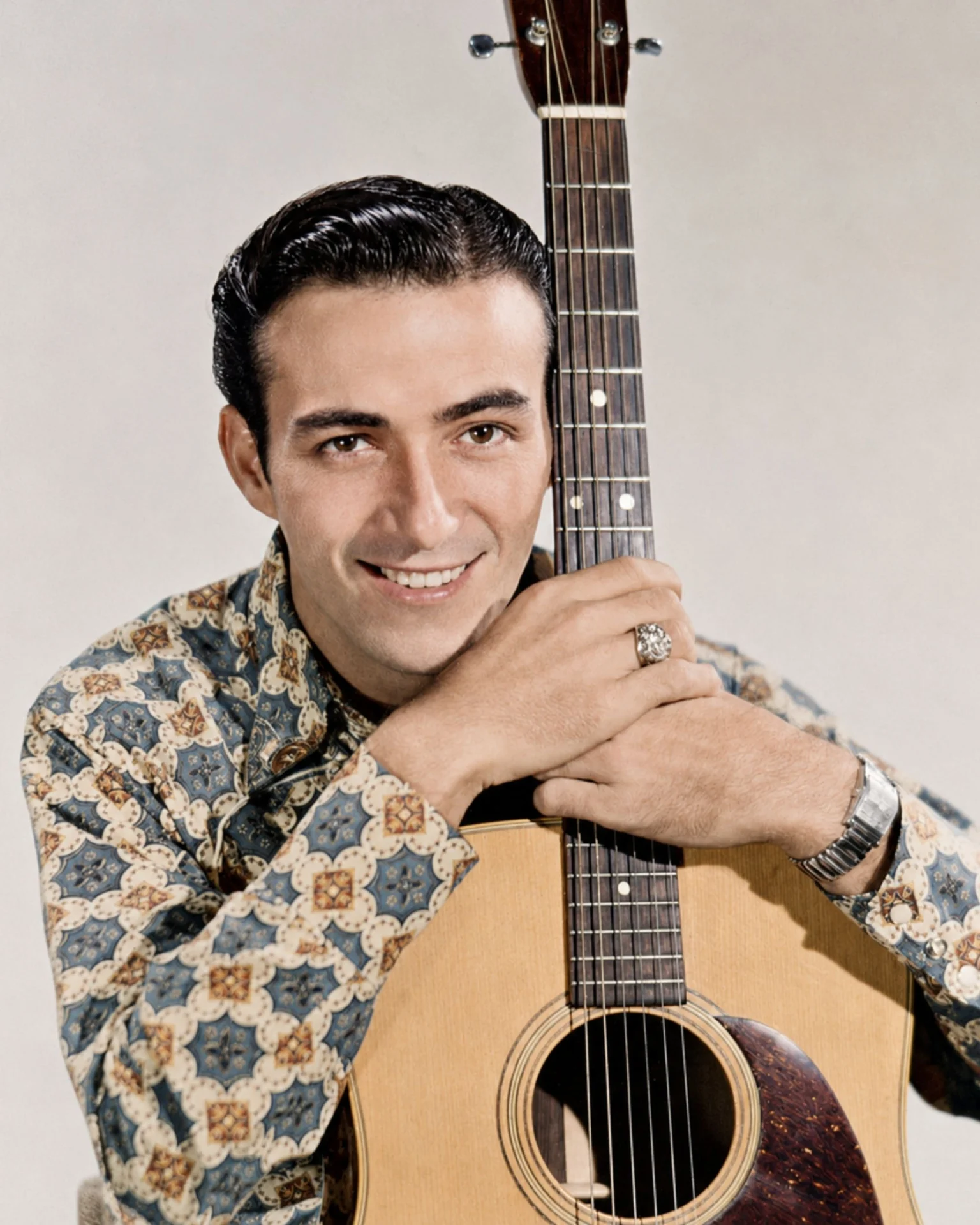
On December 9, 1996, country music lost one of its most magnetic voices in the quietest way. Faron Young sat alone in his Nashville home. He was sick. He was angry. And he was ready to leave. The next day he was gone.
But the man who made “Live Fast Love Hard Die Young” sound like a life plan did not start in silence. He came from Shreveport, Louisiana, and the Louisiana Hayride stage. His voice was built for neon sadness. His personality could fill any room. In the 1950s, he was country music’s brightest young star. Handsome, loud, funny, and volatile. He was impossible to ignore.
Then came 1955. “Live Fast Love Hard Die Young” became his first number one hit. The song stuck to him like a second skin. It sounded less like a song and more like a promise. Or a threat.
The title felt like a warning he was willing to outrun
Faron carried that energy everywhere. Onstage and off, he was charm and temper mixed together. Parties. Stories. Wild nights. The kind of danger that draws people in. But there was more to him than noise. When he sang about loneliness, it felt real. It felt like a man awake at four in the morning while the rest of Nashville slept.
In 1961, he gave Willie Nelson one of his biggest breaks. Faron recorded “Hello Walls,” a song Willie had written but could not get heard. The record became a hit. It helped carry Willie into Nashville.
Faron heard the song and turned it into a major hit before the world knew Willie’s name
Years later, “It’s Four in the Morning” brought Faron back near the top. That song captured his gift. He could make heartbreak sound immediate. Unpolished. True.
But the town changed. By the 1980s and 1990s, country music wanted younger faces and cleaner sounds. Older stars were praised in memory but pushed aside in practice. Faron felt that deeply. He complained that the business had forgotten the people who built it. For a man who once seemed unstoppable, being treated like the past was a wound that would not heal.
His body began to fail too. Friends said he was depressed over serious health problems. Reports mentioned emphysema and cancer. The man who had once seemed larger than life was now facing pain and fear.
None of the old charm could protect him from illness or isolation
On December 9, 1996, at his Nashville home, Faron Young shot himself. A suicide note was found. He died the next day. He was sixty-four.
The old motto sounded different then. In 1955, “Live Fast Love Hard Die Young” was a young man’s anthem. Forty years later, it felt darker. Faron had not died young. He had lived long enough to feel the industry move on. He had lived long enough for his body to give out and the silence to grow louder than the crowds.
In 2000, he was inducted into the Country Music Hall of Fame. The honor came too late for him to stand and receive it. The voice was gone. The rooms had closed. The anger and loneliness could not be undone.
But the music remained. “Hello Walls” still echoes with Willie Nelson’s early story. “It’s Four in the Morning” still holds that sleepless ache. And “Live Fast Love Hard Die Young” still preserves the young Faron. Bright. Reckless. Alive.
In the end, the deepest part of this story is not only that Faron Young died by suicide. It is that the image could not save the man who carried it. Behind the rowdy legend was a singer who understood lonely rooms better than anyone. One of country music’s loudest men left behind the sound of silence. And a voice still echoing through songs that know how loneliness feels when there is no one left to answer.