
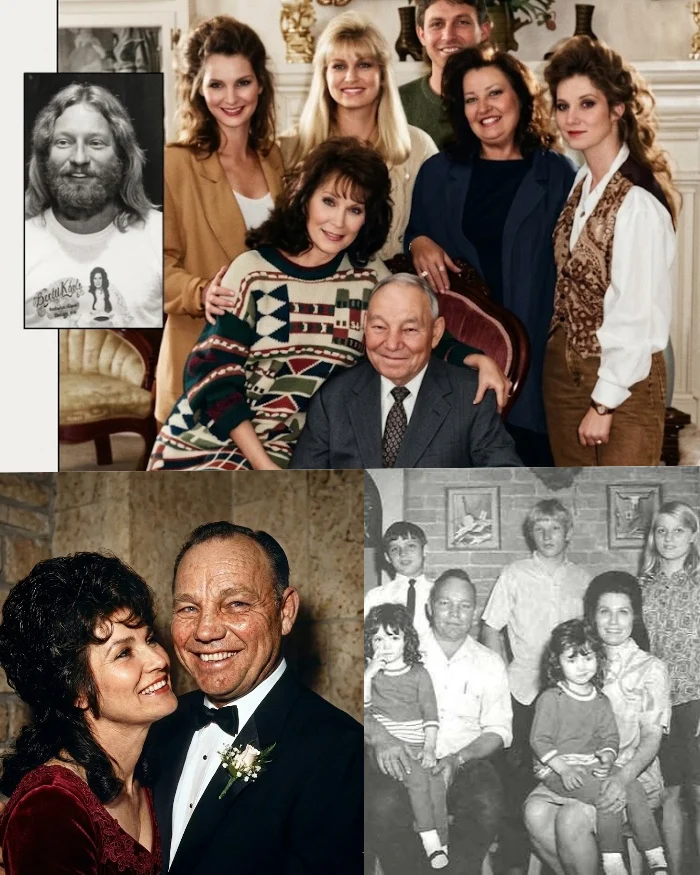
The Grand Ole Opry regular could often be found with dirt beneath her fingernails and a cotton work shirt hanging loose over her shoulders. By 1966 Loretta Lynn had become one of Nashville’s most visible stars, yet her proudest possession was not a gold record. It was a battered mill town hidden along the Duck River.
In 1966, as her career was exploding, Loretta and her husband Oliver “Doolittle” Lynn took a drive through the rolling hills of Humphreys County, Tennessee. What they found was Hurricane Mills, an antebellum plantation settlement that had slipped into quiet decay. The purchase covered more than a thousand acres of timber and bottomland, along with a late nineteenth century manor house, a water-powered gristmill, a general store, and the community post office. An entire rural town suddenly belonged to one country family.
Loretta’s reasons had nothing to do with real estate ambition. She carried the memory of an impoverished childhood in Butcher Hollow, Kentucky, where she grew up in a mountain cabin without running water or electricity. The more famous she became, the more photographers and reporters camped near her family. She wanted a place where her young children could run outdoors, fish near the mill, and never feel trapped inside the music industry’s goldfish bowl.
Hurricane Mills gave a coal miner’s daughter the quiet boundary her family needed to survive sudden stardom.
Off the tour bus, Loretta traded bright stage dresses for denim and cotton work shirts. She checked livestock, tended the property, and helped restore a place that had nearly collapsed. Early deeds and purchase agreements show the Lynns financed the initial parcel through tightly structured mortgages, pooling road earnings while taking on the federal post office. They repaired the mill’s foundation beams, brought the plantation house porches back to life, and reopened the general store for neighboring farming families.
Over the following decades the ranch expanded to several thousand acres. The Lynns built campgrounds, hosted amateur motocross championships, and turned the old gristmill into a museum filled with stage dresses, mining memorabilia, and relics from Loretta’s Appalachian youth. Rather than closing the gates, she invited her listeners into the front yard, welcoming fans to music festivals and personal exhibits.
When heartbreak struck, including the 1984 loss of her eldest son Jack Benny in the swollen waters of the Duck River, Hurricane Mills remained the emotional center of her world. It was the soil where she weathered every storm and kept the independent spirit that defined her art.
Loretta Lynn died peacefully at the plantation home on October 4, 2022, at age ninety. The world honored a pioneer who broke down doors for generations of women. Yet beneath all the accolades and gold records, Hurricane Mills stood as her greatest personal achievement. The original purchase documents, renovation records, and private agreements show how a neglected mill town became a working sanctuary. They remain a remarkable record of a woman who defended her home, proving that no matter how bright the spotlight grew, a coal miner’s daughter could always protect her family.