
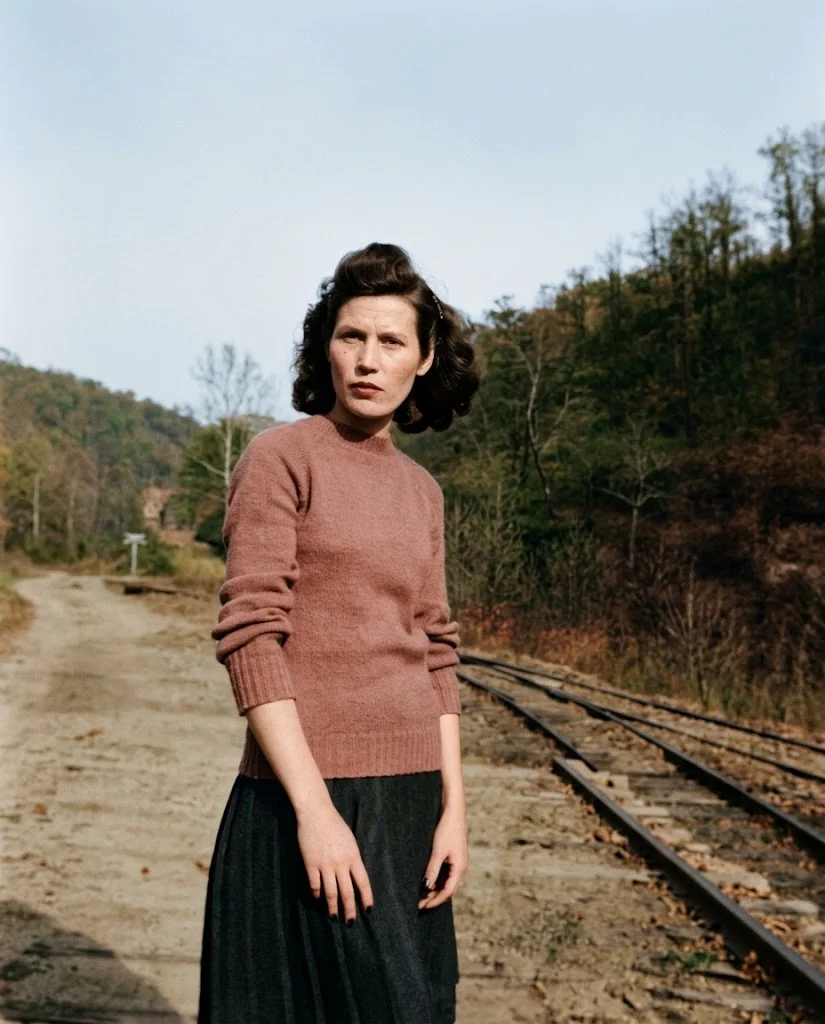
The hands that scrubbed laundry in freezing water and chopped firewood for a tiny Washington cabin would one day strum a $17 guitar into legend. Long before Nashville, before the Grand Ole Opry, before she became the voice of working women everywhere, Loretta Lynn was a teenage mother in Custer, Washington, singing just to survive the endless chores.
Uprooted from the familiar hills of Butcher Holler, Kentucky, she followed her husband Doolittle across the country to a logging community where she felt utterly alone. By age twenty, she was raising four children in a modest wooden cabin, miles from everything she knew.
Her first audience was her kids. Between washing clothes by hand in winter water and kneading dough, she would hum softly to ease the physical exhaustion. Music was not a career ambition — it was a fragile tether to her own identity before motherhood consumed her completely.
But her husband noticed the unique way her voice carried through their small home. In a move that would alter American music history, Doo bought her a $17 Harmony guitar from a Sears catalog. The cracked, calloused hands slowly learned to press down on cheap steel strings under the warm glow of a single kitchen lightbulb.
That $17 instrument became her life raft. She didn’t write about idealized romance — she wrote about the unpolished reality of being a working-class woman. Her earliest lyrics were scribbled on grocery lists and scraps of wrapping paper while she stood by the stove.
I wrote about what I knew — the fights, the bills, the lonely nights. I didn’t know any other way to write.
Those kitchen-sink drafts eventually became too big for the cabin. Doo pushed her to perform at local grange halls and Bill’s Tavern in Blaine, Washington. That momentum caught the attention of Norm Burley, who helped finance a small independent label called Zero Records.
In early 1960, she recorded her debut single, I’m a Honky Tonk Girl. Without major label support, the couple packed their old car, left the kids with family, and spent three grueling months driving across the country. They stopped at every small-town country radio station they could find, sleeping in the car and surviving on bologna sandwiches. Loretta walked into stations in a fringed dress she had made herself, handing the record to local DJs and charming them into playing a song from an unknown mother of four.
That self-funded radio tour worked. By the time they reached Nashville, I’m a Honky Tonk Girl was climbing the national charts, securing her a spot on the Grand Ole Opry and a major contract with Decca Records.
Yet even as she built a global empire, she never abandoned the perspective of the girl in the Custer cabin. Her subsequent hits — songs that fiercely tackled double standards, divorce, and the sheer exhaustion of working women — were groundbreaking precisely because they were born from real calluses and genuine struggles.
She forced the music industry to listen to the unfiltered truth of the American housewife. The grandest legacy in country music did not begin in a soundproof recording booth. It started under the glow of a single kitchen lightbulb, on a cheap guitar, somewhere between the laundry and the supper.