
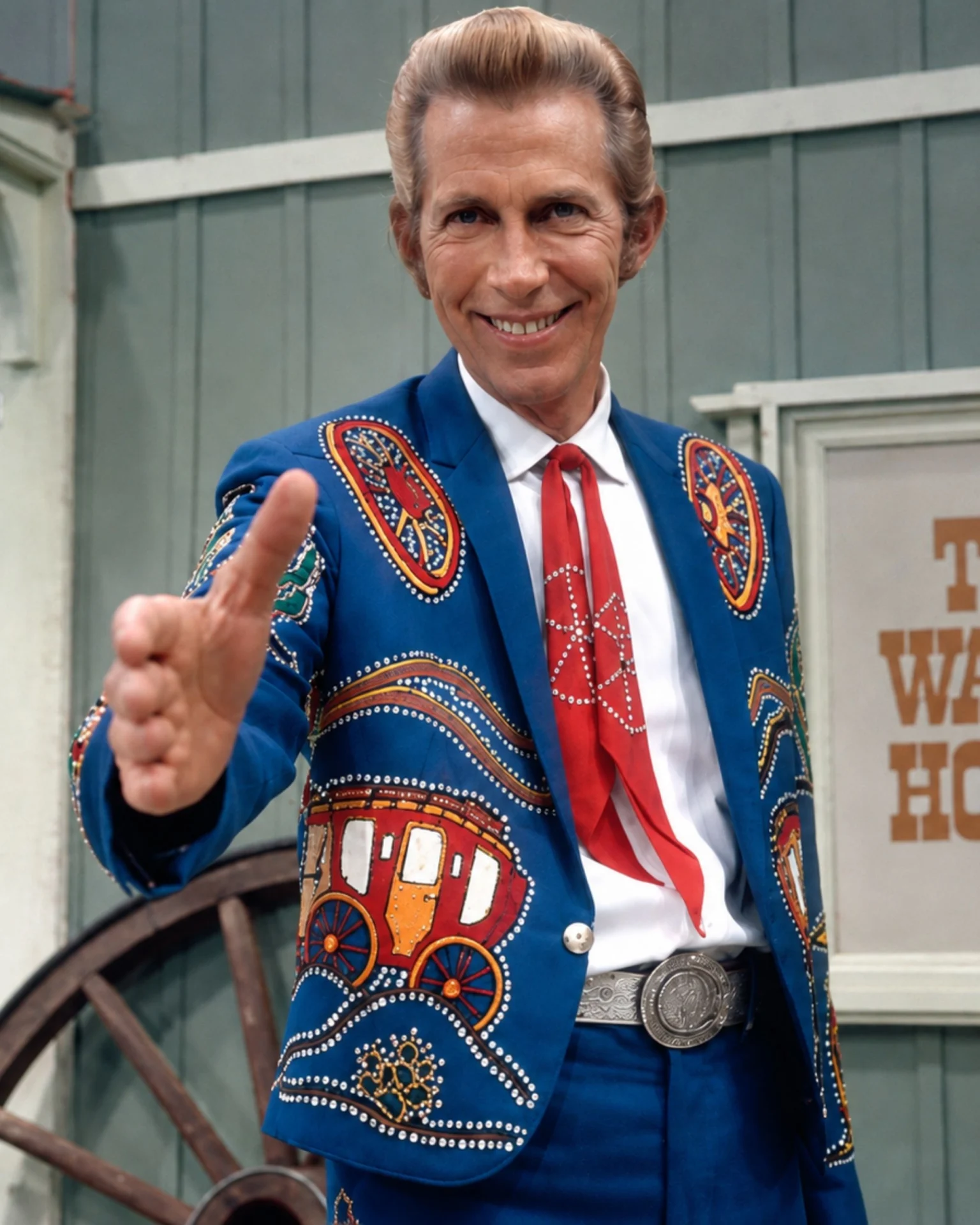
In July 2007, a 79 year old man in a rhinestone suit walked onto the stage at Madison Square Garden and faced a crowd young enough to be his grandchildren. He was not there to relive old glories. He was there to open for the White Stripes. Just one year earlier, he had nearly died.
Porter Wagoner had been a Grand Ole Opry member since 1957. His television show had ended decades before. His biggest hits were behind him. Most of Nashville had already moved on to younger stars. But in July 2006, an aortic aneurysm nearly took his life. Emergency surgery saved him, but the recovery kept him away from the Opry for seven months.
When he returned in early 2007, he told the Los Angeles Times he was desperate simply to get back to work. That was not nostalgia. That was a man who believed the stage was not something you retired from just because the charts stopped making room.
Marty Stuart had grown up watching Porter Wagoner on television. He saw more than rhinestones. He saw country music’s architecture. Before the aneurysm, Stuart approached him about making a new album. After Wagoner recovered, they finished Wagonmaster, his first secular studio album in seven years. Released in June 2007 on Anti-, the album drew strong reviews and fresh attention from listeners far outside the traditional Opry audience.
Then came the strangest booking of his career. In July 2007, Porter Wagoner opened for the White Stripes at Madison Square Garden. The 79 year old country veteran stood before a rock audience and proved there was still power in the costume, the voice, and the songs. It was not a return to the country charts of the 1960s. It was something odder, a bridge between worlds that normally did not speak to each other.
He was not pretending to belong to a new generation. The new generation was being invited to hear what had been there all along.
Wagoner did not have long to enjoy the revival. Later that year, he was diagnosed with lung cancer. On October 28, 2007, he died at 80. His final season did not restore him to the country charts of the 1960s. It gave him something stranger, a new audience arriving just as his life was ending, discovering that beneath the rhinestones was music darker and tougher than they had expected.
The deepest part of this story is not only that Porter Wagoner opened for the White Stripes at Madison Square Garden. It is that one of country music’s old showmen reached that stage after nearly dying the year before. He survived long enough to return to the Opry. Long enough to make one more record. Long enough to walk onto a New York rock stage at 79 and show a room full of strangers that Porter Wagoner had never been only a memory.
The revival came late. But it came while he could still hold the microphone.