
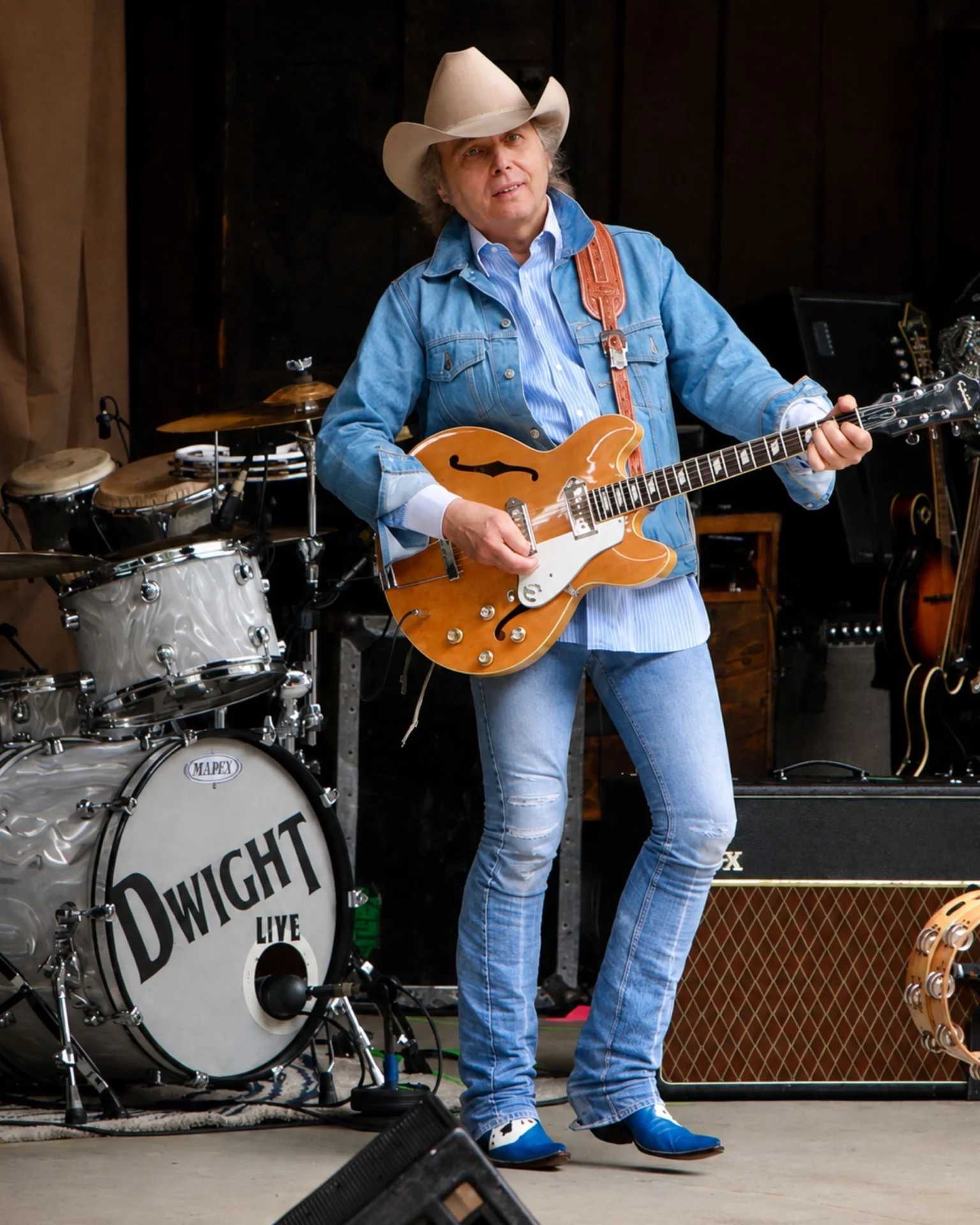
In 1988 the Los Angeles outsider stood beside Buck Owens on “Streets of Bakersfield” and carried one of the architects of the California sound back to No. 1 on country radio.
He was no longer simply borrowing from Bakersfield history because he had helped put one of its architects back at the top of the chart.
Dwight Yoakam arrived in Los Angeles in 1977 with music that sounded deliberately out of step with the moment. Country radio was moving toward polished crossover sounds while Yoakam wanted something leaner and harder from Buck Owens and Merle Haggard and the honky tonk records he had grown up hearing in Kentucky and Ohio.
The Punk Underground Heard Him First
Instead of finding his first audience inside the country establishment, he found one in Los Angeles’ punk and roots underground. Yoakam began playing clubs alongside X, The Blasters and Los Lobos, bringing cowboy boots, acoustic guitar and hillbilly songs into rooms filled with punk and rock fans.
It worked. He later said those audiences responded to the same things he loved in older country with directness, energy and little polish between performer and listener. He even called the approach “cowpunk.”
Cowpunk.
Building A Sound Without Waiting For Nashville
The circuit let Yoakam build a following without waiting for Nashville. With guitarist and producer Pete Anderson he developed the stripped down sound that defined his early records.
A major label still did not come first. Yoakam financed a six song EP himself with Guitars, Cadillacs, Etc., Etc. appearing on the independent Oak Records in 1984 and selling well enough to attract Reprise Records, which expanded it into a full album in 1986.
Then country radio caught up. “Honky Tonk Man” the Johnny Horton song from 1956 became Yoakam’s first country hit. “Guitars, Cadillacs” followed into the Top 5. The album reached No. 1 on Billboard’s country albums chart and eventually went double platinum.
Yoakam arrived alongside Randy Travis as mainstream country began moving back toward traditional sounds. But their routes were very different because Travis came through Nashville while Yoakam came through Los Angeles clubs.
The Circle Completed With Buck Owens
Owens had largely stepped away from recording before their 1988 duet brought him back to country radio and went all the way to No. 1. His records had helped define the California sound Yoakam had been defending from the beginning.
That triumph proved Nashville had not opened the first door for Dwight Yoakam. Los Angeles punk clubs had embraced the country outsider, and he repaid that unlikely beginning by helping a Bakersfield legend shine at the top once more.