
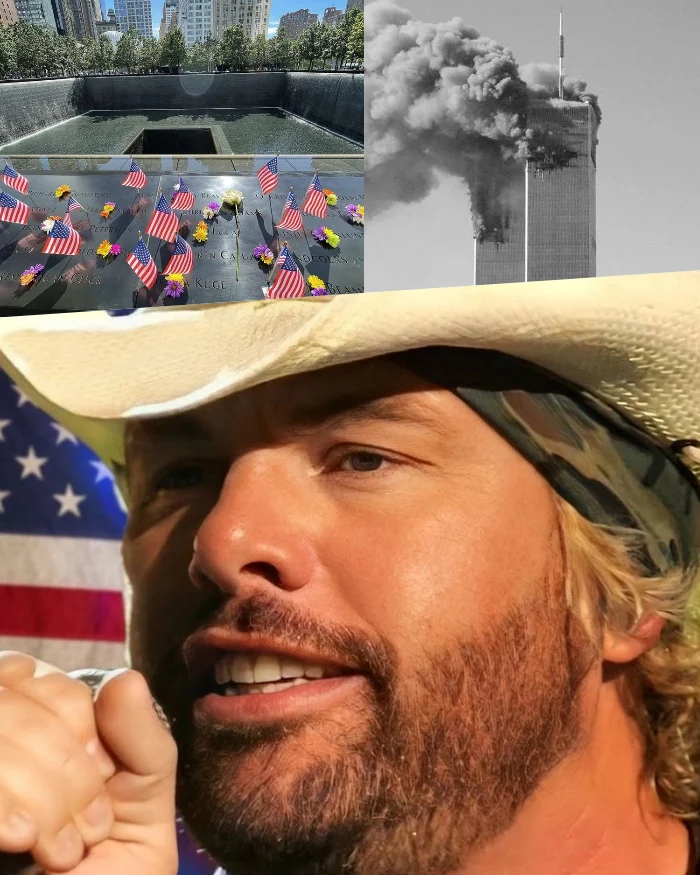
The crash that took Toby Keith’s father did not end the story.
H.K. Covel was an Army veteran who lost his right eye during military service. He came home with a quiet and unyielding sense of duty. In March 2001, a highway crash in Oklahoma killed him. Toby Keith was already a massive country star, but the loss fractured the ground beneath him.
Months later, September 11 broke the world open. Keith’s private grief collided with a national tragedy. Instead of hiding, he reached back into his father’s history and wrote from the perspective of a wounded veteran who still stood watch.
He turned a missing eye into a symbol of vigilance. He turned permanent scars into proof of survival. He turned heartbreak into a unifying force for a shaken America.
“A man who understood the physical price of freedom could speak for a grieving nation.”
The music landed on country radio with blunt and unapologetic force. It dominated the charts and shifted the cultural conversation. But Keith treated the anthem as a promise, not a finish line.
He carried his father’s military legacy onto transport planes. Over decades, he played hundreds of USO shows in Iraq and Afghanistan. He strapped into C-130 aircraft, wore Kevlar and helmets, and flew through danger to reach remote forward operating bases.
Behind the stadium anthems was a grounded reality. When the sound system fell quiet, Keith sat in plywood mess halls and canvas tents with 18 and 19 year old service members. They talked about hometowns, high school football, cold beer, and families waiting back home. He listened where they lived.
He showed them that physical losses were not weaknesses. He showed them those wounds proved someone had fought and survived. He kept returning to the dirt and danger year after year, even as the news cycle moved on.
When Keith passed away in early 2024, the deepest tributes came from veterans who remembered a towering man walking into desert camps with a battered acoustic guitar. He built his legacy as an outspoken defender of the armed forces. His truest tribute was not how loud he sang. It was how far he traveled to look his father’s brothers and sisters in arms in the eye.