
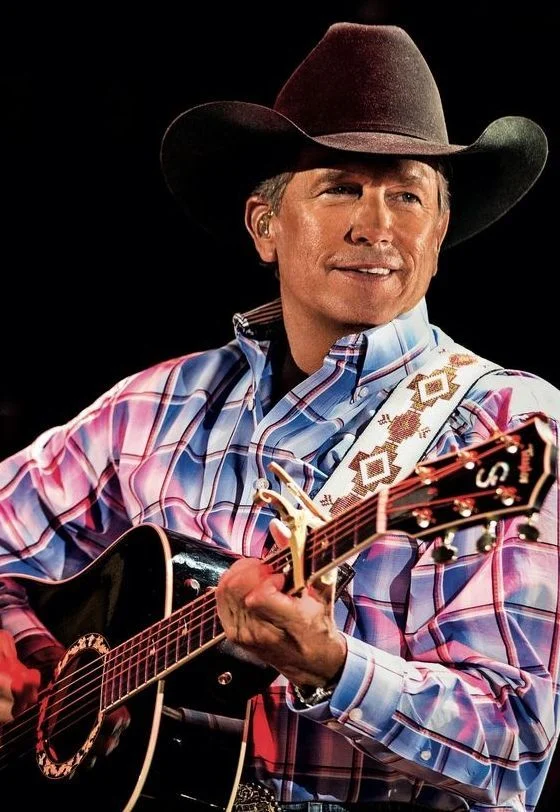
Some moments in music feel like a secret whispered between friends. The final line lands with the quiet grace of a punchline no one saw coming. That wasn’t my chair after all. In that single confession, the entire song snaps into focus, revealing not awkwardness but deliberate charm, not a mistake but a masterstroke of romantic strategy. George Strait built a towering reputation on such subtle turns, and no track showcases his gift for understated storytelling better than this 1985 gem.
The track opens with a snare drum ticking like a heartbeat in the dark. An upright bass hums warmth into the room. Then the steel guitar slides in, not weeping but murmuring, setting a scene that feels less like a recording studio and more like a late night in a Texas dancehall where the floorboards creak and the air smells of beer and promise. This is the sonic fingerprint of mid-eighties Nashville at its finest, captured during the sessions for Strait’s album Something Special on MCA Records.
By this point, George Strait had already claimed his throne as the quiet king of the neotraditionalist movement. Alongside co-producer Jimmy Bowen, he delivered a sound rooted in classic country traditions, a deliberate counterpoint to the pop gloss rising on the charts. In 1985, he earned the CMA Male Vocalist of the Year award. The first single from Something Special became his seventh number one hit, powered not by flashy production but by vocal nuance and the kind of songwriting that leaves room for silence to speak.
The song was written by the legendary duo of Hank Cochran and Dean Dillon, two names synonymous with the craft of country storytelling. They built something structurally audacious, a song with no traditional chorus. The melody repeats subtly, but the lyrics unfold as an unbroken narrative, a one-sided conversation that places the listener directly into the middle of a barroom flirtation.
Strait delivers the opening line as if he is simply speaking to someone across the table. Well, excuse me, but I think you’ve got my chair. There is no grand entrance, no dramatic flourish. The voice is unhurried, buttery, and warm, carrying the polite confidence of a man who knows exactly what he is doing even as he pretends to stumble. The instrumentation mirrors this restraint. The acoustic guitar provides a steady, understated strum. The electric guitar offers sparse fills, like nervous smiles between sentences. The piano introduces a soft honky-tonk trill in the background, a subtle nod to the dancehall setting.
As the conversation progresses, the dynamic swells almost imperceptibly. The hi-hat becomes more present. The rhythm section locks into a relaxed two-step sway. Yet the focus never leaves the story. Yeah, I like this song too, it reminds me of you and me. The listener is invited not to sing along but to lean in, to study the architecture of the interaction like one might study sheet music to grasp the subtle turns of a classical composition.
The genius of the piece lies in its commitment to narrative fidelity. Most great country songs deal in grand heartache or wild celebration. This one captures the exquisite tension of a first impression, the high stakes of the approach, the moment before any real action. It is a micro-story containing all the drama of a three-act play. The twist arrives not as a surprise but as an earned inevitability, reframing everything that came before.
George Strait understood that the greatest romantic gestures are often the simplest. The charm lives in the conversation. The thrill lives in the reveal. The staying power lives in a voice that never needs to shout to be heard. This song, from an album that helped define neotraditional country, remains a high-water mark not just for the King of Country but for the genre itself.
For those seeking similar experiences, consider Randy Travis and Forever and Ever, Amen for its neotraditionalist clarity. Merle Haggard and Today I Started Loving You Again offers the same unhurried pace and conversational phrasing. Alan Jackson and Chattahoochee trades the slow burn for uptempo energy but shares the same commitment to evocative storytelling. Conway Twitty and Hello Darlin opens with a dramatic one-sided conversation that pulls the listener into a private moment. And Vince Gill and I Still Believe in You exemplifies the smooth vocal control that characterizes the finest balladry of the era.
The song offers the listener the rare satisfaction of a story perfectly told. Four minutes of masterful restraint, a quiet reminder that the best songwriting often involves knowing exactly what to leave out.