
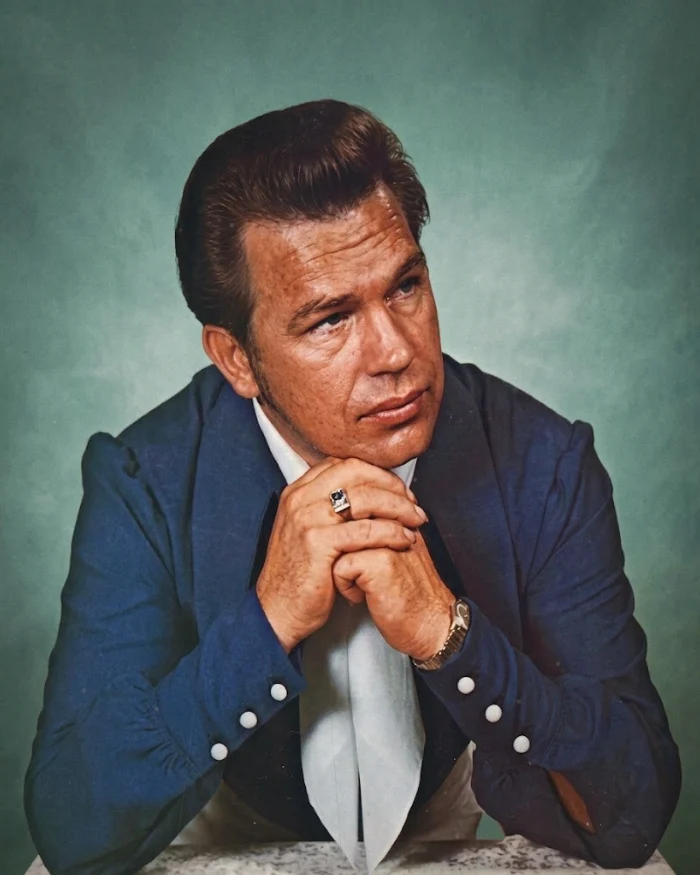
A six-year-old boy dragged cotton sacks through Texas heat while other children learned to read. That child was Gene Watson. He was born into extreme rural poverty in 1943, and his family needed every pair of hands to survive. His small fingers grew rough on hoe handles and cotton thorns. The fields took his childhood, but they also left a deep ache that later lived inside his voice.
Watson did not leave school for a dream. He left school because work paid better than hope. He dropped out in the ninth grade and labored full time. In his late teens he moved to Houston and found a different kind of grind. He became an auto body mechanic and painter. He spent days grinding metal, breathing paint fumes, and repairing wrecked cars. The shop gave his family a paycheck the fields never gave.
Music came as a second job, not a spotlight. Watson sang in Houston nightclubs after long shifts. He formed a band called Gene Watson and The Other Four and played dim honky tonks, including a long run at the Dynasty Club. He washed the grease from his hands and stood at a microphone until early morning for a few extra dollars. His wife and children needed more than one income could bring.
He was not a trained vocalist practicing heartbreak. He was a working man releasing exhaustion through song.
Audiences heard the truth in his voice. That truth carried him beyond the clubs. He recorded regional singles on independent labels such as Wide World and Resco, and small 45s gained radio play. The local buzz helped his managers win a major label contract with Capitol Records. Even then, Watson kept his mechanic tools and his day job. The music business looked fragile next to the steady wage of fixing a dented fender.
Everything changed in 1975 with Love in the Hot Afternoon. The track climbed to Number 3 on the Billboard country chart. At 31, the former cotton field worker and auto body mechanic had one of the biggest country hits in the nation. The demand for his shows finally pushed him onto the stage full time. He went on to record enduring songs such as Paper Rosie and Farewell Party, earning respect as one of the most trusted traditional voices in Nashville.
Even after decades of touring and acclaim, Watson never became a celebrity pose. Long after the Texas dirt gave way to the lights of the Grand Ole Opry, he kept the quiet endurance of a boy who learned sorrow before he learned fame. His voice remained a field of hard labor turned into song.
https://www.youtube.com/watch?v=0k0A-4e6mO0