
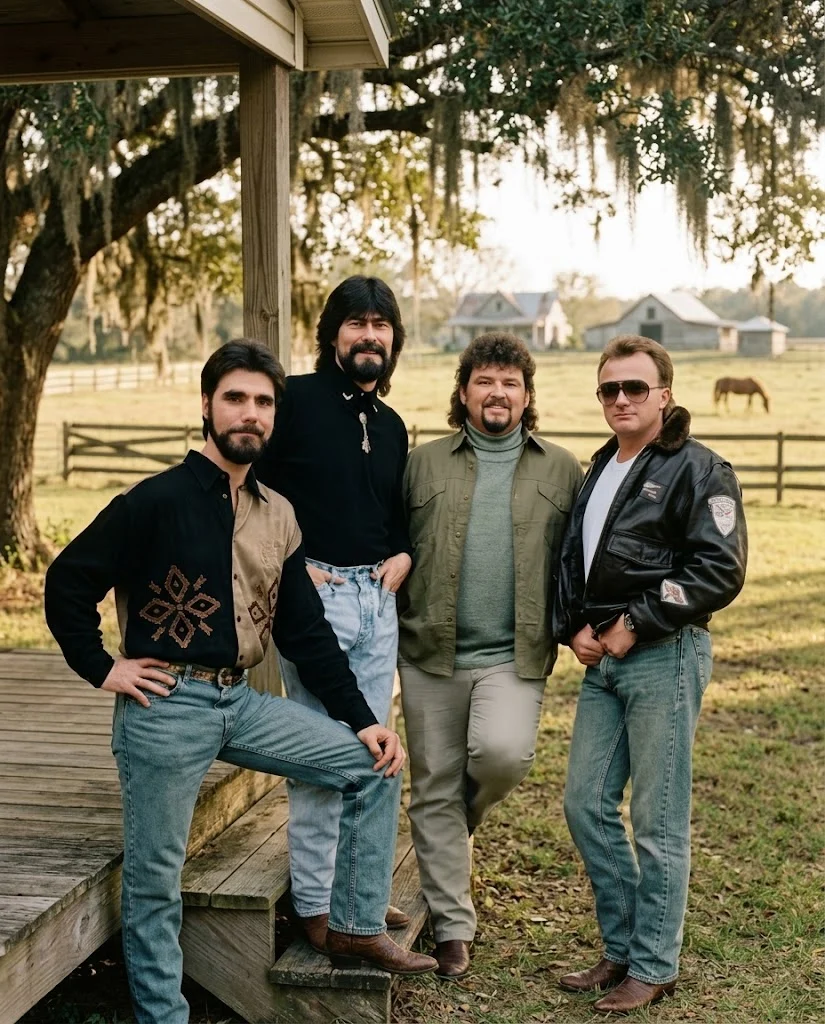
The room fell silent in a Nashville hotel ballroom as Randy Owen, Teddy Gentry, and Jeff Cook poured their exhaustion and love for Fort Payne into one song. They were not polished Nashville acts. They were a self-made bar band with a $4,000 bank loan and a hometown anthem that would change their fate.
For seven years, the cousins played as Wildcountry at The Bowery in Myrtle Beach, South Carolina. They hauled heavy gear, worked six nights a week, and learned how to win over noisy crowds for tips. That grind shaped their sound and their stubborn belief that they could make country music on their own terms.
When they became Alabama, the industry still did not seem ready for them. Nashville’s record labels favored solo stars backed by professional session players, not three cousins who insisted on playing their own instruments. The band refused to wait for permission.
They walked into a local bank in Fort Payne and borrowed $4,000. For a working bar band, that was a frightening risk. The money paid for independent recording sessions and helped them press and distribute their own single.
The song was “My Home’s in Alabama”, a sprawling and personal anthem about roots, road fatigue, and the pull of family. It did not follow the usual radio formula, yet its honesty gave it momentum. Through relentless grassroots promotion, the unsigned band began climbing the lower ends of the charts.
That momentum earned them a place at the 1980 Country Radio Seminar in Nashville. The New Faces showcase was not a friendly room. It was packed with radio programmers, promoters, and record executives who held the keys to mainstream country music.
“A single misstep could have closed the door forever.”
Alabama stepped onto that stage with blood harmony and raw conviction. They did not try to imitate the manufactured acts dominating the airwaves. As the chorus of “My Home’s in Alabama” lifted into the room, skepticism turned into stunned silence, then into recognition that a new kind of country band had arrived.
The showcase gave them leverage most unsigned acts never had. They arrived with a charting independent record and a live energy that executives could see. In the days after the seminar, RCA Records executive Joe Galante moved to secure their signature.
By April 1980, Alabama signed a historic contract with RCA Records. That deal did more than launch their career. It opened the door for future country bands and proved that a self-contained group could reach the top of the charts.
The irony still defines their legacy. They spent the 1970s trying to escape dive-bar tips and coastal grind. To earn the right to travel the world, they had to stand before the nation’s most powerful music gatekeepers and sing about wanting to go home.
“They did not have to change their identity to make Nashville make room for them.”
Alabama’s breakthrough was not luck. It was the result of sweat, a risky loan, and a song about belonging. The performance in that ballroom turned a local gamble into a lasting chapter of country music history.