
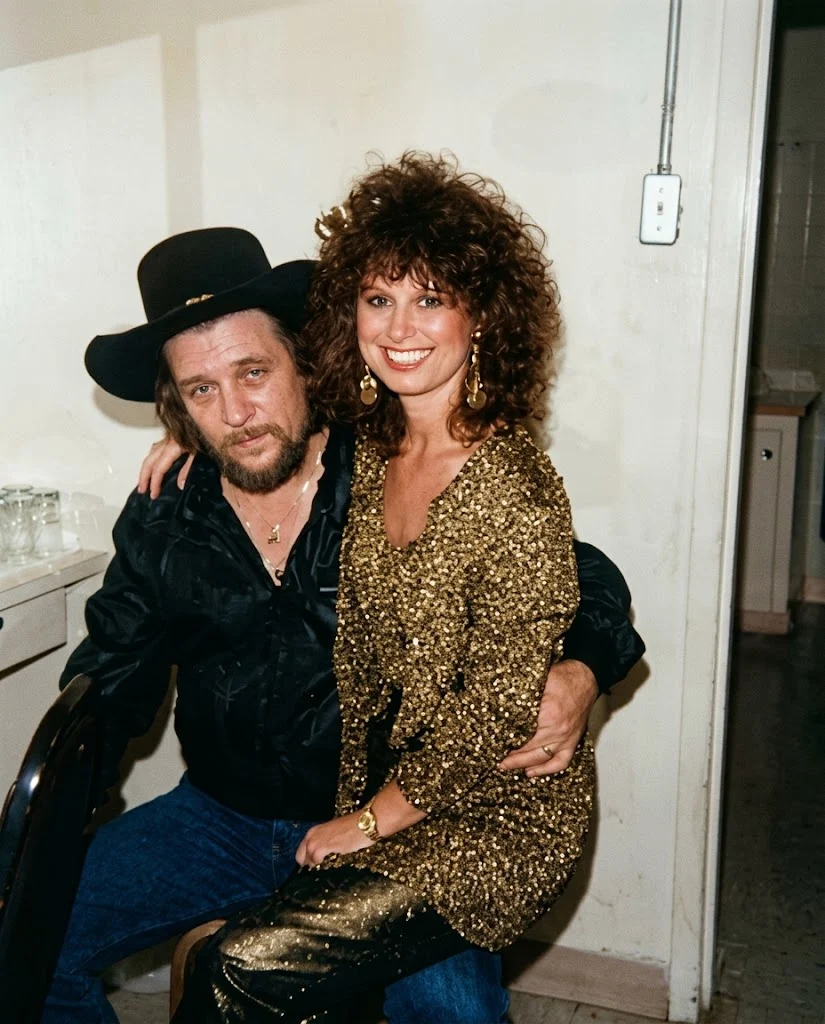
Waylon Jennings rewrote country music with defiance, yet his most tender rebellion happened behind a closed front door.
In 1969, he married Jessi Colter and took on more than a wife and stage partner. He opened his arms to Jennifer, her young daughter from her previous marriage to rock and roll guitarist Duane Eddy. To a man who would later battle the Nashville establishment, family was already a matter of love and commitment rather than paperwork.
The world knew the black leather and the stubborn outsider who demanded his own band and his own sound from RCA Records. Inside the home, that same voice became patient, gentle, and fiercely protective. The birth of their son Waylon Albright Shooter Jennings in May 1979 deepened the quiet refuge they built away from the road.
Shooter grew up under the long shadow of a monumental legacy. His father did not hand him a crown or ask him to carry the Outlaw torch. He warned him never to imitate anyone and especially never to imitate him.
He gave his son the freedom to walk out of the myth and into his own life.
That belief shaped their music together in a way few saw at the time. In the mid-1990s, when Shooter was a sixteen-year-old drawn to rock and punk, Waylon did not dismiss the abrasive sound. He entered a studio and recorded songs with his son and the young band. Those private sessions rested for more than a decade before Shooter finished them and released the posthumous album Waylon Forever in 2008.
The recordings revealed a father willing to step into his child’s world instead of forcing a son to bend toward his fame. That protective spirit still guides Shooter today. He has built his own Grammy-winning career as a producer and artist while becoming the careful keeper of his father’s private archives.
In recent years he has unearthed and mixed long-lost tapes and brought archival albums such as Songbird and Diamonds to listeners. He treats those relics with the discipline of a seasoned producer and the tenderness of a son honoring a titan’s unfinished blueprints.
The contrast between the legend and the father remains striking. The public saw a rebel who refused to compromise. Behind closed doors he wanted his children to find their own voices with room to breathe and choose their own path.
Waylon Jennings spent his life breaking the rules of country music. At home he raised an independent family and left his son a gift stronger than imitation.