
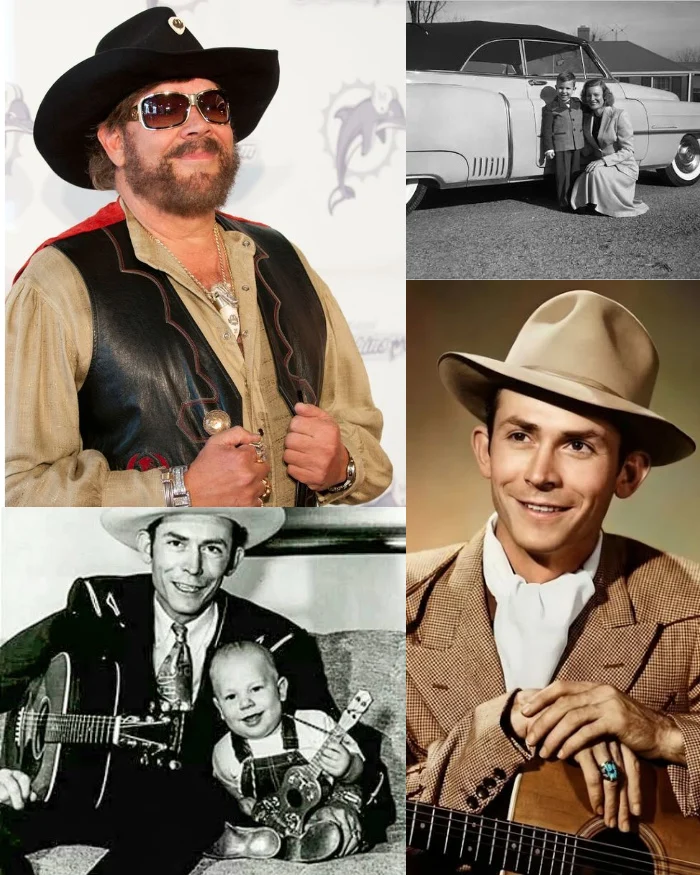
Before the first chord of his own career, a famous surname was already waiting. For Shelton Hank Williams, the name carried the ache of his grandfather Hank Williams Sr., who made heartbreak sound universal, and the wild edge of his father Hank Jr., who pushed country music toward the outlaw horizon.
He did not simply inherit applause. He inherited expectation. The Nashville world around him seemed to ask the third generation Williams to step into a familiar honky tonk frame, but he found a louder and stranger door. During the late 1980s and much of the 1990s, he sat behind a drum kit in underground punk bands such as Buzzkill and Bedwetter.
That detour into distortion was not a rejection of his bloodline. It was a parallel language for the same restless rebellion. The Williams line had always lived close to pain, speed, and defiance, and he translated those forces into a different roar.
He learned that a distorted guitar and a steel guitar can both tell the truth about loss.
When he later signed with Nashville major labels and recorded traditional country, including albums like Risin’ Outlaw, his allegiance remained divided. He carried the acoustic lament of the front porch and the chaos of the mosh pit at the same time. At many shows he split the night into clear chapters, first honoring country traditions, then unleashing cowpunk, psychobilly, and metal with fierce speed.
Projects like Assjack and releases on Hank3 Records let him push past the rigid boundaries that commercial country music often tries to impose on a historic name. By fusing the lonesome bend of a steel guitar with the unfiltered aggression of punk, Shelton Hank Williams carved out a distinct artistic space entirely his own. He proved that carrying a legendary surname did not have to mean being trapped by it.