
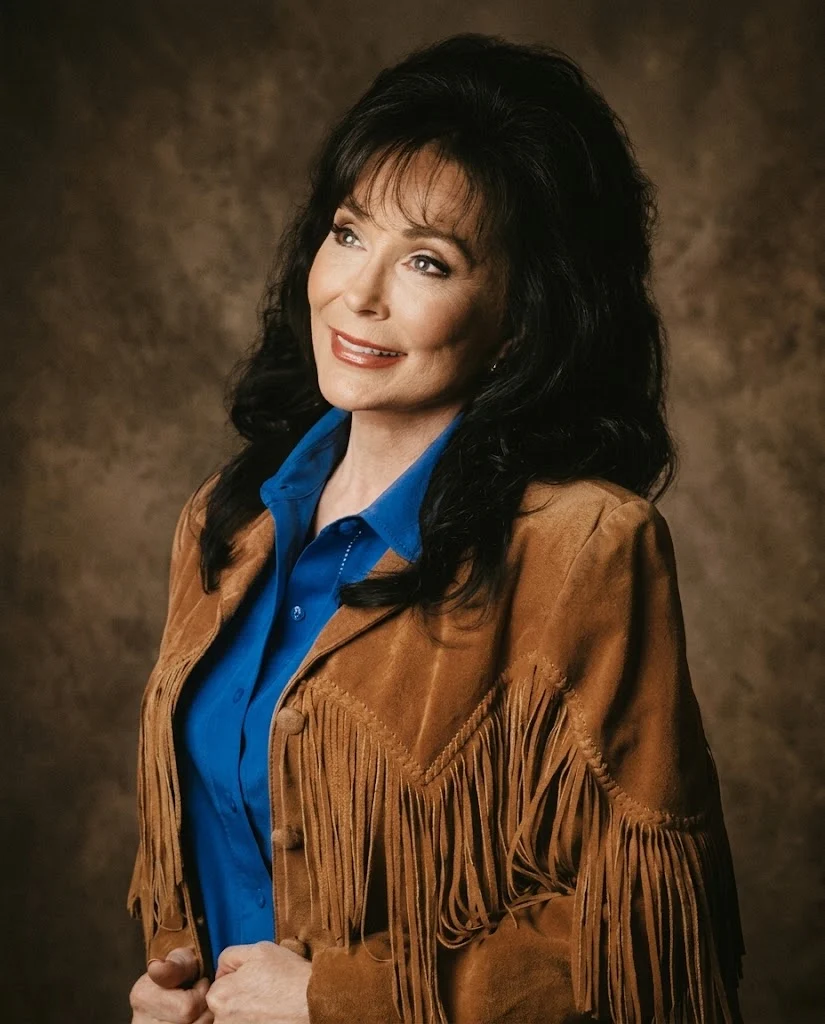
At the height of her fame, Loretta Lynn could fill arenas with women who knew every word of her defiance. Yet the most intimate battlefield was the ranch at Hurricane Mills, where the man who had pushed her toward the microphone repeatedly broke her trust.
For nearly fifty years, Loretta and Oliver Vanetta “Doolittle” Lynn shared one of American music’s most complicated marriages. Without Doo, there would have been no Coal Miner’s Daughter. He saw a talent she could not see in herself and bought her a seventeen-dollar Harmony guitar from a Sears catalog. He also physically pushed her onto a local stage in Washington state when she was a young mother, too frightened to face the crowd.
Doo built her early confidence, booked her first shows, and drove her across the country. At small-town radio stations, he handed out her debut record and helped open doors she had never imagined. As her career exploded and she became the undisputed queen of Nashville, however, the life they built together carried a sharp and painful contrast.
While Loretta kept a grueling touring schedule on a Greyhound bus to support their six children, she often returned to their ranch at Hurricane Mills to find her home violated by his drinking and wandering. She was a superstar adored by millions, but in private moments off the road she was a wife enduring repeated humiliation to keep her family intact.
Instead of breaking, or hiding the truth to protect a country music image, she weaponized the pain. She took the survival instinct of Butcher Holler and aimed it at the women who pursued her husband and at the man who took her loyalty for granted.
When it was time to put those private confrontations on tape, Loretta did not soften the edges. Inside producer Owen Bradley’s famous Quonset Hut studio on Music Row, she stepped to the microphone with lyrics often scribbled on scrap paper or written in minutes on the road. During the 1966 sessions for “Don’t Come Home A’ Drinkin’ (With Lovin’ on Your Mind),” there was no attempt to make her sound delicate or forgiving. The studio musicians laid down a driving, unpolished honky-tonk beat while she delivered a direct, conversational warning. The producers let the tape roll and captured her unvarnished anger in just a few quick takes.
Those sessions helped change country music. Songs like “Fist City” and “You Ain’t Woman Enough” were not just commercial hits. They were public indictments. She reclaimed her dignity through a microphone and set boundaries in a genre where female singers were still largely expected to stand quietly by their men. She transformed personal insult into working-class ammunition. Every time she performed those hits in sold-out arenas, Doo was often standing right there in the wings. He had to listen to thousands of women roar in approval for the very songs written about his worst mistakes.
He bought her the guitar. But Loretta found the strength to swing it all on her own.
Their marriage survived until his passing in 1996, anchored by a bond as deep as it was destructive. She never left him and often said he was the only man she ever loved and the only man who ever truly broke her heart.
The legacy she built gave millions of women the courage to find their own voices in their own living rooms and to realize they did not have to suffer in silence. Her story remains a testament to the grit of a woman who turned private pain into public power.