
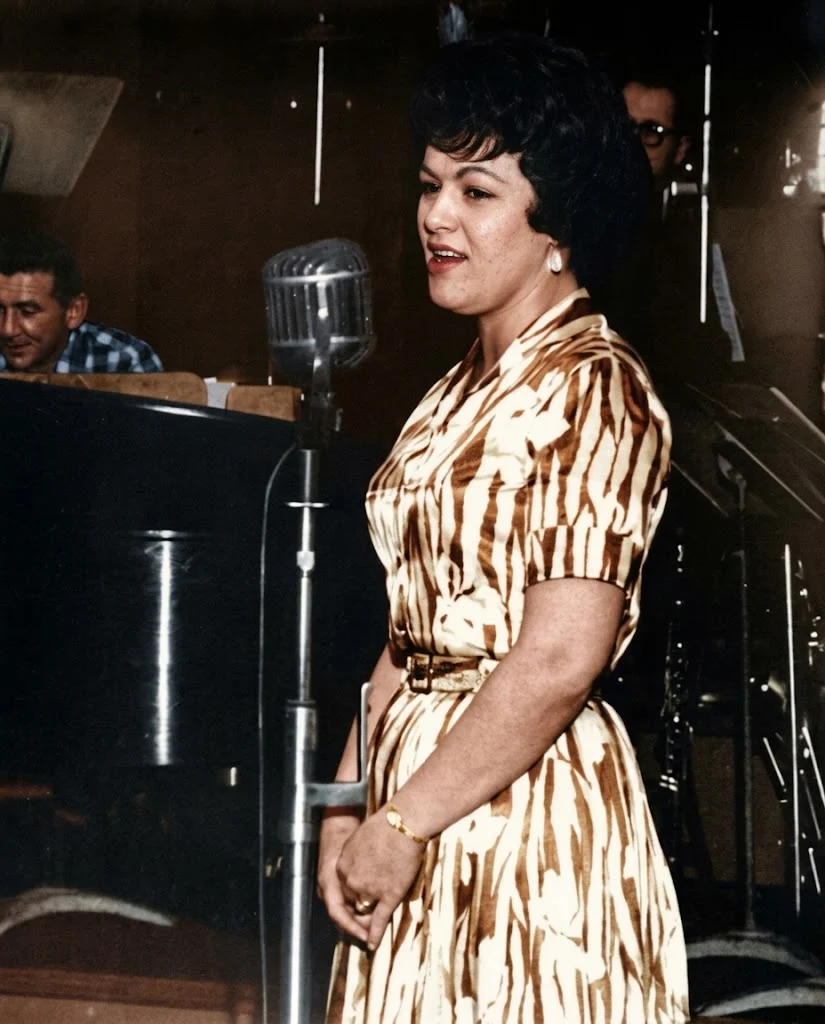
She stood on crutches with a bandaged forehead and still faced the roaring Opry crowd after a crash nearly ended her life.
On the night of June 14, 1961, Patsy Cline was thrown into the windshield during a devastating head-on collision on West End Avenue in Nashville. The impact left her with a dislocated hip, a shattered wrist, broken ribs, and a deep gash across her forehead.
Even while bleeding and in agony, she reportedly urged medics to help the victims in the other vehicle before tending to her.
Doctors expected a long and uncertain recovery for the singer whose career had soared after the success of the song I Fall to Pieces.
She refused to vanish from the stage. Six weeks later, on July 22, 1961, Patsy Cline returned to the Grand Ole Opry.
She did not hide the severity of her wounds.
She leaned on wooden crutches, wore bandages over her forehead, joked about her look, and delivered a performance that brought the audience to its feet with tears and thunderous applause.
Her survival was not quiet, and her comeback was not fragile.
Yet the deeper struggle waited behind closed doors. By August 1961, she was scheduled to enter Bradley Film and Recording Studios to record the song Crazy, written by Willie Nelson.
On August 17, she worked with producer Owen Bradley and the famed A-Team session musicians inside the Quonset Hut studio. Her healing ribs made each breath feel like a wound. She could not reach the high sustained notes the melody demanded.
Bradley recognized her suffering and stopped the vocal session. He sent her home to rest and recorded the instrumental track without her.
Four days later, on August 21, she returned to the microphone. The backing track was ready. She stepped forward and captured the vocal in a single flawless take.
The pain of that summer seemed to sink into the recording.
Her damaged ribs changed how she breathed and phrased the song, giving the performance a sorrowful depth that still moves listeners today.
For the rest of her life, she used glittering headbands and wigs to cover the permanent scar across her forehead. The glamorous stage image masked the trauma she carried.
Fans heard effortless power, but the truth was harder earned. Every performance after June 1961 carried the weight of a body broken and rebuilt.
The windshield left a mark on her skin, yet the microphone revealed an unbreakable spirit.
Her voice outlasted the crash, and her legacy became a story of resilience, pain, and the courage to return to the song.