
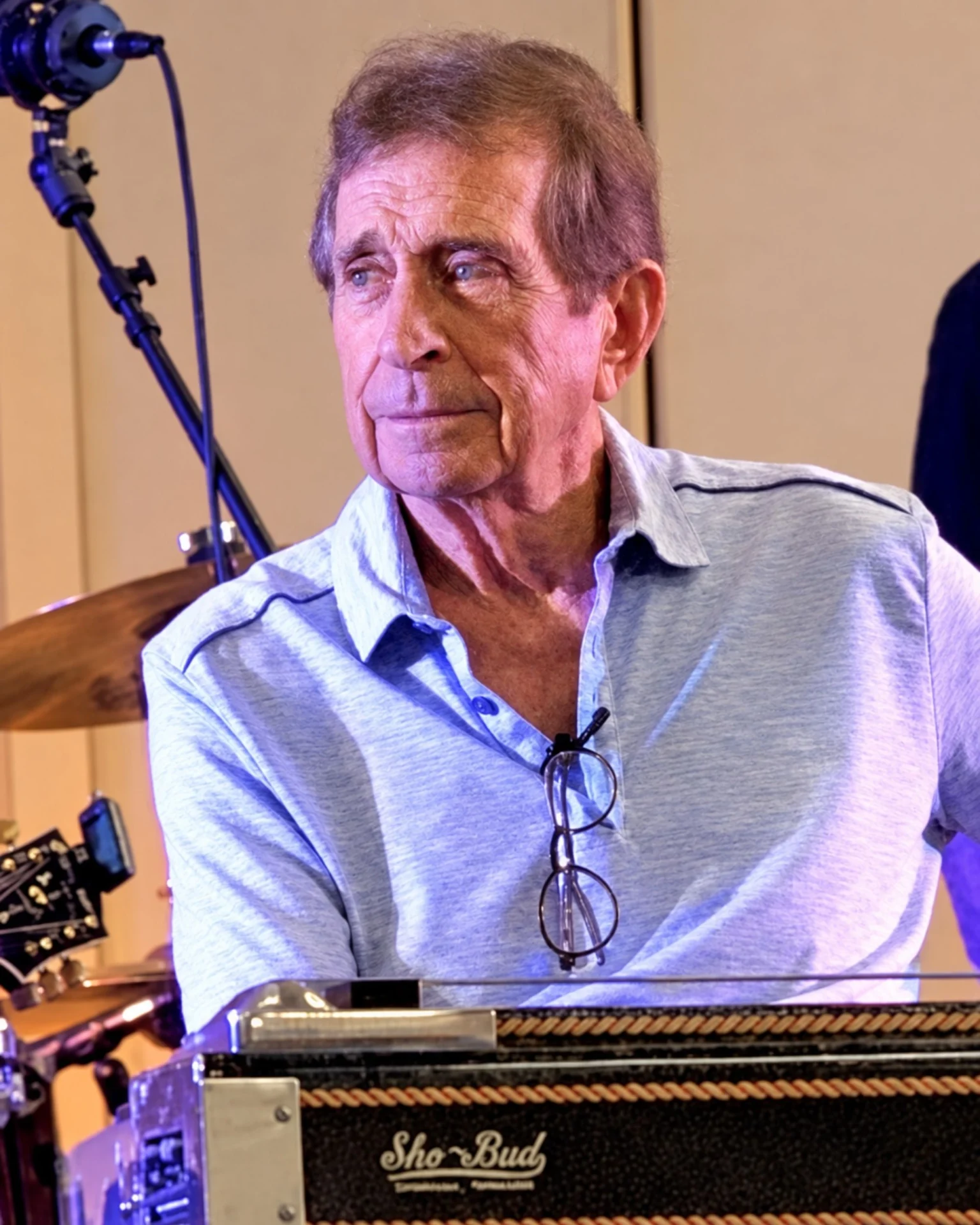
The steel guitar stayed inside its case for nearly two years. The woman who believed never stopped believing.
Lloyd Green was down on his knees measuring a customer’s foot for shoes in a Nashville department store. The year was 1961. His steel guitar had not been played in almost two years. His musicians union card had expired because he could not afford the renewal fee. He had once played the Grand Ole Opry and toured with Faron Young.
The customer placing her foot on the stool was the widow of Fred Rose, one of the most powerful men in Nashville publishing. She recognized the young salesman. She paid to restore his union membership.
That small act of generosity gave Lloyd Green a second chance at music. It did not guarantee success. He still needed a desk job at SESAC and years of unglamorous demonstration sessions before the studio doors truly opened.
A Teen with a Homemade Pedal
Green arrived in Nashville on December 26, 1956. He was nineteen years old. Faron Young hired him the same afternoon. Green had attached a homemade pedal mechanism to a Fender Stringmaster using parts that included a piece from a Model T Ford. Young complained about the rough instrument but kept the young player in the band.
Within three months, Green entered RCA’s new Nashville studio to play on George Jones’s “Too Much Water.” The building did not have an echo chamber yet, so a microphone was placed in the hallway. Green heard the playback and felt the certainty of a homecoming. The stage had never felt right. The studio was where he belonged.
The Woman Who Stayed
Within weeks of arriving in Nashville, Green met Dorothy Edwards. She was known as Dot. She was living with the daughter of Ernest Tubb and understood the chaotic rhythm of a musician’s life.
They married about six months later.
The road offered work but not stability. Green played with Ferlin Husky, Jean Shepard, Hawkshaw Hawkins, and Patsy Cline. The names were impressive. The pay was not. After a final tour with Husky, Green walked away from professional music.
Two Years in a Shoe Store
Green took a job selling shoes. A promotion moved him and Dot to Little Rock. They hated it. They returned to Nashville with no guarantee that music would welcome him back.
For two years Green did not remove the steel guitar from its case. Dot kept encouraging him even when the future looked like it belonged to retail, not records.
The Kindness of a Widow
Fred Rose had died in 1954. His widow had no reason to expect a piece of music history from the man fitting her shoes. When she learned of Green’s past, she paid to restore his union card and helped him return to the Opry.
It was the small break that reopened the door.
The Bridge That Changed Everything
Singer Roy Drusky hired Green for a desk job at SESAC. The desk sat in the middle of Music Row. Work began to trickle in. Green played on early Lynn Anderson recordings and small label sessions where he could experiment.
Studio guitarist Grady Martin gave Green the best advice he ever received. He told Green to stop trying to sound like Buddy Emmons and Jimmy Day. He needed to play the ideas moving through his own head.
One of Green’s demo performances reached Warner Mack. Mack wanted Green to play on his new song “The Bridge Washed Out.” Producer Owen Bradley wanted Pete Drake. Mack insisted on Green.
On March 16, 1965, Green walked into the session carrying his Bigsby. He played with a percussive brightness that Bradley disliked during the session. Other musicians recognized a new wave arriving. The song reached No. 1.
Green’s career took flight. He was soon playing fifteen to twenty sessions a week. His steel entered recordings by Tammy Wynette, Charley Pride, Johnny Paycheck, Don Williams, the Byrds, and Paul McCartney.
McCartney invited Green to join the Wings Over America tour. Green said no. The road had nearly destroyed him once. He would not risk his home or his marriage again.
Three Letters on a Green Guitar
By the early 1970s, Sho-Bud worked with Green on a new steel guitar model. It was a single-neck instrument built on a double-neck cabinet. The model was called the LDG.
The L and the G stood for Lloyd Green. The D stood for Dot.
The guitar named after her carried the legacy of a woman who held everything together while the work disappeared and the shoes were sold.
Green played the first production LDG for the rest of his career. The initials on the front of the guitar told a story that no song could fully capture. It was the story of a wife’s faith, a widow’s kindness, and a steel guitar that refused to stay silent.