
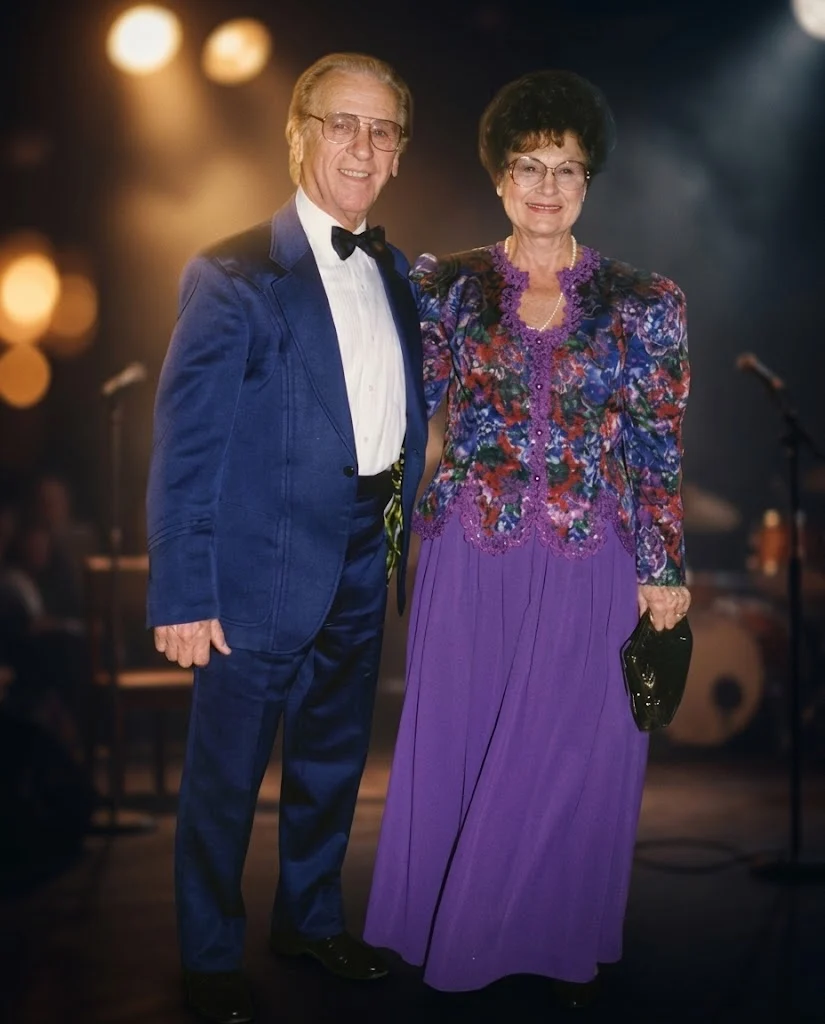
Before country music learned to listen to women, Kitty Wells stood in a modest gingham dress and changed the story.
In the early 1950s, Nashville was a boys club ruled by neon and heartbreak. Hank Williams, Webb Pierce, and Lefty Frizzell sang freely about drinking and wandering. A woman who named the same pain on a record was treated like a threat. When Hank Thompson led the radio with ‘The Wild Side of Life’ for fifteen weeks, the song blamed women for men straying, and the industry expected silence.
Instead, a thirty-two-year-old mother of three answered. Kitty Wells recorded ‘It Wasn’t God Who Made Honky Tonk Angels’ on May 3, 1952, at Castle Studio in Nashville. Written by J.D. Miller, the song offered a polite but firm reality check and said married men shared blame for broken homes and tear-stained barrooms. That simple truth made the male-dominated music business panic.
She did not shout. She sang a quiet accusation, and it was louder than any protest.
NBC radio banned the track from its national network because executives feared family listeners. At the Grand Ole Opry, WSM leaders studied every word. They forced Wells to change trustful wife to trusting wife because the original phrasing made them imagine a wife might also betray a marriage. Later rumors claimed a total Opry ban, but her husband and manager Johnnie Wright clarified that she could still perform at the Ryman Auditorium stage while being kept from the national broadcast hour.
The backstage fight was subtle. Wells had first agreed to record the answer song only to collect a standard $125 union scale session fee. She believed a woman-led rebuttal would never become a hit. When it exploded, she and Wright chose a careful path. They made her visually unassailable.
She stepped onto stages in high-collared gingham dresses, with the calm face of a devoted Southern housewife. The image was a shield and a strategy. Executives could not call a Sunday school mother a dangerous rebel while her voice carried the very reality they tried to hide.
Her dignity became the door that Nashville had locked for women.
Women at kitchen radios heard themselves for the first time. Against bans and scrutiny, the single rose for six weeks at number one. It made Kitty Wells the first female country artist to top the Billboard charts and proved that women could sell records as headliners. Later that same year, Fred Rose crowned her the Queen of Country Music, a title she carried for life.
She did not break the ceiling with rage. She broke it with steady truth. Her quiet rebellion opened the road for Patsy Cline, Loretta Lynn, Dolly Parton, and every woman who followed. The industry tried to keep her small, but the modest gingham dress became one of the most powerful costumes in country music history.