
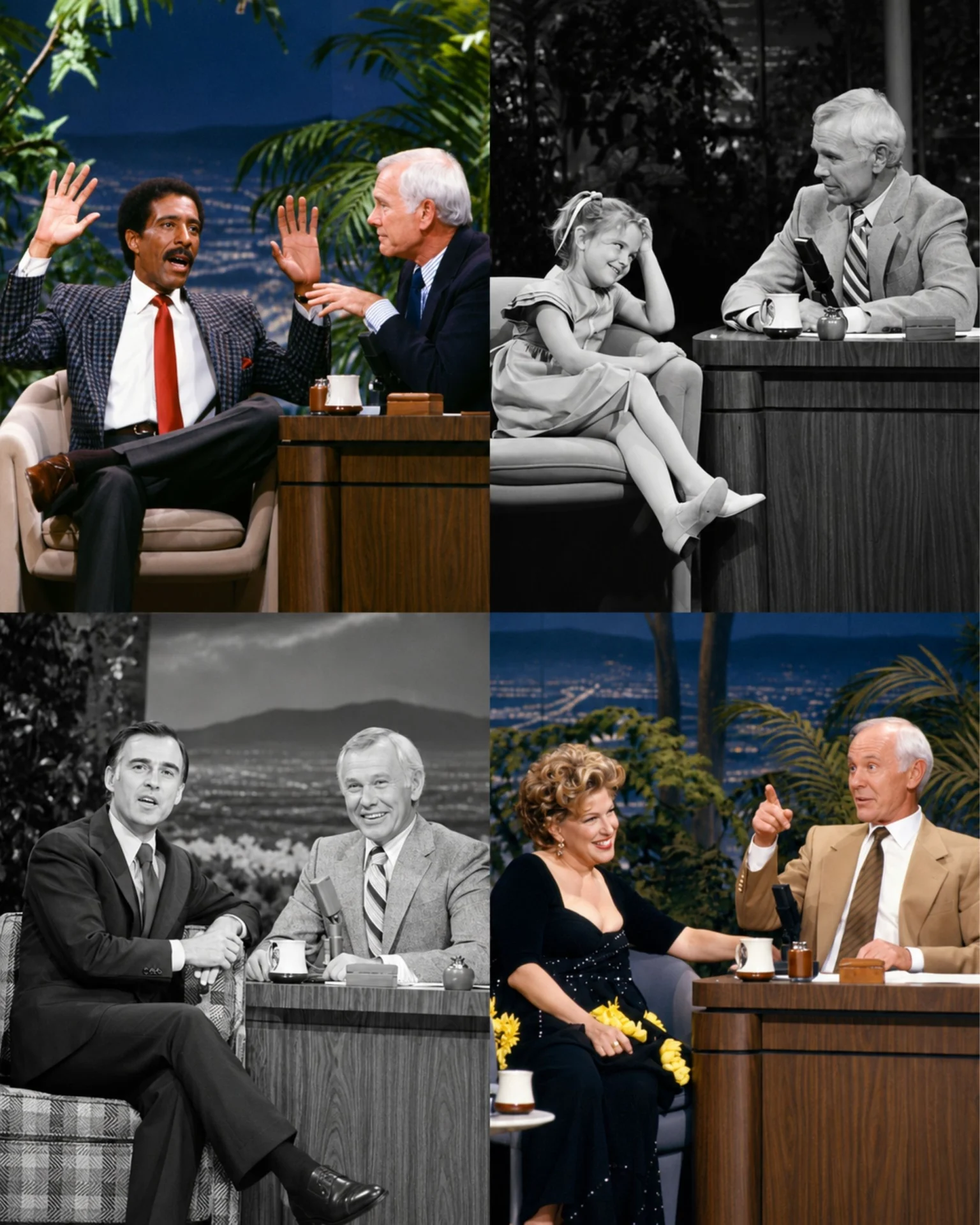
The routine decision to reuse videotape erased years of television history before anyone realized what was being lost. Johnny Carson’s first decade on The Tonight Show vanished into the same storage reels that carried cartoons and news broadcasts. Somewhere in an NBC log, the erasure still looks like routine maintenance – one title crossed out, another written beneath it. But the absence left behind is anything but routine.
When Carson began hosting in October 1962, the program captured monologues, conversations, and first national appearances. Public figures spoke in a looser setting than the evening news allowed. Yet NBC routinely reused two-inch videotape because it was expensive. Most episodes from 1962 through the early 1970s disappeared. The first broadcast survives principally through photographs and audio rather than a complete video recording.
That changed in 1972. After contract negotiations gave Carson’s production greater authority, the order was clear – the tapes were to be kept. Ownership arrangements developed further, but the preservation line is visible. Most of the early years are missing. The later twenty years remain largely intact.
After Carson retired, thousands of tapes were stored roughly 650 feet underground in a Kansas salt mine, where temperature and humidity remained stable. In 2010, 3,300 hours of surviving footage were digitized and indexed. The archive now preserves more than television comedy. It holds thirty years of American voices passing through one chair beside Carson’s desk.
“The desk, chair and couch became furniture in the viewer’s own living room,” noted NBC executive Rick Ludwin, describing the show’s intimate familiarity.
That familiarity disguised the program’s fragility. A family watching at home could reasonably believe that anything reaching a national network was being preserved somewhere. Broadcasting created a peculiar illusion of permanence. The program existed simultaneously in millions of rooms, yet its future depended upon one master tape stored by the network. When that tape was wiped, the audience’s separate memories became some of the only surviving copies.
The missing decade includes Groucho Marx introducing Carson on October 1, 1962. Photographs and audio survive, but complete video does not. Comedians received early exposure. Musicians performed material that may not have been recorded in the same form elsewhere. Guests who are now historical figures appeared as living participants in current events.
The archive is crowded with other lives. More than 22,000 guests appeared during Carson’s tenure, according to television historians. Some visits are remembered as career-changing appearances. Others survive as smaller exchanges – an actor discussing work now forgotten, a writer holding up a new book.
The two Carson archives exist together – thousands of preserved hours after 1972, and an absence containing the erased premiere, vanished interviews, and early performances. Together they explain a change in how television understood itself. At first, the broadcast was the product. Once transmitted, it had completed its purpose, and the tape could be returned to work. Later, the program became an asset, a historical record, and a library that could be revisited in forms nobody had imagined.
The surviving footage now rests on digital systems. The early years remain scattered through photographs, audio, fragments, and personal memory. The erasure still looks like routine maintenance in a logbook – but the loss is not routine at all.