
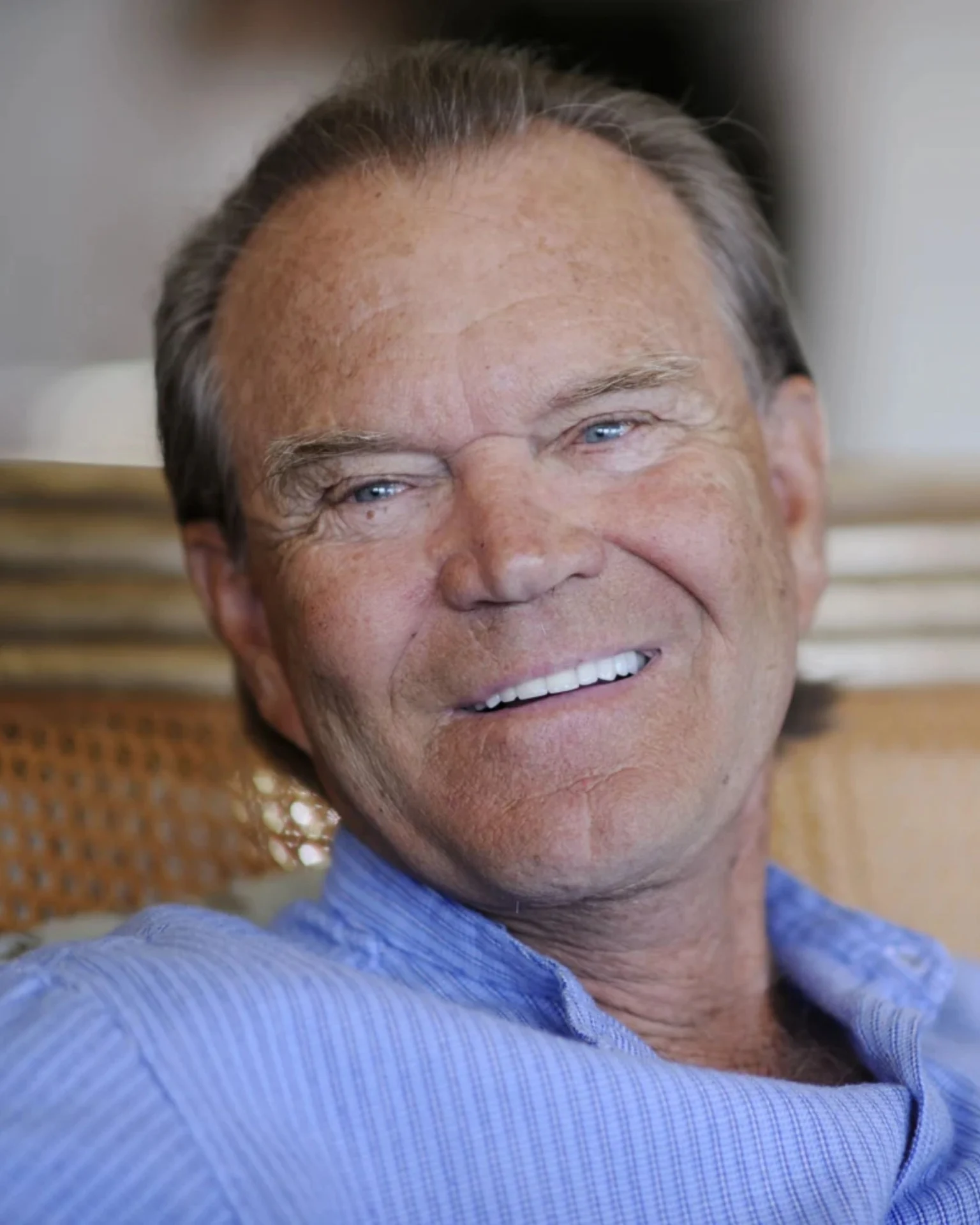
The cassette tape played over and over as the Australian outback blurred past the window. Glen Campbell had heard Larry Weiss’s song before the tour, but now it was becoming his lifeline. “I could have whistled it backwards,” he later said with a laugh. But beneath the humor lay a man clinging to hope.
By 1974, Campbell’s world had shifted. The man who once ruled the airwaves with “Wichita Lineman” and “Galveston” and hosted The Glen Campbell Goodtime Hour now watched his singles stall below the country Top 40. The television show was gone. The spotlight had dimmed. Then he heard a song about a rhinestone cowboy – a performer still believing in bright lights after years of compromise.
Larry Weiss had written and recorded the track himself in 1974. Campbell grabbed a cassette copy before heading to Australia. An airline strike forced long drives between shows, including the roughly 650-mile stretch from Sydney toward Brisbane. Inside the car, Campbell played that one song again and again. It wasn’t just the cowboy imagery that hooked him. It was the lyric about surviving the grind and still expecting another chance – a story he had lived.
“I had been a session guitarist, a Beach Boys substitute, a television star, a hitmaker, and then suddenly a man watching the hits slow down. I recognized myself in that song.”
When Campbell returned to the United States, Capitol executive Al Coury excitedly played him “Rhinestone Cowboy,” thinking he had discovered the perfect song. Campbell already knew every note. The label had no idea he had been carrying it across hundreds of miles of Australian road.
Produced by Dennis Lambert and Brian Potter, Campbell’s recording was released in 1975. Radio embraced it so fast that Capitol rushed the single’s release. It soared to No. 1 on both Billboard’s country chart and the Hot 100 – his first pop chart-topper. The record sold millions and revived his mainstream career. Two years later, “Southern Nights” would again hit No. 1 in both genres.
Larry Weiss had written about a performer still waiting for the phone to ring. But Glen Campbell knew what happened after the phone had rung for years – and when it finally stopped. That experience gave the song its weight. He didn’t sing it as a dreamer. He sang it as a survivor.
The deepest truth of this story isn’t just that “Rhinestone Cowboy” became a comeback. It’s that Campbell found it at the exact moment he needed to hear it most – on a long drive through Australia, with a cassette on repeat, believing one more stage was waiting.