
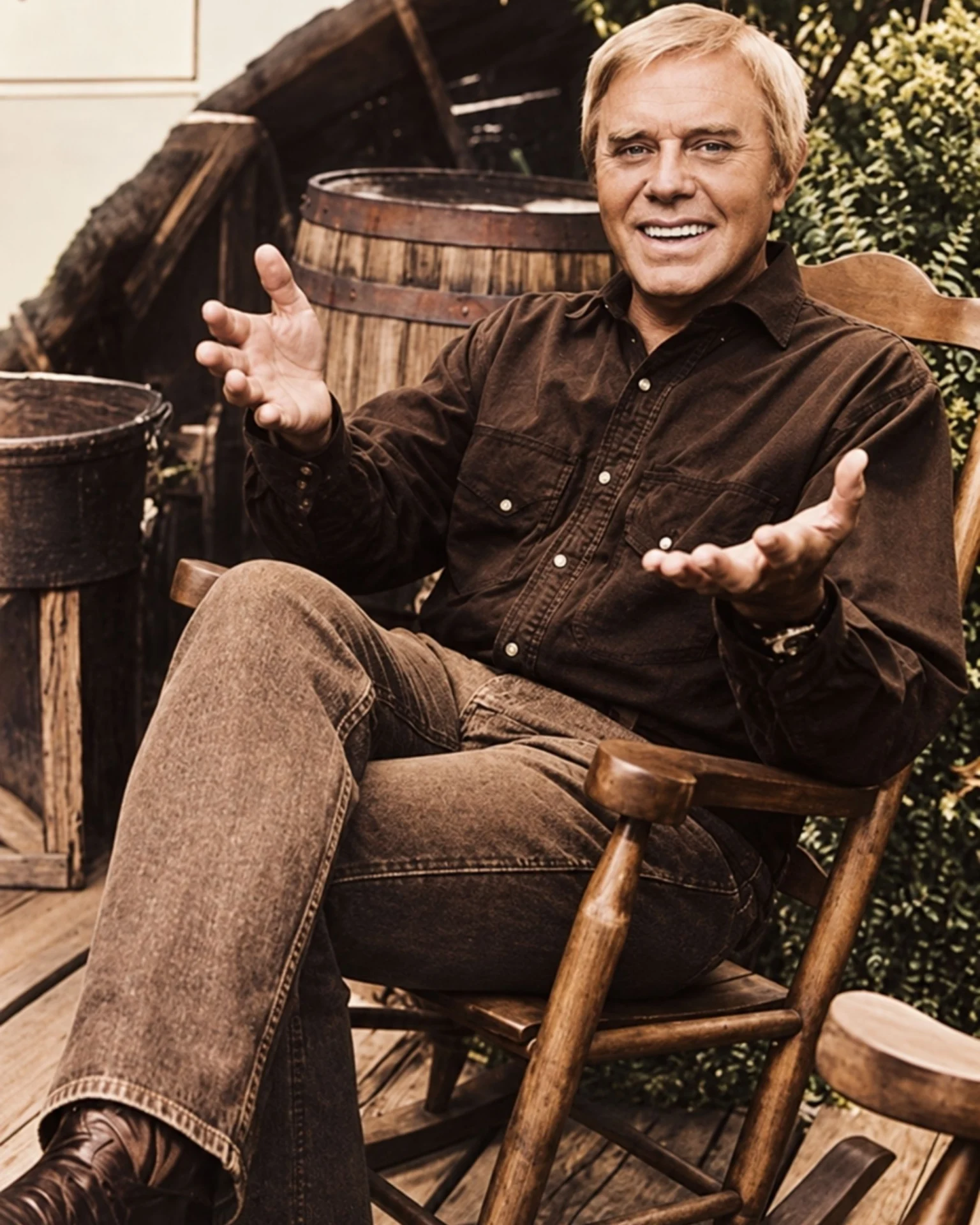
He was a radio man in Virginia, spinning records and writing songs between shifts. Then one Top 10 hit changed everything.
In the early 1960s, Tom T. Hall stood behind a microphone in a small Virginia radio station. He wasn’t just a DJ—he was a keen observer of life, a man who listened to the ordinary voices around him and turned them into extraordinary stories. But his path to Nashville wasn’t paved with silver spoons or industry connections. It began with a single song, a leap of faith, and an unwavering belief that everyday people deserved to be heard.
The DJ Who Wrote His Way Into Music History
Hall’s journey started far from the neon lights of Music Row. After years performing in Kentucky bluegrass groups and serving in Armed Forces Radio, he found himself in Virginia, working as a radio DJ. But between spinning records, he was crafting something special—songs that captured the raw, unfiltered essence of American life.
Nashville publisher Jimmy Key saw potential in Hall’s writing. That promise materialized when Grand Ole Opry star Jimmy C. Newman recorded Hall’s “D.J. for a Day.” The song climbed to the country Top 10 in 1963–64, proving that Hall’s voice could resonate beyond the confines of a radio booth.
From Virginia to Nashville: A Leap of Faith
In 1964, Hall made the bold decision to leave his steady radio gig and move to Nashville. It was a risk that would define his career. Within months, Dave Dudley took Hall’s “Mad” into the Top 10, while Johnnie Wright’s “Hello Vietnam” gave him his first No. 1 hit in 1965. Hall was proving that country songs could be more than just romantic ballads or heartbreak anthems.
“A country song could carry more than romance or heartbreak—it could sound like a newspaper column, a conversation overheard at a bar, or a short story compressed into three minutes.”
The Birth of ‘The Storyteller’
Hall’s genius lay in his attention to detail. He didn’t need elaborate production or dramatic flourishes. His strength came from observed realities—the way a barstool creaked, the smell of a country jail, the tone of a town gossip. Songs like “Harper Valley P.T.A.” became phenomena because they felt lived-in, true, and deeply human.
Jeannie C. Riley’s recording of “Harper Valley P.T.A.” shot to No. 1 on both country and pop charts. It was a story of hypocrisy, small-town judgment, and a mother’s fierce defense—all wrapped in a three-minute package that felt like a feature film.
Hall’s Own Voice: The Perfect Narrator
When Hall began recording his own songs, his plain, understated delivery became his signature. Tracks like “A Week in a Country Jail,” “The Year That Clayton Delaney Died,” and “(Old Dogs, Children and) Watermelon Wine” didn’t need theatrical vocals. They needed authenticity—a man telling you what happened because he had been paying attention.
The Country Music Hall of Fame later credited Hall’s layered character studies with expanding the language and social range of country songwriting. He gave generations of writers permission to explore ordinary lives: small failures, local gossip, children, old men, and the quiet moments that define us all.
“He widened the subject matter. He gave writers permission to look beyond obvious heartbreak and find songs in the corners of everyday life.”
The Legacy: Ordinary Life as Worthy Subject
Tom T. Hall didn’t just write songs—he taught country music to see itself differently. His work proved that a three-minute single could carry the weight of a novel, that ordinary people and their quiet observations were worthy of serious artistic attention. He left behind a blueprint for telling stories with honesty, humor, and profound humanity.
One Top 10 song got him to Nashville. But the real achievement was what he built once he arrived: a legacy that expanded what country music could say and who it could celebrate.