
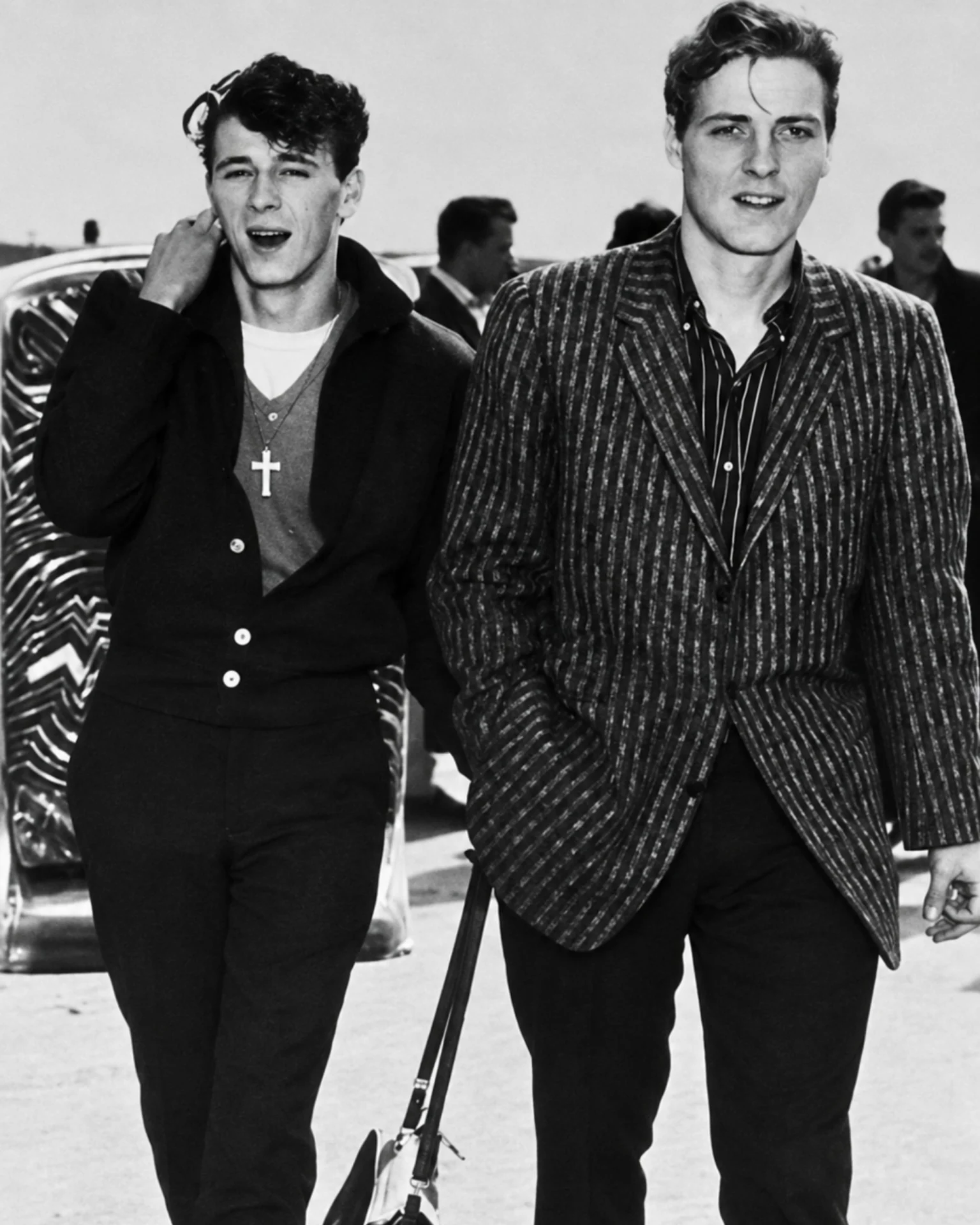
He was a young Navy man from Virginia with a badly injured left leg and a future that seemed to stop at the door of a hospital room. That is where Gene Vincent found the raw sound that would shake rock and roll. The song was Be-Bop-A-Lula, and it turned a struggling singer into Capitol Records’ answer to Elvis Presley.
Out of pain and a battered body came one of the most dangerous records of the rockabilly era.
Vincent Eugene Craddock had not planned to become a rock and roll wild man. In 1955, a motorcycle crash nearly cost him his left leg. The damage would stay with him for the rest of his life. While other young men his age were moving forward, Vincent was trapped in a recovery bed with little to do but wait.
He used that time to write.
One of the songs that came out of that hospital stretch was Be-Bop-A-Lula. The exact authorship remains disputed. A fellow patient named Donald Graves is often credited as a key part of its creation. What is not disputed is the second life it gave Vincent.
By early 1956, Vincent was singing in and around Norfolk, Virginia. A local radio personality named Bill ‘Sheriff Tex’ Davis helped carry a demo to Capitol Records. The label was searching for a young rock and roll singer who could stand against the sudden rise of Elvis Presley. Vincent’s voice did not sound like the polished stars of the past. It sounded nervous, desperate, and alive.
Capitol signed him.
In May 1956, within a year of the crash, Gene Vincent and the Blue Caps went to Nashville and recorded Be-Bop-A-Lula. At first, the song was placed on the B-side of Woman Love. The plan did not hold. Disc jockeys flipped the record over, and the so-called B-side became the hit.
The record climbed into the pop Top 10 and sold heavily. Cliff Gallup’s guitar playing was sharp, spare, and full of ideas that later rockabilly players would study for decades. Vincent had gone from a broken hospital room to the middle of rock and roll’s first explosion.
The first crash had pushed him toward fame. The second crash proved how quickly that fame could turn dark.
In April 1960, Vincent was touring in England with Eddie Cochran. Their taxi crashed near Chippenham. Vincent survived with a broken collarbone and more damage to the leg that had already been injured years earlier. Eddie Cochran did not survive. He was twenty-one years old.
By then Vincent’s biggest American moment had passed. But Britain remembered him differently. Younger musicians absorbed his look, his sneer, and the raw attack of the Blue Caps. They understood that rock and roll was not supposed to be polite.
He showed that rock and roll could sound wounded and still keep fighting.
The same energy that made Be-Bop-A-Lula a classic also made Gene Vincent hard to contain. His chart run was short. His influence lasted much longer. Later performers would borrow the trembling voice, the black leather, and the sense that the music might break apart at any second.
Gene Vincent did not get the long, smooth career that Capitol once imagined. He left something sharper instead. A guitar tone that cut like a blade. A voice that ached and snapped at the same time. A record that rose out of a hospital bed, a wrecked motorcycle, and a young man who refused to let a broken leg keep him away from the microphone.
Scroll to the end of this article to listen to the music.