
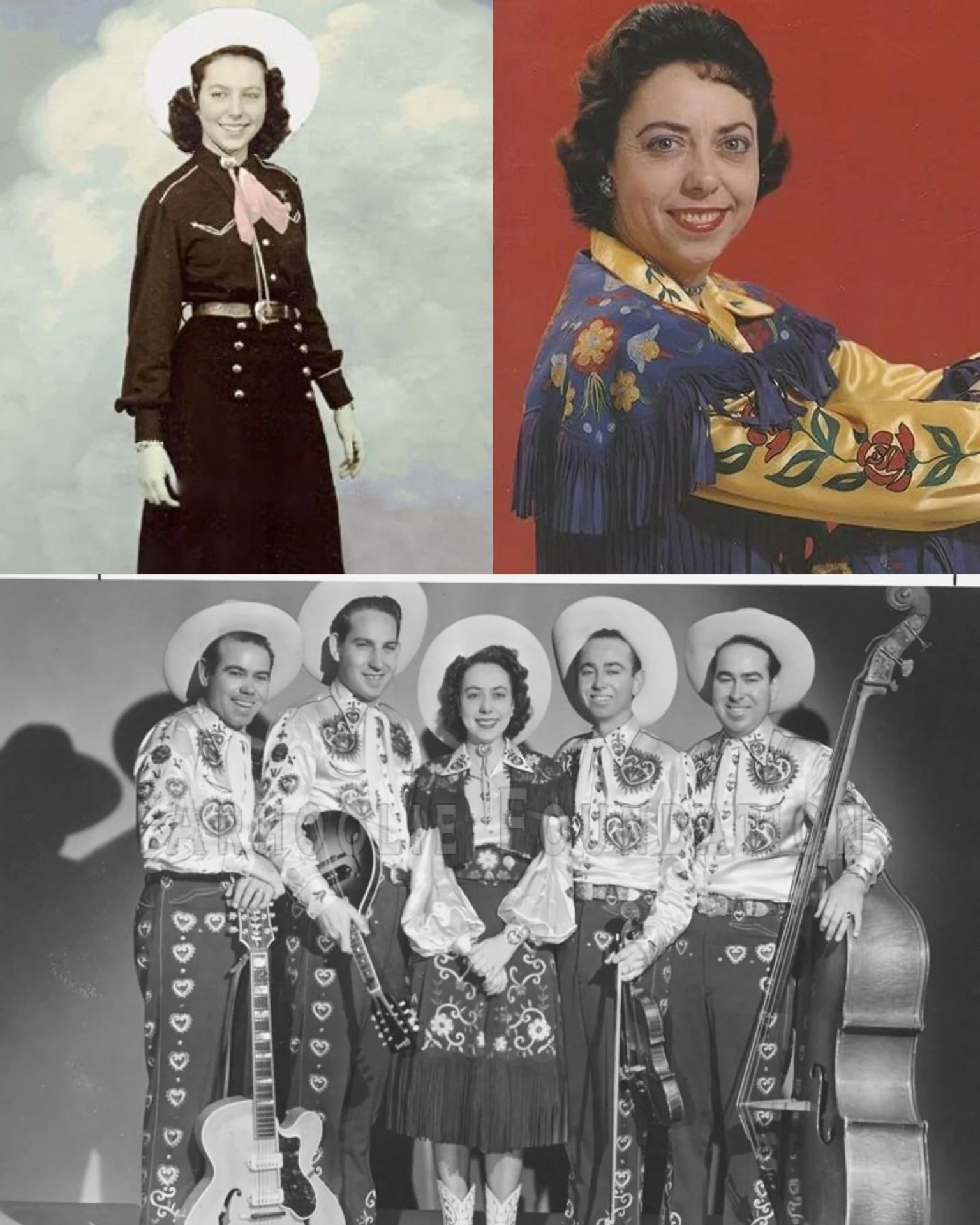
An eleven-year-old girl stood at a radio microphone in Modesto because her older brother had promised a furniture dealer that she could sing. She had never sung for money and she had never read commercials on air but the sponsor had asked for a girl singer and Rose Maddox stepped into that opening with a voice that would carry her family from California migrant camps to country music fame.
The road to that microphone began in Alabama. The Maddox family left Boaz in 1933 with five children and roughly thirty-five dollars. Cotton prices had collapsed and sharecropping no longer worked. They rode freight trains, hitchhiked and relied on railroad workers who sometimes fed the children from the caboose. A single suitcase held nearly everything they carried.
California did not greet them with opportunity. The Salvation Army in Los Angeles did not have enough room so Rose’s father and one brother slept in jail because it offered shelter. In Oakland the family stayed in Pipe City where displaced people lived inside sections of unused culvert pipe. They moved with the harvests and picked fruit and cotton from early morning until dark. Rose learned the geography of migrant labor while she was still a child.
Music was part of those hard years. Families gathered around campfires after long days and sang songs borrowed from radios and movies. That kind of singing did not seem like a future until Fred Maddox began calculating the difference between a cotton sack and a stage. Fred once sat in a cotton field with nearly no cotton in his sack and told someone he was thinking. The thought was entering the music business.
Fred found a furniture store owner in Modesto who would sponsor the brothers on KTRB with one condition.
The act needed a girl singer.
Fred answered without pausing by saying the family had the best one in the region. He had not asked his sister first.
Rose was eleven. Her experience came from singing around migrant camps and imitating performers she heard in movies and on the radio. She had no professional polish. Her mother worried about the dangers of the road and the entertainment world but the possibility of regular pay made the decision unavoidable. Rose joined her brothers and she also took over the station commercials because Fred did not like reading the sponsor’s copy. The little girl who was added to satisfy a business request became the voice that kept the broadcast moving.
The response was immediate and overwhelming. Fred later remembered thousands of letters arriving during the first week. People walked miles to the rural station just to watch the family play through the windows. The audience heard something familiar in the Maddoxes. Their Alabama speech and camp learned songs connected with the thousands of Depression displaced families who had come west looking for work just like them.
Radio turned their migration story into an advantage. The same traits that marked them as outsiders in other places made them beloved on the air. Rose’s voice gave that connection a center. The furniture dealer had asked for a girl singer as if she were simply another component but listeners heard the beginning of a star.
World War II pulled the brothers into military service and broke up the act. Rose worked with other musicians during those years and gained experience beyond the family. When the brothers returned the group rebuilt itself with more force. By 1947 the Maddox Brothers and Rose were recording for 4 Star Records with a fast and rowdy sound that mixed country harmony, boogie, gospel and the rough charge later called rockabilly.
Their look became just as bold. They wore brightly embroidered Western outfits including designs by Hollywood tailor Nathan Turk. At a time when many country acts dressed conservatively the Maddoxes looked almost lit up. They eventually billed themselves as The Most Colorful Hillbilly Band in America.
The Most Colorful Hillbilly Band in America
The billing described their clothing but it also described their refusal to hide where they had come from. Rose was no longer an add on. She moved, shouted and sang with physical force while the brothers drove the music behind her. She could break a slow song and still master the wildest numbers. Her presence tested the quiet rules that usually surrounded female country singers and made the family act impossible to ignore.
The brothers mattered enormously and Fred’s promotion instincts kept the band moving but the sponsor’s original request had been answered far beyond expectation. The act had needed a girl singer. Soon it was impossible to picture the act without Rose.
The Maddox Brothers and Rose separated in the 1950s when marriages, ambitions and years of travel pulled the family apart. Rose kept going. Her solo career included the song Sing a Little Song of Heartache and duets with Buck Owens. In 1962 she released Rose Maddox Sings Bluegrass, an early and important bluegrass album by a woman. Later generations found the old Maddox records and treated them as essential parts of West Coast country history.
In 1996 Rose received her first Grammy nomination for the album $35 and a Dream. The title reduced her childhood journey to two things the family owned when they left Alabama. They had thirty-five dollars and an idea of California. The dream did not carry them alone. Between the money and the music stood freight cars, pipe camps, fields and years of labor.
The family came west looking for work they could do with their hands. Their first reliable opening in music appeared because a furniture store owner asked for a girl singer and Fred thought of his little sister. That girl’s voice turned a family survival story into legend and gave West Coast country music one of its brightest stars.