
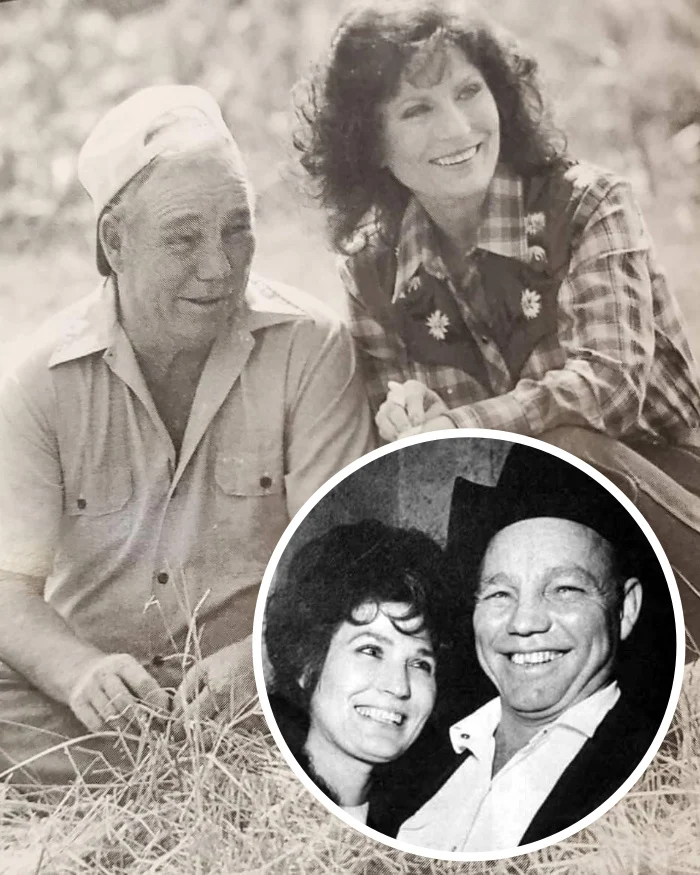
A 15-year-old girl at a school pie auction saw something no one else could see in a 21-year-old moonshiner fresh out of the military. While the men of Butcher Holler called him worthless, she bought his pastry and changed music history forever.
Oliver Vanetta Lynn earned the nickname Doolittle from coal miners who thought he was a lazy outlaw running illegal liquor through the Appalachian mountains. But Loretta Webb ignored the town’s judgment and married him exactly one month after that pie social in 1948. Her family warned her about his temper and his reputation, but she recognized a stubborn drive that refused to settle for crushing poverty.
She took the miners’ mockery and shortened it to Doo, using it as a term of endearment. The couple escaped Butcher Holler for Washington state, where Doo bought her a cheap Sears Roebuck guitar and taught her basic chords. He forced his terrified wife onto local tavern stages and drove her across the country to beg radio DJs to play her records.
He gave her the armor she needed to survive the industry, while giving her the pain she needed to write the truth.
That same stubbornness built the foundation of her career and protected her in a male-dominated world. But Doo also provided the betrayals and arguments that defined her legendary catalog. His chronic alcohol abuse inspired her 1966 breakthrough, Don’t Come Home A-Drinkin’ (With Lovin’ on Your Mind). The blunt honesty resonated instantly with rural housewives facing the same domestic battles.
As Loretta’s fame grew and she spent more weeks on the road, Doo’s wandering eye gave her more material. You Ain’t Woman Enough (To Take My Man) was born backstage in 1966 after a distraught fan warned her that another woman was trying to leave with her husband. Loretta reportedly looked out the dressing room door and delivered the title phrase as a blunt warning, writing the rest of the track in ten minutes.
Two years later, she threatened a Tennessee school bus driver on national radio with Fist City. Instead of hiding her husband’s infidelity, she broadcast a physical threat. The strangest part of their dynamic was Doo’s reaction. He never tried to censor her writing or soften the lyrics. As her manager, he recognized that her raw anger was her greatest commercial asset. He would cause the heartbreak at their kitchen table, then aggressively promote the resulting record to station programmers the next week.
The man the coal miners dismissed as worthless ultimately handed his wife the exact ammunition she used to rule country music. Their marriage lasted nearly fifty years, marked by deep loyalty, frequent fights, and an undeniable partnership. He fought for her stage time and negotiated her contracts with rough intensity that demanded respect from Music Row. The insult that Butcher Holler gave him became the name of the manager who built the Queen of Country Music.