
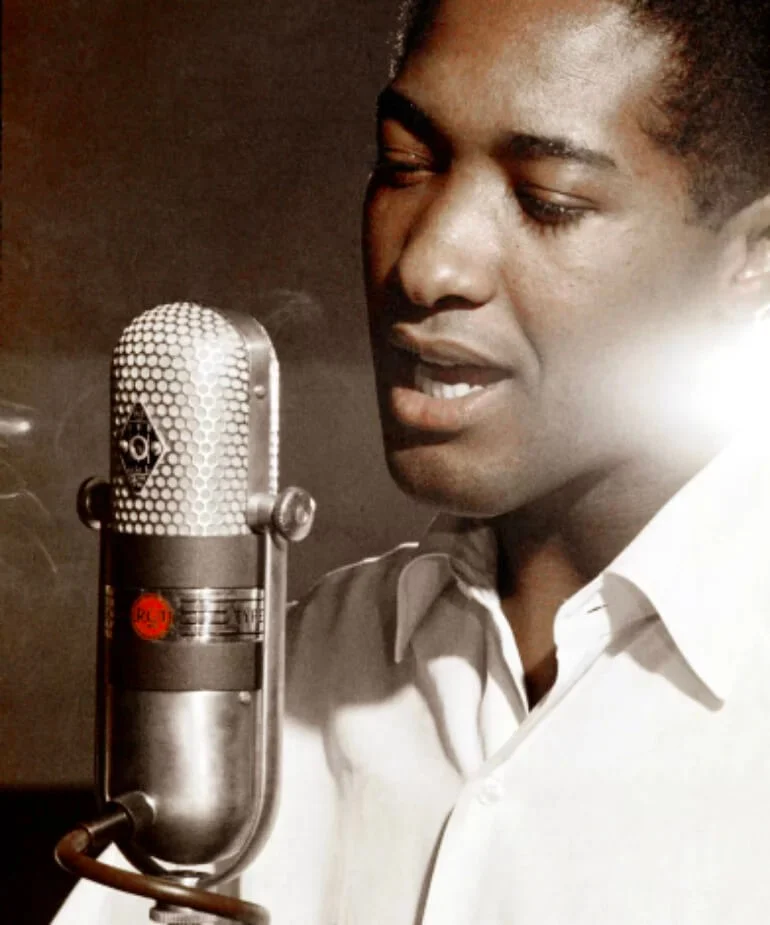
In the vast catalog of American soul music, not many songs capture the messy reality of love like Sam Cooke‘s ‘Bring It On Home to Me’. It is a raw confession wrapped in a hypnotic harmony. The narrator admits his deepest fault. He let his lover walk away, and now he is filled with regret. ‘I know I laughed when you left,’ he sings. ‘But now I know I only hurt myself.’ This was not just a vocal performance. It was an exorcism.
The magic of the track was forged by two voices. Cooke enlisted a young Lou Rawls to sing the low harmony. Rawls, who was just beginning his own storied career, provided a perfect baritone anchor. He balanced Cooke’s bright, soaring tenor. They sing as one man, a single soul pleading for redemption. The arrangement by René Hall supports this intimacy. Ernie Freeman’s piano is the rhythmic heartbeat. A lone saxophone weeps. The strings are present but feel like a distant memory of a sweeter time. Produced by the team of Hugo and Luigi, the recording was stripped down and raw by pop standards.
Sam Cooke was a man of many voices. He could deliver a polished pop hit with the ease of a crooner. He could also reach back to his gospel roots with the Soul Stirrers. ‘Bring It On Home to Me’ sits perfectly at that intersection. It is secular music with the spirit of a Sunday sermon. The song was released on May 8, 1962, by RCA Victor. It was the B side to the upbeat ‘Having a Party’. Despite being the secondary track, it became a monster hit. It climbed to number two on the Billboard Hot R&B Sides chart. It also crossed over, landing at number thirteen on the Billboard Hot 100. This success was a testament to Cooke’s deep connection with his audience.
The early sixties were a transformative period for Cooke. He had left the Keen label and moved to the powerhouse major RCA. But his most revolutionary act was forming his own companies. He created SAR Records, along with publishing and management firms. At a time when many African American artists were stripped of their rights, Cooke seized control of his own marketing, promotion, and sales. He was a musical maverick on and off the stage.
Lyrically, ‘Bring It On Home to Me’ is a masterclass in emotional complexity. The narrator offers everything to win back his love. Jewellery and money. His eternal devotion. ‘I’ll always be your slave until I’m buried in my grave,’ he promises. But he cannot fully abandon his pride. In the final verse, he gets in one last dig. He reminds her that she stayed out all night. He forgives her, but he makes sure she knows the score. This contradiction is what makes the song so enduring. It does not offer a simple happy ending. It offers a messy, human truth.
Baby, bring it to me. Bring your sweet loving. Bring it on home to me.
With this classic, Sam Cooke created a timeless document of heartache. It is a perfect storm of gospel roots, pop sensibility, and raw vocal talent. The song remains a testament to the power of a vulnerable voice.