
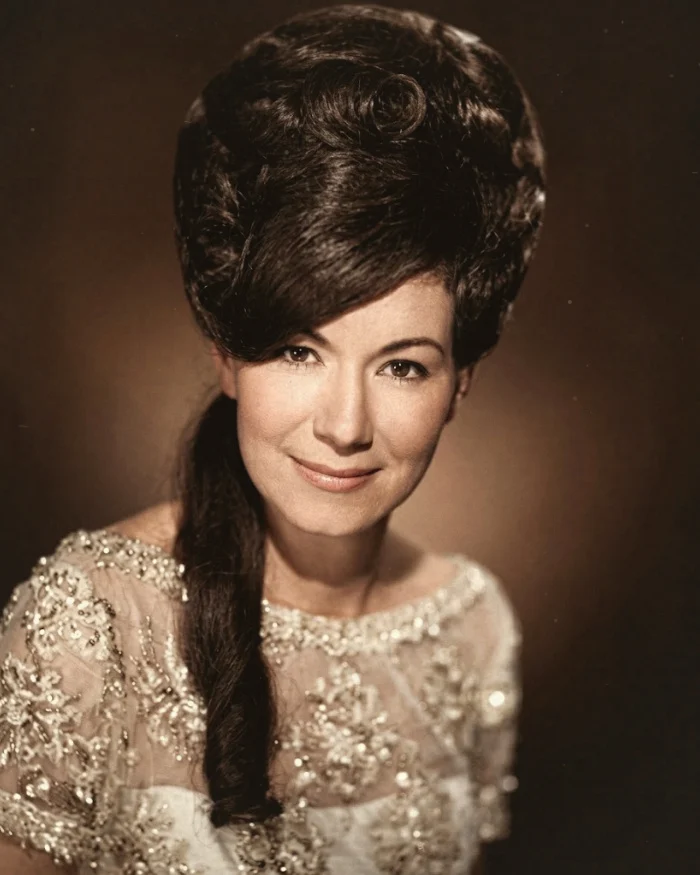
She once owned a mansion, a Corvette, and a fortune built from a golden voice. In August 1990 Dottie West sat inside her home, wept before a television crew, and admitted she was completely broke.
The collapse traced back to a defiant choice. In 1983 the 51-year-old country legend shocked Nashville by marrying Alan Winters, a 28-year-old sound engineer.
The 23-year age gap drew cruel mockery from the press and the public. Many ridiculed the severe difference in their ages, but West refused to hide her relationship.
After decades of grinding industry pressure and two painful divorces, she was exhausted. Her first marriage to Bill West had ended in 1972, and her second marriage to Byron Metcalf collapsed in 1981 after a $55,000 settlement.
When she chose Winters, her own sound technician, she wanted a quiet promise of companionship. She believed his youth and devotion could finally become the safe harbor she had searched for.
The sanctuary did not last. Behind closed doors the relationship quickly became turbulent and emotionally punishing.
By 1988 West was forced to file for divorce. The legal papers cited cruel and inhuman treatment and irreconcilable differences, a picture far darker than her public optimism.
The emotional betrayal arrived as her financial empire began to collapse. During her peak crossover success in the early 1980s, West earned between one and two million dollars annually.
She had built a lifestyle defined by a sprawling colonial mansion in Williamson County, Tennessee, custom Bob Mackie stage gowns, and luxury vehicles.
During the chaotic final years of the marriage, that fortune evaporated. As the bitter divorce dragged toward its January 1990 conclusion, Winters sued the struggling singer for $7,500.
That lawsuit was only a fraction of the avalanche. Bad investments, unpaid management disputes, and tax liens from the Internal Revenue Service totaling over a million dollars pushed her into Chapter 7 bankruptcy.
The consequences were absolute. The bank seized her sprawling colonial mansion after a foreclosure sale for $800,000. Her Chevrolet Corvette was repossessed, and Kenny Rogers quietly lent her a vehicle so she could still drive.
At one point, the woman who had won the first-ever Grammy Award for a female country vocalist temporarily lived out of her tour bus in a parking lot.
In the summer of 1991, the Internal Revenue Service held a public auction in Nashville to liquidate her prized possessions. They sold her baby grand piano, her stage wardrobe, and her 1976 Cadillac Fleetwood.
Several fans attended the auction, purchased her belongings with their own money, and immediately handed them back to her.
Yet West refused to surrender her dignity. She relocated to a modest condominium in Nashville and continued to book shows, determined to sing her way out of the ruin.
You can knock me down, but you better have a big rock to keep me down
She never got the chance to fully rebuild. In September 1991, just over a year after the divorce from Winters was finalized, West died from injuries sustained in a car crash while rushing to a Friday night performance at the Grand Ole Opry.
The tragedy was not simply that she married a younger man. It was that a woman who spent her life singing about love watched the partner she trusted and the empire she built disappear at the same time.