
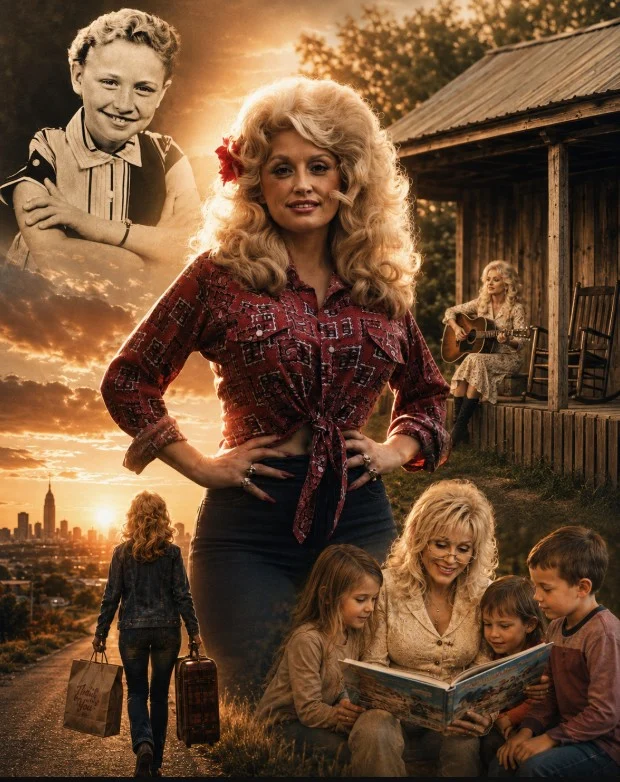
Two dollars. A paper bag of dirty laundry. A bus ride into a city that had no plan for a girl from a one-room cabin in the Great Smoky Mountains. Dolly Parton arrived in Nashville the morning after her 1964 high school graduation with almost nothing in her hands and an entire future on her shoulders.
She grew up as the fourth of twelve children in a household where music was not a dream kept on a shelf. It was a living thing. Her father worked the land and took manual labor jobs. Her mother raised children in a home without running water. In that world, singing became a path through hardship, not just a hope for later.
By thirteen, she had already stood on the Grand Ole Opry stage, introduced by Johnny Cash. Fame did not wait for her to feel ready. It met her early, and she met it back.
Nashville was still a town built around men who controlled the room. When Porter Wagoner brought her onto his syndicated television show in 1967, audiences pushed back hard. They missed his previous singing partner. They made that clear from the first night. Dolly did not shrink. She wrote. She sang. She turned resistance into a national platform over seven years, creating classics like “Coat of Many Colors” and “Jolene.”
She did not ask Nashville to make room for her. She made a room so bright the town had no choice but to see her.
When she decided to stand on her own in 1974, she wrote “I Will Always Love You” in a single afternoon. It was a respectful farewell to Wagoner, but it was also a declaration. She would not stay in someone else’s shadow just because the shadow paid well.
Leaving came at a steep cost. It sparked legal battles and forced her to buy her way out of contracts. Yet the decision protected the one thing she refused to surrender, her creative freedom.
That same fierce instinct appeared when Elvis Presley wanted to record the song. His manager, Colonel Tom Parker, told her that Presley required half the publishing rights to any song he cut. The offer could have changed her life overnight. It could have brought wealth, exposure, and a stamp of approval from the biggest star in music.
She walked away. She said no to Elvis so she could say yes to herself.
By keeping her publishing rights and building her own companies early, Dolly held full ownership of her work. That choice became the quiet engine behind everything that followed. It helped fund a theme park in East Tennessee, bringing thousands of steady jobs to the region. It helped launch the Imagination Library, which has mailed more than 200 million free books to children around the world.
The rhinestones, the wigs, and the warm smile became famous. The steel behind them mattered just as much. Dolly Parton did not only survive Nashville. She rewrote the rules of what a country artist could own, what a woman could keep, and what a small-town dream could build.