
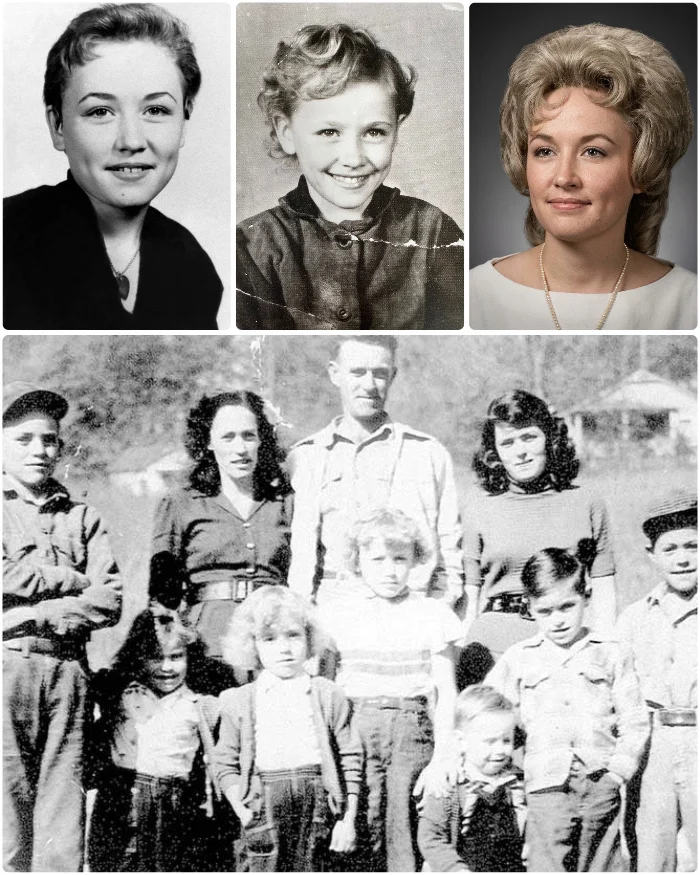
A newborn girl arrived in a Tennessee cabin without electricity in 1946, and the only payment for the doctor was a sack of cornmeal. That child became Dolly Parton, and the story begins far away from glittering stages.
On January 19, 1946, Robert Lee and Avie Lee Parton welcomed their fourth child in a one-room home at Locust Ridge, Tennessee. There was no running water and no cash. Robert Lee handed the doctor a sack of cornmeal as the only currency the family could offer.
Winter in the Smoky Mountains could feel like a test of endurance. Three or four Parton children would crowd into one bed so their bodies could hold heat against the bitter cold.
Avie Lee fought the wind with whatever she had. She pasted pages torn from old Sears catalogs over cracks in the wooden walls. When supper never came, her lullabies carried the children into sleep. Music was a survival tool long before it became a career.
Young Dolly built her first stage from imagination. A tin can wedged onto a tobacco stick became her microphone. She stood on the porch of the mountain home and sang for chickens and pigs.
Her uncle Bill Owens heard her gift and helped her sing on local Knoxville radio when she was ten. Television appearances followed before high school, and the world began to notice the voice from the hollow.
Her grit came from watching her parents. Robert Lee could neither read nor write, yet his calloused hands kept the family alive through fields and hard labor. Dolly carried that lesson into every contract and every recording session.
When she needed a winter coat, Avie Lee stitched colorful scraps given by neighbors into one garment. That coat became a lasting symbol of dignity, proving poverty could never erase a family’s worth.
On the morning after her high school graduation in 1964, Dolly packed a flimsy bag, left Sevierville, and boarded a bus to Nashville.
Music Row in the 1960s was tough and often unwelcoming. The Nashville Sound favored polished strings, and executives pressured rural singers to soften their twang. Dolly held her ground in a male-dominated town. She and her uncle knocked on doors, pitched original songs, and protected her publishing rights.
She refused to hide her roots. Instead, she made them the heart of her art. The patchwork coat became a song, and she reportedly wrote it on the back of a dry cleaning receipt while traveling on a tour bus in 1971.
When she recorded that deeply personal tribute in RCA Studio B, she turned family hardship into a country standard. She kept the Appalachian sincerity that many industry voices wanted to erase.
Music was never just entertainment for her. It was warmth on a freezing night.
Years later, after building a global entertainment empire, Dolly bought and precisely restored that exact childhood cabin. She preserved the place where catalog pages blocked wind and lullabies soothed hungry children.
The rhinestones and towering wigs became famous around the world, but the foundation was the dirt porch, the tin can, and the belief that a mountain girl could turn a hollow into a stage.