
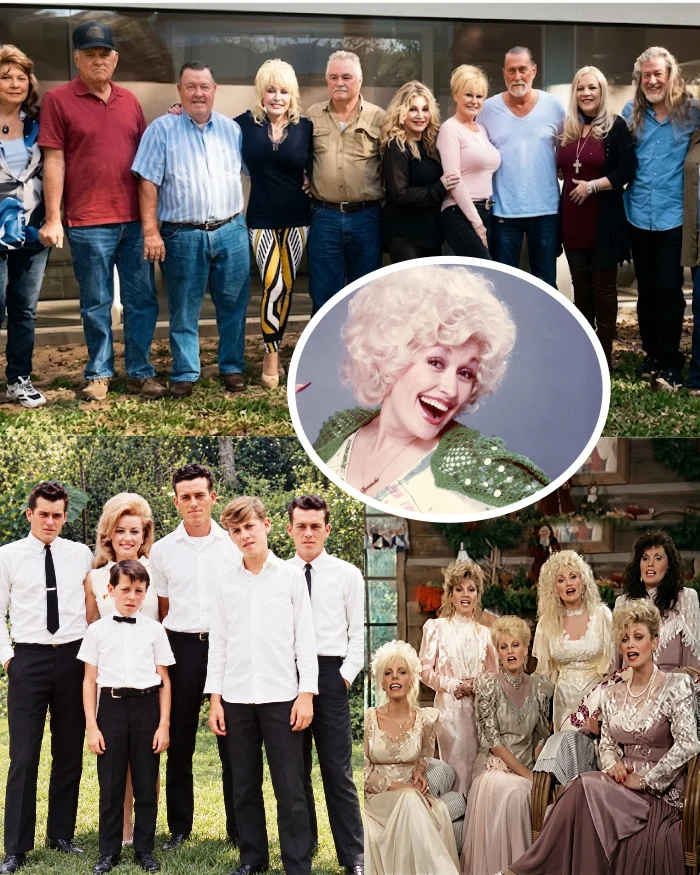
Decades before the applause grew deafening, Dolly Parton was already protecting her family in a dark Tennessee cabin, where children crowded together for warmth and she learned the fierce duty of a second mother.
When she boarded a bus to Nashville in 1964, she left that cramped wooden home behind, but she never left the people inside it. Her rise was not a solo journey. It became a rescue mission.
Born the fourth of twelve children in the Locust Ridge area of Sevier County, Tennessee, Dolly carried responsibility long before she carried a microphone. The Parton kids survived extreme mountain poverty by relying entirely on each other. In bitter Appalachian winters, three or four children could share one bed just to keep the cold away.
Her breakthrough did not arrive overnight. She worked relentlessly as a struggling songwriter and then gained national exposure as a featured vocalist on Porter Wagoner’s television show. Once royalty checks stabilized and her solo career gained traction, she made a decisive choice. She would not let her bloodline stay stranded in the mountains.
She did not simply mail cash back to Sevierville. She brought several younger siblings to Davidson County and helped them adjust from a rural home without indoor plumbing to the fast pace of Nashville. She paid for housing and education, giving them the quiet, well-lit rooms they had never known.
Then she opened doors without trapping them behind her fame. She recognized the musical talent running through her family and guided them into entertainment with care. Randy Parton played bass, sang backup in her touring band, and recorded duets with her. Floyd Parton built a career as a Nashville songwriter, later writing Rockin’ Years, a chart-topping duet for Dolly and Ricky Van Shelton.
Her sisters also found their own paths. Stella Parton landed a major country hit in 1975 with I Want to Hold You in My Dreams Tonight. Rachel, the youngest of the twelve, moved into acting and starred in the television adaptation of 9 to 5, taking over the workplace role her older sister originated on film.
Dolly hired siblings for backup singing, band work, and operations, but she pushed them to become self-sufficient professionals. She provided the stage, yet they had to do the daily work. That balance preserved dignity while offering protection in an industry known for chewing up young artists.
By the mid-1980s, the family’s growing footprint needed a permanent anchor. When Dolly helped rebrand a local theme park into Dollywood in 1986, she shaped it into more than a tourist attraction. It became a sprawling family estate and employment hub.
The park created steady jobs for dozens of relatives and insulated them from the volatile Nashville gig economy. Siblings like Cassie and Randy headlined their own daily shows on park stages. Her brother Bobby oversaw major construction projects, including a precise replica of their childhood cabin.
To the world, she was a global superstar moving between sold-out arenas and Hollywood sets. Inside the family, the rhythm remained familiar. She was still the older sister organizing the household, making sure everyone was fed, safe, and employed.
Her songwriting wealth gave her power in the music business, and she used that power as a protective shield around her brothers and sisters. The empire of rhinestones and hit records had one enduring purpose.
“Dolly turned childhood duty into a lifelong promise, so the family who once shivered together could always stand in the light.”