
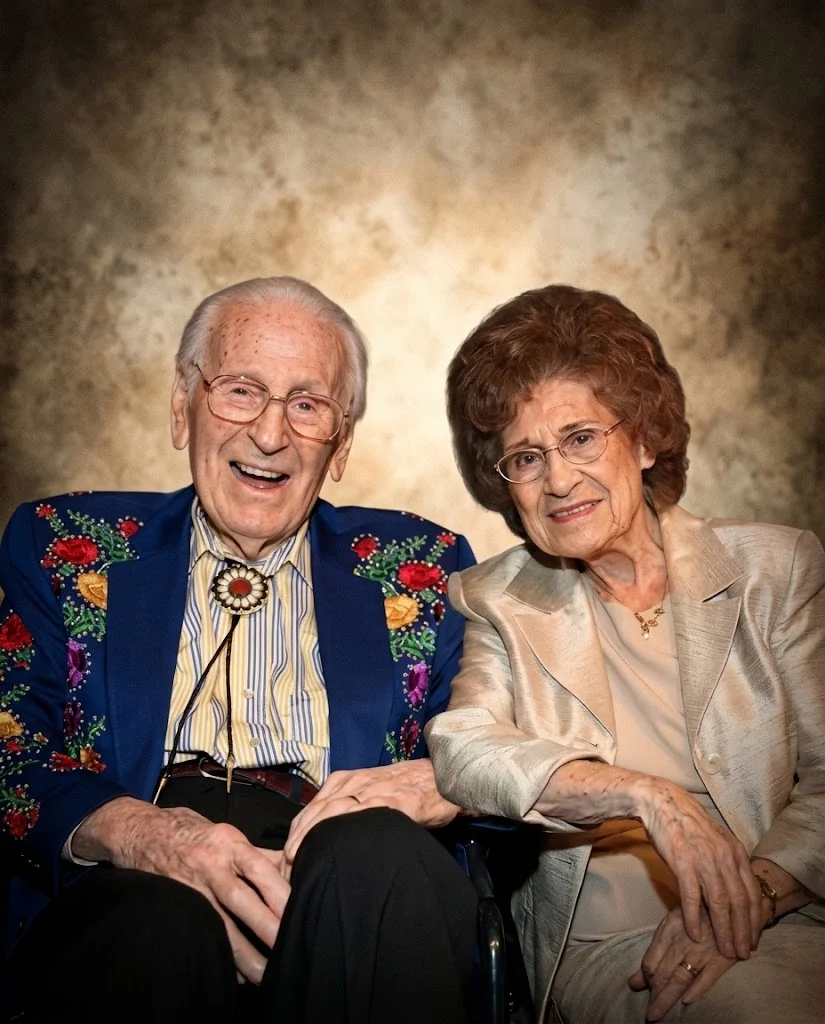
On the morning of July 16, 2012, Kitty Wells slipped away from the roaring world she had once commanded. The country music pioneer died at age 92 inside her long-time family home in Madison, Tennessee after complications of a stroke.
She did not leave behind a hospital bed or a stage full of flashing lights. She left behind a quiet room and a life shaped by devotion. Her final morning carried a tender sorrow because it came less than ten months after the death of her husband Johnnie Wright.
Wells and Wright had shared 74 years of marriage and nearly every hard road of a music career. They had built a partnership since 1937. When Wright died in September 2011, the woman the world knew as a legend became a grieving widow in a familiar house.
Her public story was louder than her private ending. Born Ellen Muriel Deason, she once considered stepping away from music to focus on her family. In the spring of 1952, she was 32 and a mother. She agreed to record It Wasn’t God Who Made Honky Tonk Angels because Wright saw it as a simple way to collect a standard $125 union recording fee.
That decision changed American music. The song pointed the blame at straying men and challenged a male-dominated Nashville system. Radio stations refused to play its unapologetic lyrics and the Grand Ole Opry temporarily banned the record from live broadcasts.
The pushback failed. The track sold more than 800,000 copies, ruled the Billboard country charts for six weeks, and showed that a female solo artist could headline tours on her own merit. She opened the road for Patsy Cline Loretta Lynn Dolly Parton and generations of women who followed.
Nashville later honored her foundational power. She entered the Country Music Hall of Fame in 1976 and received a Grammy Lifetime Achievement Award in 1991. Yet she never let the industry swallow her home life.
When she retired from performing in 2000, she traded applause for the comfort of her living room. In her final hours, the heavy crown fell away and the pioneer returned to being Muriel.
She spent her life opening doors and her final hours finding peace.
Her passing felt less like a tragic end and more like a quiet departure toward the man who had waited for her. She had spent decades breaking barriers for future generations. At the close of her journey, her deepest comfort remained inside the walls of her own home.