
Fifty years after a rushed wedding in a tiny Georgia church, Dolly Parton and Carl Dean stood together in a private Nashville chapel and reclaimed the dream the music business once tried to steal. There were no cameras, no crowd, and no red carpet. The golden anniversary renewal was quiet, yet it carried the weight of a lifelong bargain between fame and love.
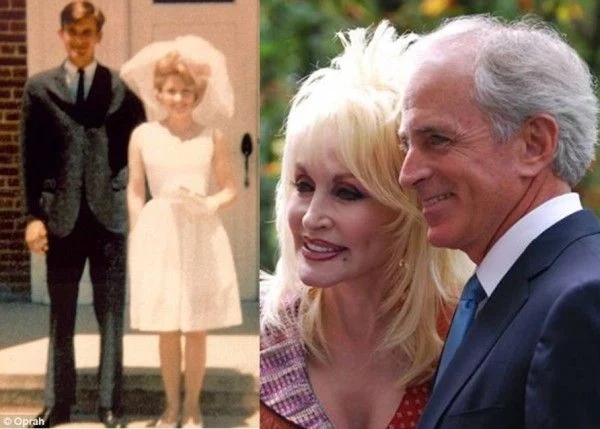
The story began in 1966, when Monument Records warned a 20-year-old country singer that marriage could ruin her appeal. Dolly Parton did not choose between her career and Carl Dean. She chose a hidden path. The couple crossed into Ringgold, Georgia, on Memorial Day weekend and married before her mother, Avie Lee, who served as the only witness. Dolly wore a simple short white dress made by her mother. The ceremony moved quickly, shaped by fear and determination.
What made their union endure was not secrecy alone. Carl promised he would never block her career. Dolly promised she would never drag him into the spotlight. That mutual respect became a private foundation beneath her public brilliance. It gave her a safe place to return to after every stage, studio session, and tour. It also gave her the courage to write bold songs about heartbreak, betrayal, and freedom.
While Dolly conquered the world in rhinestones, towering wigs, and custom jumpsuits, Carl remained a quiet asphalt contractor in Nashville. He rarely attended concerts. He avoided industry events. Their marriage survived a fragile entertainment landscape because they refused to mix two very different worlds. He did not need fame to stand beside her. She did not need his name in lights to feel loved.
Half a century later, the renewal gown finally matched the ceremony they deserved. Dolly wore a lavish off-the-shoulder custom gown designed by longtime creative director Steve Summers. Carl, usually at home in blue jeans and work shirts, stepped forward in a classic suit. The private moment became a correction of the rushed 1966 vows, and a celebration of a love that stayed steady while the world watched her shine.
Even then, the couple turned their intimacy outward. After decades of protecting Carl from public view, Dolly allowed rare photographs of the vow renewal to be released. The images were not sold for vanity or gossip. The proceeds supported her Imagination Library, transforming a private milestone into free books for children around the world.
Their story is not simply a marriage that lasted fifty years. It is proof that a quiet sacrifice can become a lasting triumph when it is protected by trust, respect, and a shared refusal to let the industry decide what love must look like.
The music business once told her that a husband would cost her a career. Instead, the man she kept in the shadows became the anchor that let her stay in the light.