
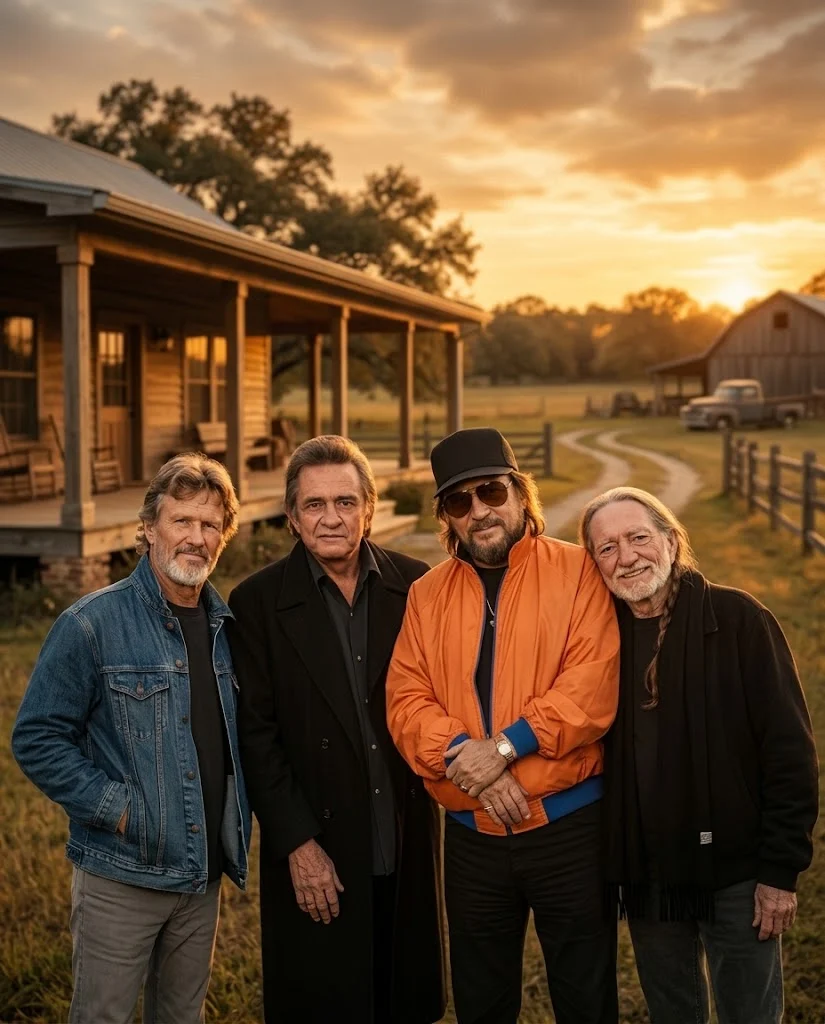
The most lasting picture from a Highwaymen concert was not a single star claiming the center of the stage. It was four of the fiercest independent voices in country music choosing to stand behind one another while thousands watched.
Johnny Cash, Willie Nelson, Waylon Jennings, and Kris Kristofferson formed The Highwaymen in 1985. Their union produced three studio albums, yet the road became the truest stage for their shared story. During the late 1980s and the 1990s they carried the Outlaw movement into arenas, amphitheaters, and international stadiums. A famous 1990 show at Nassau Coliseum remains a vivid marker of that era.
On stage, the atmosphere felt cinematic and intimate at once. The lighting was low and dramatic. The setup was simple. The four men stood shoulder to shoulder at microphones, and the performance took on the spirit of a rugged campfire gathering rather than a polished arena spectacle.
Building a setlist for four prolific legends was a delicate task. Each man had songs that audiences expected to hear. Cash brought “Ring of Fire” and “Folsom Prison Blues.” Nelson brought “Always on My Mind.” Jennings brought “Are You Sure Hank Done It This Way.” Kristofferson brought “Me and Bobby McGee.”
Yet the group treated the night as one narrative. Historical accounts and archival footage suggest their rehearsals were relaxed acoustic circles. The four friends sat together and mapped the evening with a quiet democratic grace. There was no sense of a tense competition for spotlight.
The blueprint came from their first hit together, Jimmy Webb’s “Highwayman.” That song gave each singer a different character from a different century. The stage arrangement followed the same idea. They traded verses and let each voice serve the lyric rather than force perfect polished harmonies.
Kristofferson carried weathered poetic lines. Jennings added gritty driving muscle. Nelson brought jazzy unpredictable phrasing. Cash anchored everything with his booming baritone.
The emotional climax often arrived when the spotlight shifted. When Cash thundered into “Folsom Prison Blues,” Nelson and Jennings would move back from the center. They smiled from the shadows, playing rhythm guitar and singing harmony for their friend.
True greatness did not need to fight for attention. It could step aside and lift another voice.
These were men who had survived hard roads. They had challenged Nashville, battled personal demons, and carved their places in country music history on their own terms. Their later years together revealed something gentler. They found joy in supporting each other.
That was the quiet power of The Highwaymen. Their brotherhood did not erase their individual legends. It placed them side by side and let each man shine without diminishing the others.
Their concerts left a standard that later country collaborations have rarely matched. The Outlaws had traveled lonely roads for years. On those stages they showed that they did not need to walk the rest of the road alone.
The memory endures because it was never only about four famous names. It was about respect, humility, and friendship turning a massive arena into a place that felt human.