
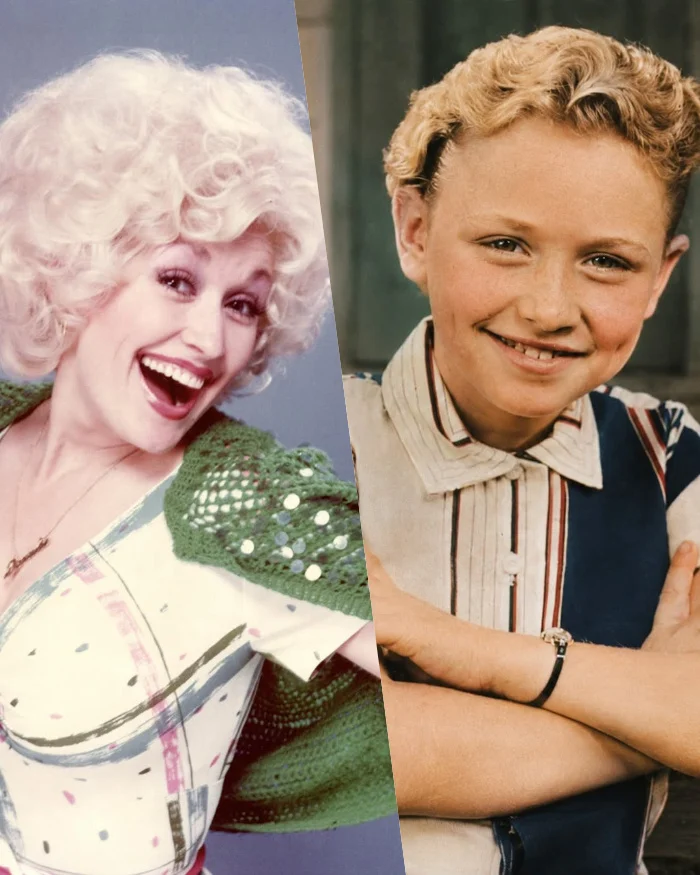
Before she crossed the county line, Dolly Parton turned back to face the dirt road. A quiet vow formed in her heart.
I will not walk back up that road until I am successful.
At eighteen, with a high school diploma fresh in hand, she carried everything she owned in paper grocery bags and cardboard boxes. No suitcase. No cushion for the fall.
Back in the Great Smoky Mountains of Sevier County, Tennessee, neighbors whispered their doubts. They saw the fourth child of a dirt poor family of twelve and assumed Music Row would swallow her whole. They predicted she would buy a return bus ticket before the first money ran out. But Dolly had seen her parents, Robert Lee and Avie Lee, struggle to feed a crowded one room cabin. She knew that failure meant condemning her younger siblings to the same crushing poverty.
Nashville greeted her with empty pockets and a strange silence. She and her uncle Bill Owens shared a cramped space and scrounged for food. At the Wishy Washy Laundromat, a young man named Carl Thomas Dean drove by in a white Chevrolet and stopped to talk. That chance meeting led to a private marriage that has lasted more than half a century. But even a new relationship could not instantly change her financial reality.
During the leanest weeks, Parton survived on free condiment packets. She asked for cups of hot water at diners, tore open ketchup and mustard packets, and stirred them together to create a makeshift tomato soup. It was not a meal fit for a rising star, but it kept her alive. She refused to retreat to the mountains.
The relentless pavement pounding paid off when Fred Foster of Combine Music and Monument Records recognized the piercing quality of her voice. He signed her as a writer, providing the first steady income. That was the crack in the wall. Within three years, her songwriting caught the attention of Porter Wagoner, who hired her for his television show in 1967. For seven years she performed alongside him, building a national audience.
But Parton had not come to Nashville to remain a permanent co star. In 1974, she made the difficult choice to leave the show and launch a solo career. She wrote a heartfelt farewell song that wished Wagoner well while asserting her independence. From that moment, she controlled her own destiny. She established publishing companies and protected her copyrights with sharp business acumen. By the late seventies, she had crossed over into pop music and Hollywood.
Decades after leaving Sevier County, Dolly Parton returned to the Smoky Mountains. She did not come back in defeat. In 1986, she opened Dollywood in Pigeon Forge, a massive venture that transformed the local economy. Today she is the largest employer in her county, creating thousands of jobs for the same community that once assumed she would fail. She also launched the Imagination Library, a literacy program that gives books to children. The quiet vow made on a dirt road in 1964 had built an empire large enough to take care of the hometown she left behind.