
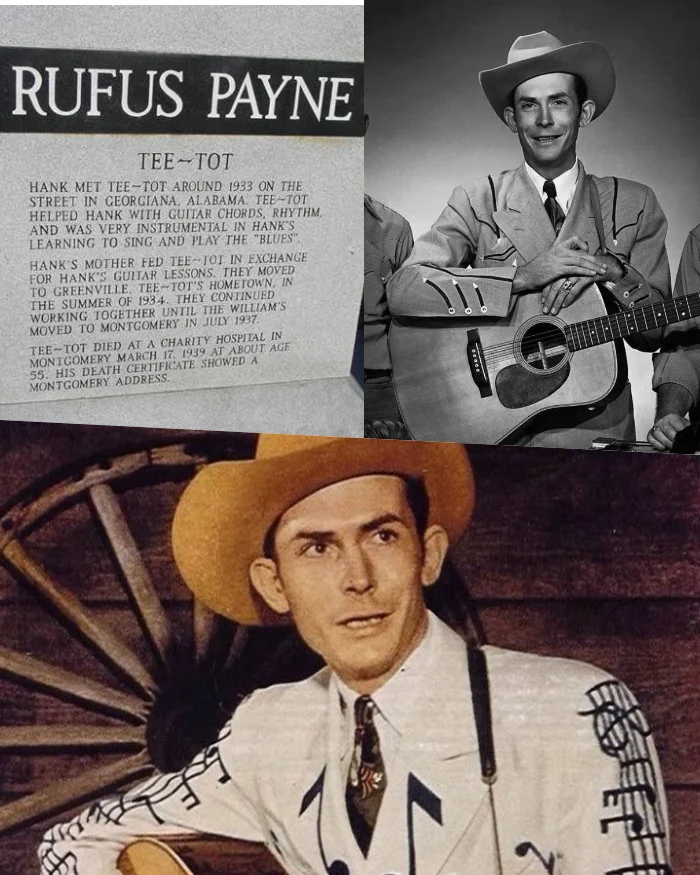
Rufus Payne was the only music teacher I ever had.
Hank Williams spoke those words long after he had conquered the Grand Ole Opry and reshaped the sound of American country music. The man in the tailored suit could have told a cleaner story to fit the Nashville machine. He chose something far more honest instead. The foundation of his legendary sound did not begin in a studio. It began on the hidden porches of Georgiana, Alabama, in the darkest years of the Jim Crow South.
A frail and fatherless boy with a painful spinal condition followed a Black blues singer through the dusty streets. Rufus “Tee-Tot” Payne knew the danger of that public bond. In that era a white child trailing a Black musician was an invitation for violence. Payne warned the boy to keep his distance but the boy would not listen. He carried a cheap guitar and an unbreakable hunger to learn.
Their arrangement was simple and fair. Williams earned small change selling peanuts and shining shoes near the train depot. Those coins bought his lessons. On quiet porches away from hostile eyes Payne taught him how to tune the strings, bend the notes into heartbreak, and feel the deep rhythmic pulse of the blues. Music became their only safe ground. The folk melodies of a poor white boy merged with the lived experience of a marginalized Black artist in that unlikely classroom.
Payne gave Williams more than technique. He gave him a driving percussive “sock rhythm” that would later anchor the Drifting Cowboys in the studio. That exact blues timing allowed Williams to bridge old hillbilly music with the energetic bounce that helped shape rock and roll. The lessons were stitched into his earliest recording sessions and they remain a critical layer of country music history.
At the height of fame Williams refused to erase his teacher from the story.
He consistently told reporters and radio broadcasters that Payne was the only music teacher he had.
In a deeply segregated era he used his platform to honor a street musician who died in poverty. He never claimed to invent his rhythm in a vacuum and he made sure the public knew exactly whose hands showed him the way.
The boy who reshaped country music carried Tee-Tot’s rhythm from a dusty Alabama porch to the center of the American stage. A transaction of shoe-shine coins changed the architecture of the genre forever. That quiet exchange remains one of the most powerful debts in music history.