
“You’ve never been this far before / And you don’t know the way.”
Few records in country music history arrived wrapped in such quiet, combustible tension. When Conway Twitty’s voice first emerged from car radios and console stereos in 1973, it didn’t announce itself with a flourish. It crept in, low and intimate, like a hand reaching for yours across a restaurant table. The nation leaned in, and immediately, a firestorm ignited.
You’ve Never Been This Far Before became an instant cultural flashpoint. Conservative programmers yanked it from playlists, scandalized by lyrics that traced the boundary between hesitation and surrender. Yet the public, hungry for stories that mirrored their own hidden complexities, propelled it to the top of the charts. It became Conway Twitty’s tenth number one on the US Hot Country Songs tally and crossed into the Billboard Hot 100 Top 40—a crossover that, in 1973, felt almost improbable for a country record so unapologetically adult.
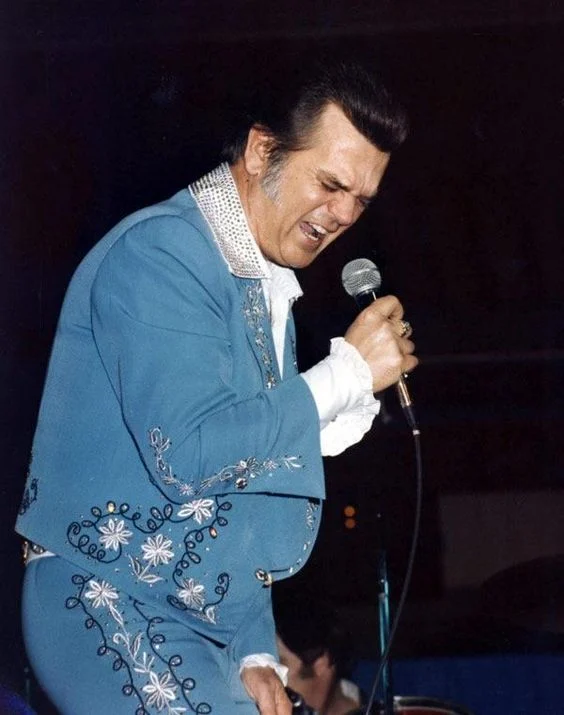
To grasp the weight of that achievement, you must understand the man behind the microphone. Born Harold Lloyd Jenkins, Twitty had already lived several musical lives by the early seventies. His rockabilly roots gave way to a complete reinvention as Nashville’s most nuanced interpreter of desire and regret. He wasn’t the swaggering outlaw or the jilted barroom howler. He was the man who leaned close, voice barely above a whisper, offering not judgment but understanding. This title track from his 1973 album on MCA Records stands as the crowning moment of his Countrypolitan era—a sound that sanded away honky-tonk grit while preserving every ounce of raw emotional truth.
The genius, however, belonged as much to the architect behind the glass as to the voice in the booth. Producer Owen Bradley, the architect of the legendary Nashville Sound, understood that material this charged demanded restraint, not spectacle. The arrangement does not crash; it conspires. Bradley designed a sonic environment meant not for dance floors but for late-night drives, for the silence after an argument, for headphones and solitude.
“The genius of Owen Bradley’s production on this track is how he uses lush orchestration to create a feeling of absolute, devastating isolation.”
The song opens not with a riff but with a deep, sustained electric guitar chord—warm, nocturnal, almost tactile. No twang, no aggression. Immediately, a brushed drum pattern follows, a heartbeat slowed to something almost hesitant. The bass line moves with velvety, unhurried grace, anchoring the whole enterprise in a kind of sensual gravity.
Then Twitty enters. His voice is a low rumble that can shift from croon to break in a single syllable. He employs his signature speaking-singing style, a theatrical intimacy that makes the listener feel like the sole recipient of a confidence. “You’ve been telling me all night long / That you’d better be goin’ home…” The phrasing is deliberate, almost agonizingly slow. He holds vibrato on certain words, stretching the tension like taffy.
The strings arrive not with a swoop but a sigh. They follow Twitty’s vocal line, rising only when he pushes toward emotional peaks, particularly on that repeated, almost pleading refrain: “But you’ve never been this far before / And you don’t know the way.” Beneath it all, a piano traces a simple, melancholic counter-melody—not a solo, but a muted, jazzy presence that adds complexity without stealing focus.
What makes this production so masterful is the contrast it creates. Lyrically, the song is stark and, for its time, overt. Musically, it is grand, orchestrated, and emotionally layered. The high stakes of the narrative are wrapped in the soothing embrace of mature Nashville craftsmanship. Twitty’s vocal restraint amplifies the volatility of the subject matter, leaving space for the listener to inhabit the silence.
This approach to control explains the record’s enduring power. The song survives not because it courted scandal, but because it told the truth about a universal, disorienting human moment—the point of no return. It proved that sophisticated, narrative-driven country music could challenge conventions, conquer pop radio, and retain its soul all at once.
Today, those same textures still find new ears. Imagine a late-twenties couple driving through fog, each hesitant about the road ahead. Or a listener alone at night, finding forbidden comfort in the track’s frank depiction of temptation. The song lives on in these micro-stories, far removed from 1973 yet still tethered to its emotional gravity.
Listening Recommendations
Tammy Wynette – ’Til I Can Make It On My Own (1976): A confessional vocal performance wrapped in Countrypolitan strings, deeply personal and dramatic.
Charlie Rich – Behind Closed Doors (1973): Shares the same year and the intimate theme of a secret relationship rendered with smooth, orchestrated country soul.
Glen Campbell – Wichita Lineman (1968): A brilliant example of crossover Countrypolitan sound, using orchestral swells to elevate a solitary narrative.
Joe Simon – The Chokin’ Kind (1969): Slow-burn soul music with the same sensual vocal approach to relationship tension.
Conway Twitty – Hello Darlin’ (1970): Twitty’s earlier classic that established his spoken-word, close-mic style for relationship drama.
Sammi Smith – Help Me Make It Through the Night (1971): A classic story of fleeting intimacy, delivered with world-weary, knowing grace.