
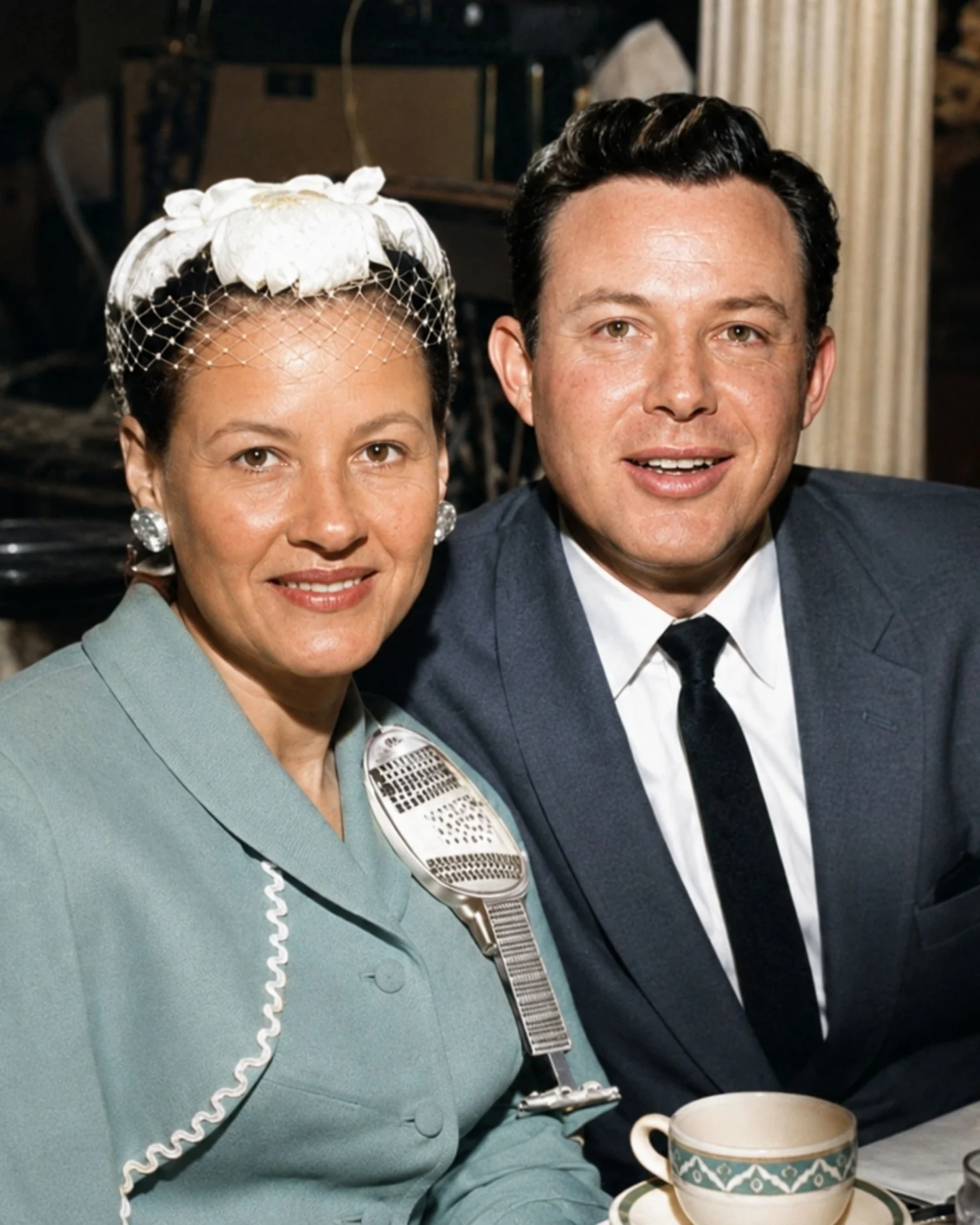
In a 1957 recording studio, Jim Reeves leaned into the microphone and let his voice drop to a near whisper. That moment changed country music forever.
Before that session, Reeves was a known name. He had signed with RCA Victor in 1955 and already scored hits with Mexican Joe and Bimbo. He joined the Grand Ole Opry the same year. His voice was bright and strong, built to fill noisy dance halls and cut through live bands.
But the sound that would define him had not yet arrived.
Four Walls did not arrive with a roar. It arrived with a quiet intimacy that felt almost private. Reeves sang in a lower baritone, close to the microphone, as if he were speaking to one person in a silent room. The song reached No. 1 on the country charts and No. 11 on pop. More importantly, it revealed a new kind of power.
“The microphone could carry power without volume. Reeves understood that restraint could feel deeper than shouting.”
That insight reshaped everything. Reeves stopped projecting outward. He let the listener come closer. His voice became smooth, warm, and conversational. The arrangements followed — strings, soft background vocals, cleaner production — but the country ache remained. He did not abandon heartbreak. He polished the room around it.
In 1959, He’ll Have to Go pushed the approach further. Reeves sang it like a private telephone conversation, low and steady. It became another massive crossover success. Songs like Welcome to My World, Adios Amigo, and Am I Losing You? continued the same path.
The image changed too. The cowboy clothes gave way to tailored jackets. The East Texas singer became Gentleman Jim. But the transformation was not just about appearance. It was about a new philosophy for Nashville: that country music could cross into pop without losing its soul.
Jim Reeves did not need to chase the room anymore. He made the room come to him. And once Nashville heard what a quieter voice could do, the Nashville Sound was born — polished, intimate, and wounded all at once.