
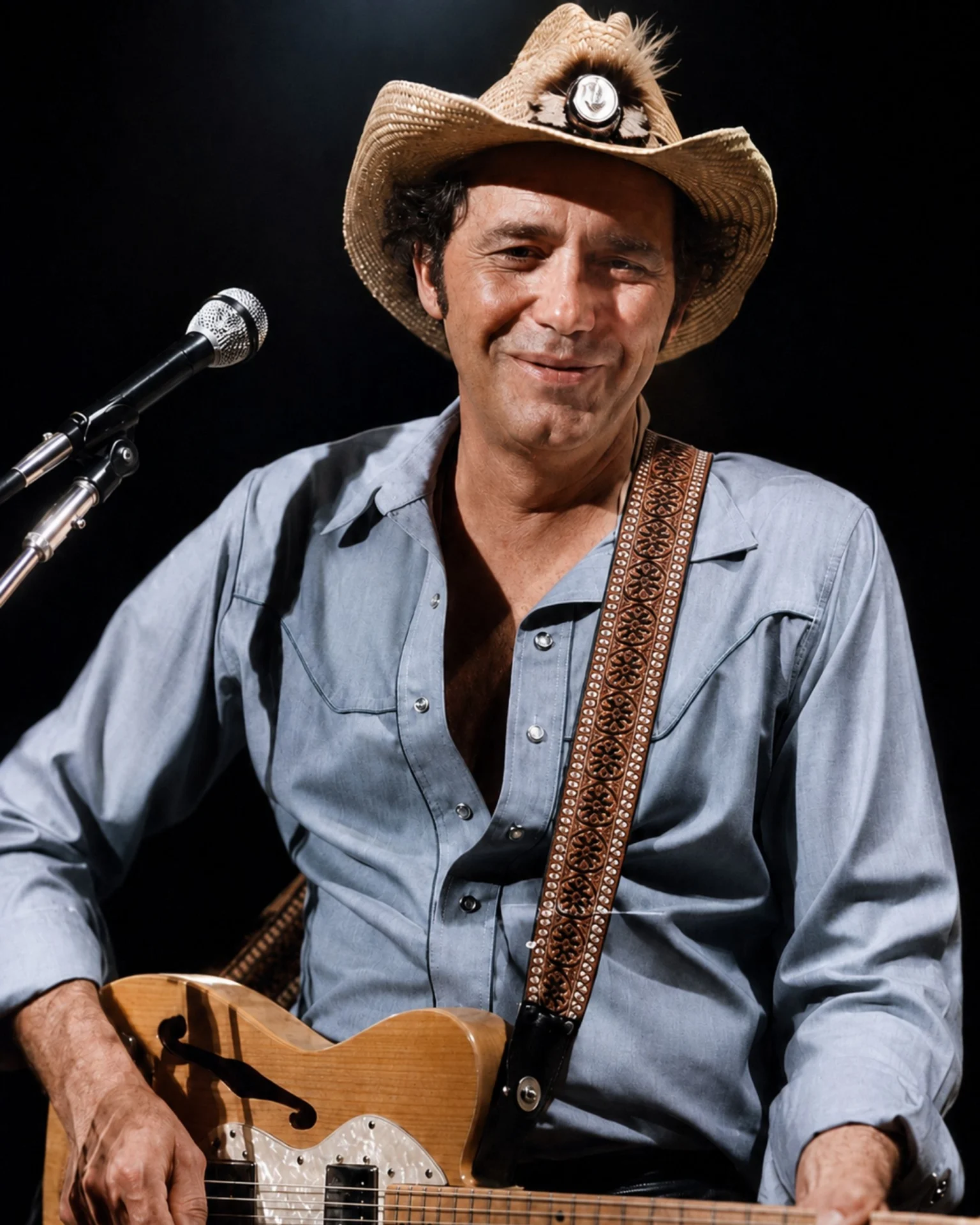
The man whose voice climbed to No. 2 while he was in Army boots still couldn’t get his own career off the ground — until two songwriters cornered the most powerful producer in Nashville.
Bobby Bare had already been through Capitol, Challenge, and Fraternity. He had watched his own vocal cords make someone else famous. When he walked into Chet Atkins’ office in 1962, the only thing he carried was the strangest kind of almost.
Then Harlan Howard and Hank Cochran did something that changed everything.
They “ganged up” on Chet Atkins, Bare later remembered. Kept telling him how good their friend was.
Atkins finally agreed to listen. He told Bare to come back in a week. There would be a contract. They would find songs. They would make a record.
The first single under his own name — “Shame on Me” — broke through with horns and strings, pushing against Nashville’s usual rules. But the real shock came later, when Bare heard Billy Grammer’s recording of “Detroit City” while driving. He joked that the song hit him so hard he nearly wrecked the car.
He cut his own version. In 1963 it reached the country Top 10, crossed to No. 16 pop, and won the Grammy for Best Country & Western Recording.
That record did what “The All American Boy” had not done. It made Bobby Bare visible as Bobby Bare. The voice finally belonged to the man.
Why this story matters — beyond the hit that nearly was — is that it shows how the right allies can rescue a career from obscurity. Howard and Cochran refused to let Bare’s talent stay hidden behind a misprint. Atkins gave him room to be himself. And once RCA put the machinery behind him, the old misfire no longer defined him.
Today, “Detroit City” remains a country standard, a song about homesickness and pretending everything is fine. But for Bobby Bare, it was proof that his own name could finally stand in the same place as his voice.