
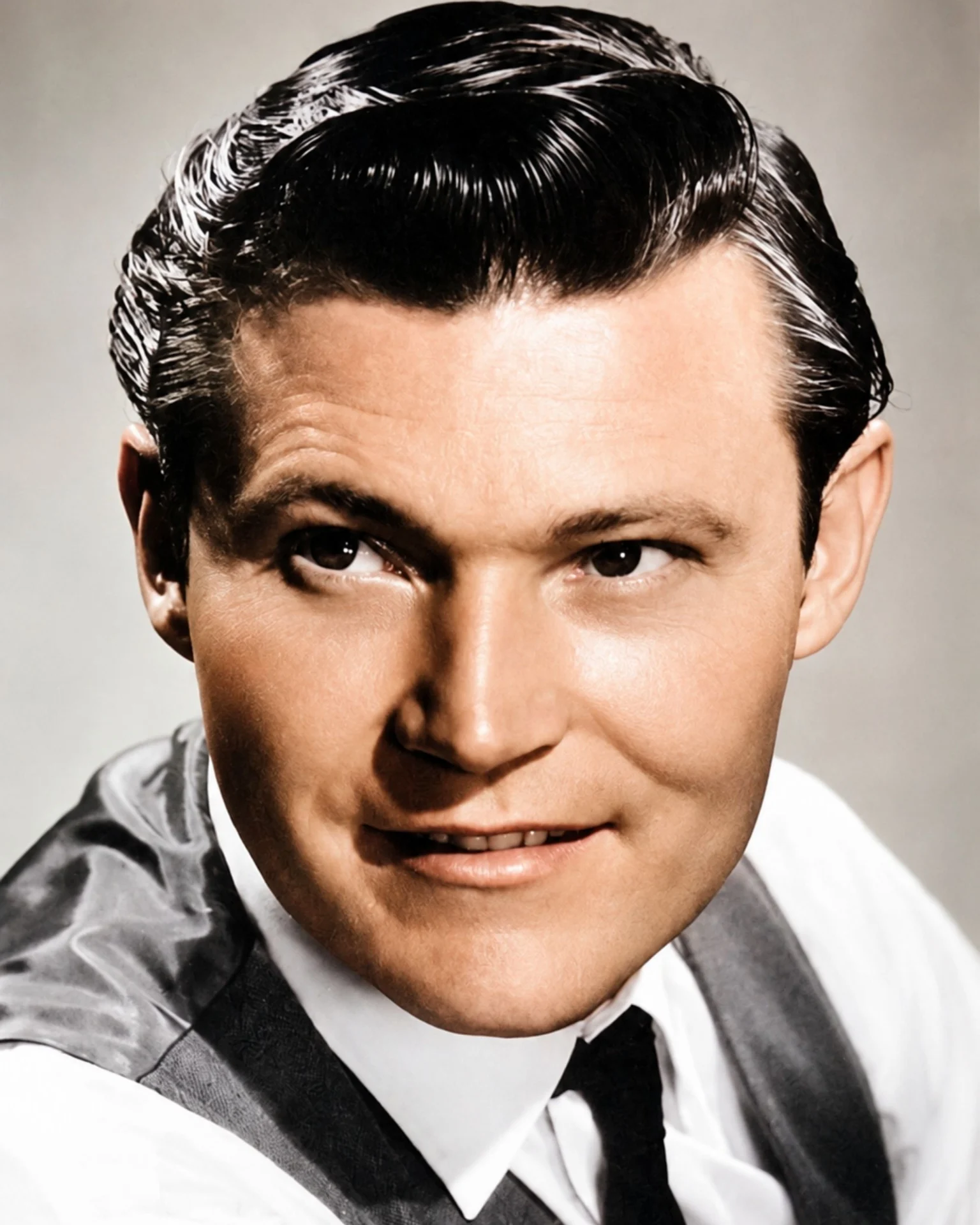
At 16 years old, Stonewall Jackson lied about his age and joined the Army — not out of youthful rebellion, but because he was desperate to escape a brutal sharecropper childhood. Decades later, a single, unplanned walk across a Nashville street would set him on a path to becoming one of country music’s most iconic voices.
“He saw the Acuff-Rose office, walked in, and sang. That was enough to change everything.”
Jackson grew up in rural Georgia with very little. His father died young, and his mother remarried a harsh stepfather who made life deeply unhappy. The family worked as sharecroppers, and Jackson was already looking for a way out by his teens. At 16, he tried to join the Army by lying about his age — a deception that was discovered, leading to his discharge. But the attempt spoke volumes about how badly he wanted to leave home behind.
A few years later, in 1950, Jackson entered the Navy legally and served until 1954. After that chapter ended, country music was still more dream than profession. He eventually made his way to Nashville in 1956, checking into a motel near the Acuff-Rose publishing office. Instead of waiting for an introduction, he simply walked over and asked if anyone would listen to him sing.
Wesley Rose listened.
Jackson performed several songs, and Rose heard enough to take the next step — bringing him to the attention of Grand Ole Opry officials. The unknown singer was given an audition, and the result was almost unheard of: Stonewall Jackson was invited to join the Grand Ole Opry before he had even signed a recording contract.
Columbia Records soon followed. Within a few years, Jackson had major hits including “Life to Go,” “Waterloo,” and “B.J. the D.J.” “Waterloo” reached No. 1 in 1959, turning the former sharecropper into one of the most recognizable hard-country voices of the era. The speed of the change was remarkable — no long Nashville apprenticeship, no years spent waiting behind another star, and no carefully arranged industry introduction.
“He arrived with hunger, nerve, and a voice hard enough to carry the life behind it.”
Jackson’s path defied the usual shape. Instead, it turned on a raw, almost reckless decision: seeing the Acuff-Rose office from across the street, walking through the door, and singing. That single choice gave Wesley Rose a voice to remember — and gave the Grand Ole Opry one of its most unusual new members. The deepest part of this story is not just that Jackson joined the Opry before signing a record contract, but how far he had traveled before that door opened: a father gone early, a brutal sharecropper childhood, a sixteen-year-old lying his way into the Army just to escape. Then the Navy, Nashville, a motel room, Acuff-Rose across the street, and one unplanned walk that put him in front of Wesley Rose.