
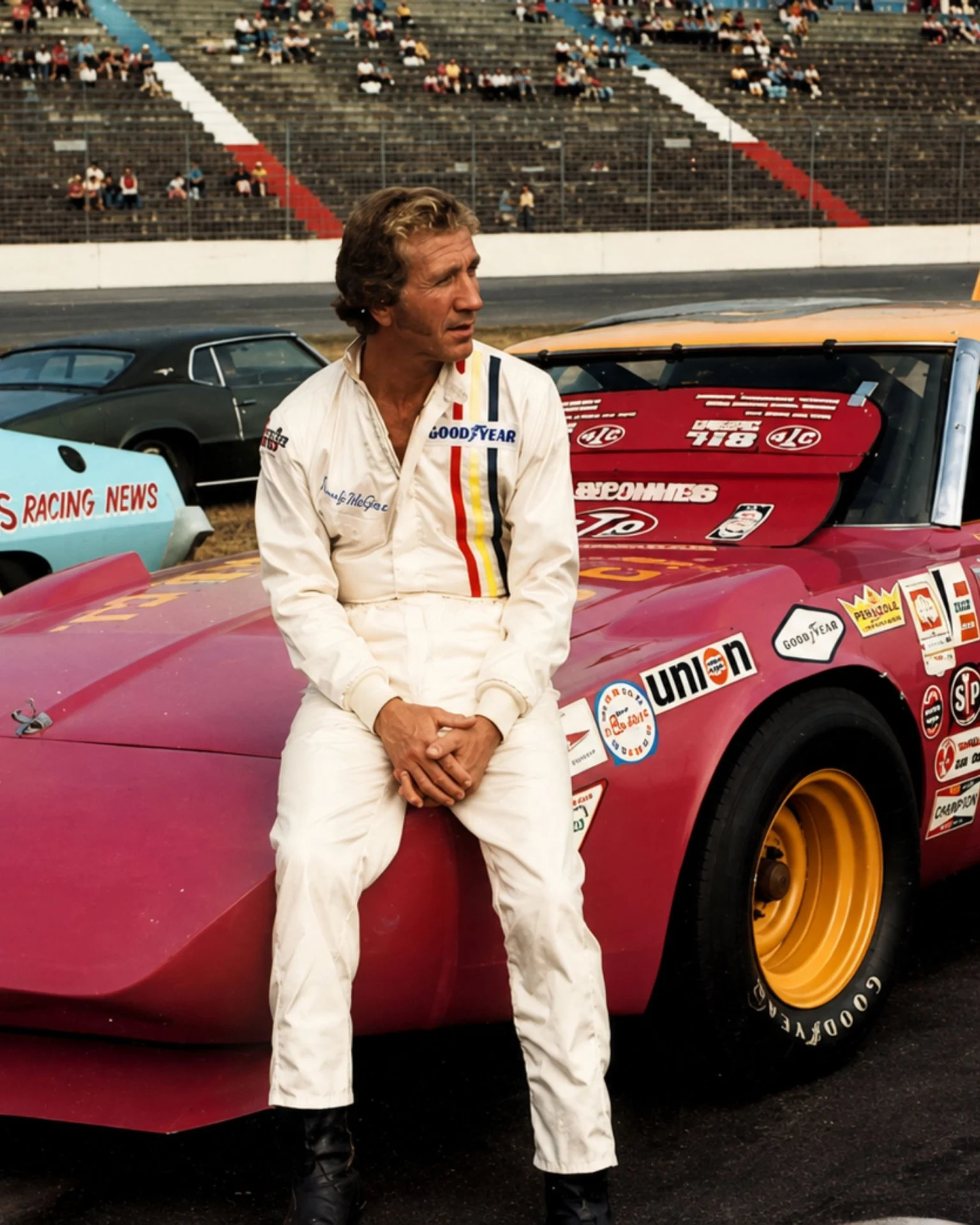
The roar of engines filled the Charlotte Motor Speedway in 1974, but above the noise one sound cut through the chaos: the screech of metal meeting concrete at 160 miles per hour. That sound marked the moment country legend Marty Robbins proved his character was stronger than steel.
Robbins was not a novelty act in NASCAR. He had earned respect with real finishes, posting Top 10 results while balancing a career that had already made him a household name. But no song lyric could prepare him for what happened during the Charlotte 500.
A multi-car wreck erupted ahead, and Richard Childress’s Chevrolet came to a stop with its driver’s side exposed directly in Robbins’s path. There was no time to think, only to react. Robbins later recalled the split-second calculus that saved another man’s life.
“I could not stand the thought of driving straight into another driver.”
He turned right. His No. 42 Dodge slammed into the concrete wall instead of Childress’s car. The impact shattered his ribs and tailbone, and left his face cut so deeply it required more than 30 stitches. But Childress walked away without a scratch from Robbins’s car.
Childress never forgot what he witnessed from inside his own cockpit. He saw Robbins bearing down, knowing a driver-side collision could kill or cripple him. Then he watched Robbins veer away into the wall.
“He chose where to crash.”
That choice defined Robbins not as a celebrity who raced, but as a racer who placed another person’s safety above his own body. The story endures because at the worst possible speed, with no time to polish the decision, instinct revealed a man who would take the wall for a fellow driver.
Marty Robbins went on to record more music, but the Charlotte 500 remains his most powerful performance. No microphone, no stage lights, just 160 mph and a concrete wall that became a monument to sacrifice.