
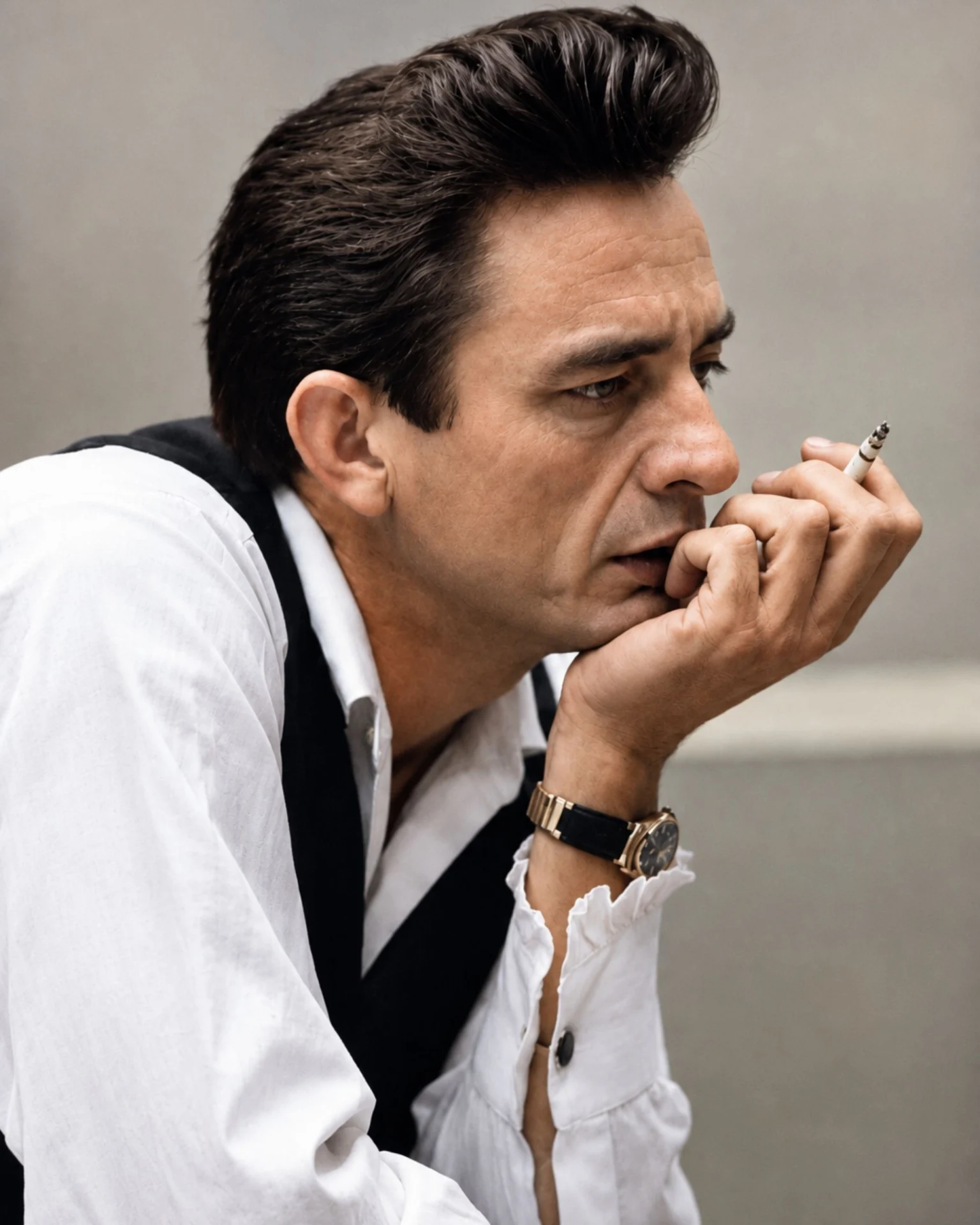
Johnny Cash was not yet the Man in Black the world would later revere. In June 1965, he was a man unraveling—and his unraveling set California’s Los Padres National Forest ablaze. 508 acres of pristine watershed were scorched, Cash had to be airlifted from a creek, and the federal government demanded payment. This is the story of the wreckage before the redemption.
“The fire showed how far his private chaos had begun to reach.”
By 1965, Cash was a paradox: famous enough to fill theaters, yet unstable enough to terrify those closest to him. His amphetamine addiction was severe, his marriage to Vivian Liberto was crumbling, and long absences from home were becoming the norm. After a heated argument at their home in Casitas Springs, California, Cash drove off with his nephew, Damon Fielder, heading toward Sespe Creek in Los Padres National Forest.
The trip quickly veered into disaster. Fielder later recalled Cash drinking whiskey and downing pills as they drove. When Fielder returned from fishing, he smelled smoke and found flames spreading near Cash’s camper. The cause remains disputed: Fielder believed Cash had tried to build a small fire and lost control; Cash insisted sparks from a defective exhaust system ignited the brush. Whatever the origin, the result was undeniable—a fast-moving fire that tore through dry brush and mountain heat, devouring 508 acres of national forest watershed.
As the blaze raged, Cash sought refuge in a creek, and a helicopter crew evacuated him. That image—Johnny Cash, not under stage lights but trapped in his own chaos, pulled from a burning forest—shatters any romantic outlaw myth. There was no glamour, only smoke, heat, and the hard reality that his private damage had spilled into the landscape.
The federal government swiftly pursued him. Authorities sought over $125,000 in damages, but Cash eventually settled for $82,000. Records from his FBI file confirmed the case was tied to the 1965 fire. This was not a story that ended when the flames died—it was a public cost, a legal burden, and evidence that his unraveling had reached far beyond himself.
“The burned land became evidence that Cash’s private unraveling had reached the outside world in a way nobody could ignore.”
The fire also cast a darker shadow over the environment. Los Padres was critical habitat for the endangered California condor. Later accounts linked the fire to the disappearance of most condors in that part of the refuge, though definitive claims about individual birds remain cautious. Still, the weight is clear: the fire didn’t just scar land; it threatened a species already fighting for survival.
For Cash, Los Padres was one catastrophe in a year of cascading failures. His drug use led to arrests, accidents, and broken relationships. The polished performer audiences saw onstage became harder to match with the man his family experienced at home. That contrast is unsettling—the public image made danger look powerful, but the private reality made it look exhausting. Cash was not yet the redeemed elder figure; he was still inside the damage, still burning through trust, health, and now forest land. Los Padres wasn’t a chosen symbol—it was a consequence.
A few years later, Cash would rebuild his life and career around discipline, faith, and an honest willingness to speak about his failures. That later testimony became part of his legend. But Los Padres belongs to the period before that rebuilding—before the clean comeback. In those woods, the outlaw myth wasn’t noble or rebellious. It was reckless, dangerous, and carried a cost measured in acres, dollars, and frightened people watching a great artist come apart. This is the wreckage before the confession, written in ash and federal records.