
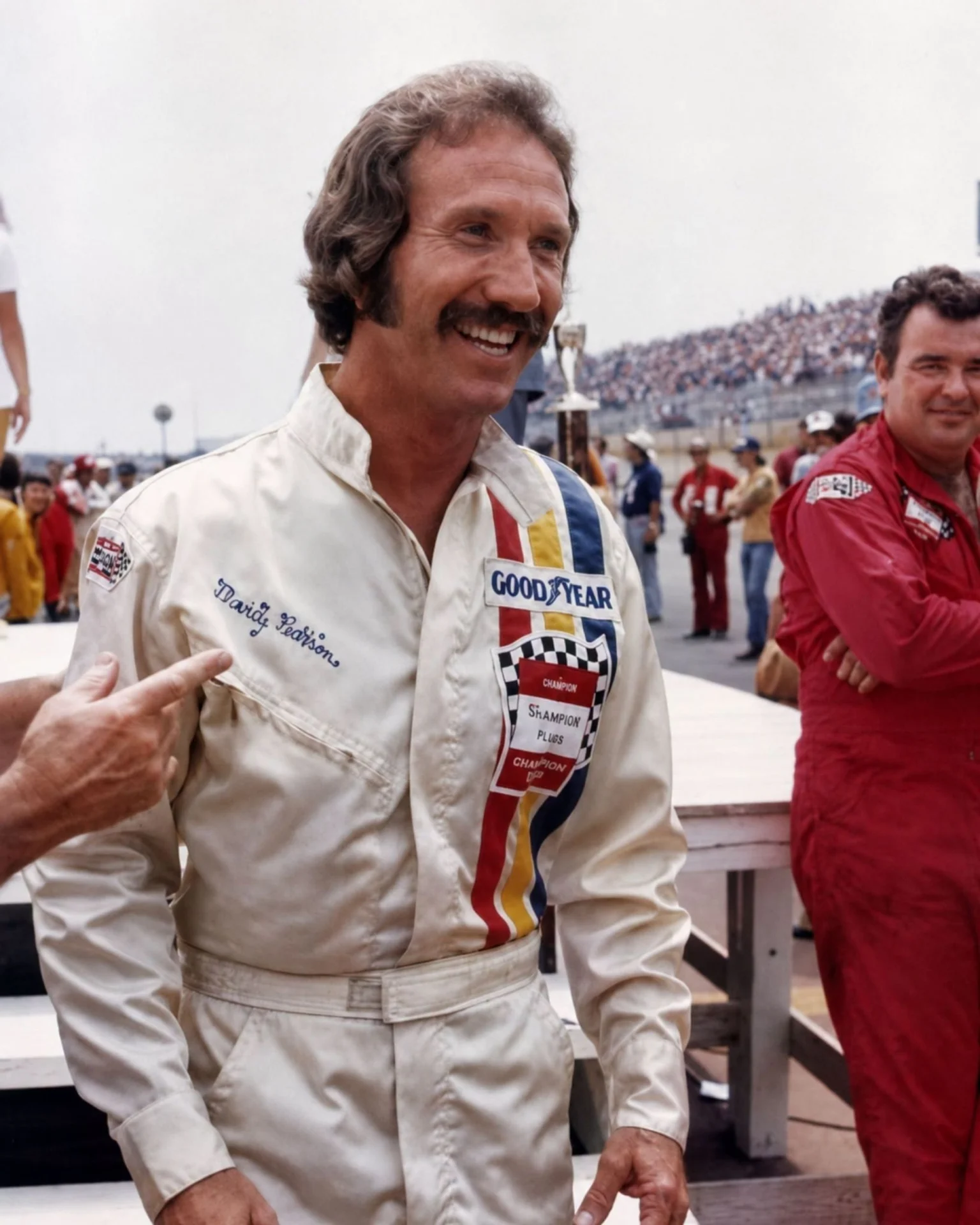
Marty Robbins spent decades chasing a feeling no stage could give him. On May 7 1972 at Talladega he finally caught it. The music star who had written El Paso was moving past men who normally lapped him because his Dodge had been made faster than the rules allowed. Then he gave the speed back.
Robbins did not treat the track as a publicity appearance. He had raced micro-midgets in the 1950s while his music career grew. He climbed into modified stock cars at Nashville Speedway and made his first NASCAR Grand National start in 1966. On Saturday nights he arranged to appear late in the Grand Ole Opry lineup so he could leave the speedway and still make the show. He knew the difference between being famous and being fast. His name bought equipment and attention, but the men around him raced for a living every weekend.
Talladega gave him a forbidden taste of their world. His Dodge had qualified far behind the leaders for the Winston 500. Yet during the race the same car ran roughly fifteen miles per hour faster than it had in qualifying. The carburetor restriction designed to limit the big engines had been defeated. He completed 179 of the 188 laps before pulling off the track. NASCAR wanted to honor him with Rookie of the Race recognition. He refused and admitted what had been done.
I wanted to know what it felt like to run near the front.
That explanation sounded almost childlike in its honesty. It also revealed a man who understood the boundary between experience and achievement. The speed had been real. The accomplishment had not.
Bobby Allison later remembered that Robbins could give competitors all they wanted on the track. Richard Petty recalled the pleasure Robbins brought into the garage. He was not expected to challenge the front-runners every week, but he was not treated as a man circling for photographs either.
Robbins continued racing after heart surgery. He had suffered a heart attack in August 1969 and undergone bypass surgery in January 1970 when the operation was still relatively new. By October 1970 he was back in a NASCAR race. He briefly withdrew after wrecks in 1974 and 1975. Walking away would have been the sensible choice. He had a damaged heart, an established music career and no realistic path to a NASCAR championship. He returned in 1977 anyway. He made thirty-five starts at NASCAR’s highest level and recorded six top-ten finishes. His best result was fifth at Michigan in 1974.
Racing occupied a space his music could not touch. A singer could extend a note, charm an audience after a mistake or choose another song. A car approaching a corner gave him less room for persuasion. The stopwatch did not care who had written El Paso. That indifference may have been part of the attraction.
His last season held two very different arrivals. In October 1982 Robbins was formally inducted into the Country Music Hall of Fame. On November 7 he started the Atlanta Journal 500 in a Buick Regal. The day ended with an accident and a thirty-third-place finish. It was his final NASCAR appearance. On December 8 he died following another heart attack. He was fifty-seven.
The easy moral of Talladega is that a playful country star cheated and confessed before anyone could praise him too much. The quieter truth concerns why he wanted the speed. Robbins already knew what winning felt like. El Paso had topped both country and pop charts. He had Grammy Awards, large audiences and a secure place at the Opry. But none of that could tell him what Richard Petty saw through the windshield.
For one afternoon an altered carburetor placed him close enough to find out. Then Robbins separated the experience from the achievement. He kept the memory and refused the award. The decision did not make the illegal car legal. It revealed that he understood the boundary he had crossed.
Marty Robbins entered racing rich in fame and comparatively poor in speed. He stayed long enough to earn the respect of men who had no reason to be impressed by a gold record. Talladega gave him something more private than a victory. For a handful of laps the leaders were visible in front of his hood instead of disappearing beyond it.