
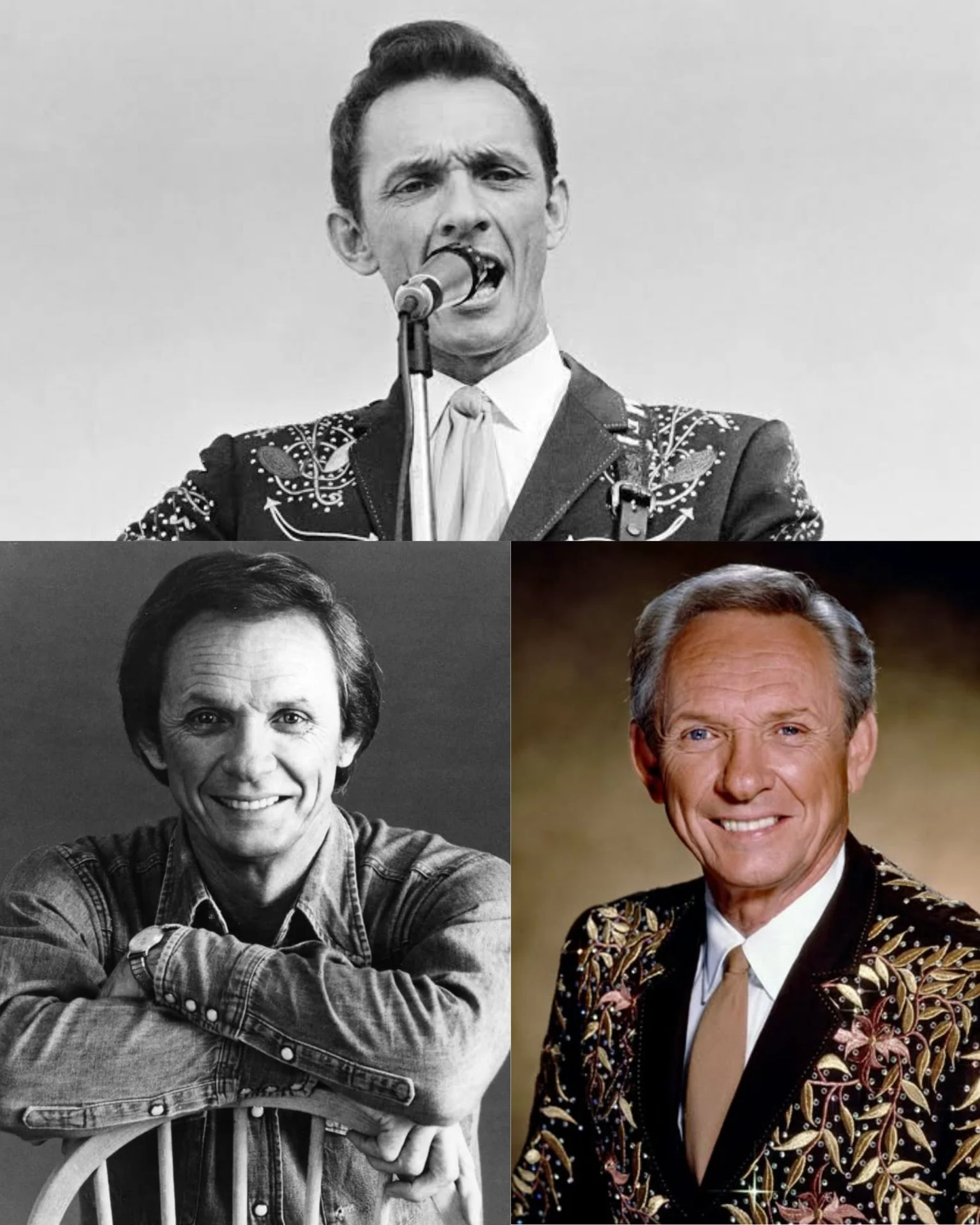
The door is closing. A man who survived a war lies motionless in a quiet room while the woman he loves prepares to leave for the evening. He can hear every small sound she makes and stop none of them. That room existed long before the song. It stood in a small Florida town, behind a bedroom wall where a boy named Mel Tillis lay awake and listened.
Tillis grew up in Pahokee, near the southern edge of Lake Okeechobee, in a musical family with no reason to suspect that a neighboring couple’s private troubles would one day become part of one of country music’s most widely recorded songs. The husband was a disabled veteran. The wife was younger. As a boy, Tillis could hear their arguments through the wall whenever she dressed to go out, and he understood that war had followed the man home, though no uniform remained in sight.
The quarrels stayed buried in his memory for years. Then one afternoon, trapped in Nashville traffic, Tillis heard Johnny Cash come through the radio singing “Don’t Take Your Guns to Town.” The title stirred a second sentence in his head, and the old argument finally found its voice.
“Ruby, don’t take your love to town.”
The name Ruby was invented. The marriage behind it was not. In one later account, Tillis described the husband as a veteran paralyzed during World War II. In a recorded interview with the National Endowment for the Arts, he said the song itself concerned the Korean War. The differing details reveal how personal memory and finished composition were blended rather than transcribed. Tillis did not write a report about his neighbors. He kept the essential arrangement, a physically damaged man, a younger wife, and the humiliation of being unable to follow her through the door.
Many listeners assumed the song was about Vietnam, because that conflict filled American television when the record became famous. The confusion gave “Ruby” an unintended immediacy. Families were watching young men leave for Asia while the song quietly asked what happened after a wounded soldier returned home.
Tillis placed the listener beside a paralyzed veteran who can hear his wife preparing to leave but cannot rise to stop her. He recognizes her loneliness even while begging her to stay.
By the final verse, the sound of a closing door has become more threatening than anything the narrator experienced overseas.
Johnny Darrell carried the song to No. 9 on the country chart in 1967. Waylon Jennings, George Jones, Bobby Bare and others recorded it too, and each voice shifted the husband’s character slightly, older, angrier, more resigned, more accusatory. The song could withstand those changes because Tillis had left the central act unseen. Ruby prepares to leave. The husband suspects what she intends. The listener never follows her outside.
Then, in 1969, Kenny Rogers and the First Edition approached the song while trying to move beyond the psychedelic sound of “Just Dropped In.” Rogers sang it without theatrical anger. His narrator sounded trapped between suspicion, tenderness and humiliation, weakened before the song even began, which made the final threat feel less like a plan than the last thought of a man trying to recover some control. The record reached No. 6 on the American pop chart and No. 2 in Britain, carrying one Florida household’s private argument far beyond country radio.
Ruby herself has no verse of her own. Generations of listeners have therefore supplied motives for her. Some hear cruelty. Others hear a young woman exhausted by years of care, isolation and needs the marriage can no longer meet. The husband grants that those needs exist, even as he imagines reaching for a gun his body will never let him hold. Tillis offers no clean side to take. The man’s suffering is undeniable. So is the danger inside his desperation. Her departure may be betrayal, self-preservation, or merely something he fears while the door closes. No version can settle what the lyric refuses to prove.
Listeners never learn whether Ruby is meeting another man. They know only what her husband fears while hearing her footsteps move toward the door. That uncertainty is what Tillis preserved. The veteran has survived the war, but the song does not offer him the simpler dignity of a heroic return. It leaves him in a room where the battle is over, the evening is beginning, and the woman he loves is still young enough to walk away.
The song never visits a battlefield. It contains no military ceremony and offers no public gratitude. The damage appears in smaller sounds. Cosmetics being handled. Clothing being adjusted. Footsteps crossing a floor. That was what the boy next door had heard. Years later, the famous version carried those sounds onto radios across several countries, and Tillis kept the door closed at exactly the point where judgment would have become easy.